Thursday, September 29, 2022

What a Year It Has Been! Let the Celebration of Transit Month Continue

What a Year It Has Been! Let the Celebration of Transit Month Continue
By Erin McMillan

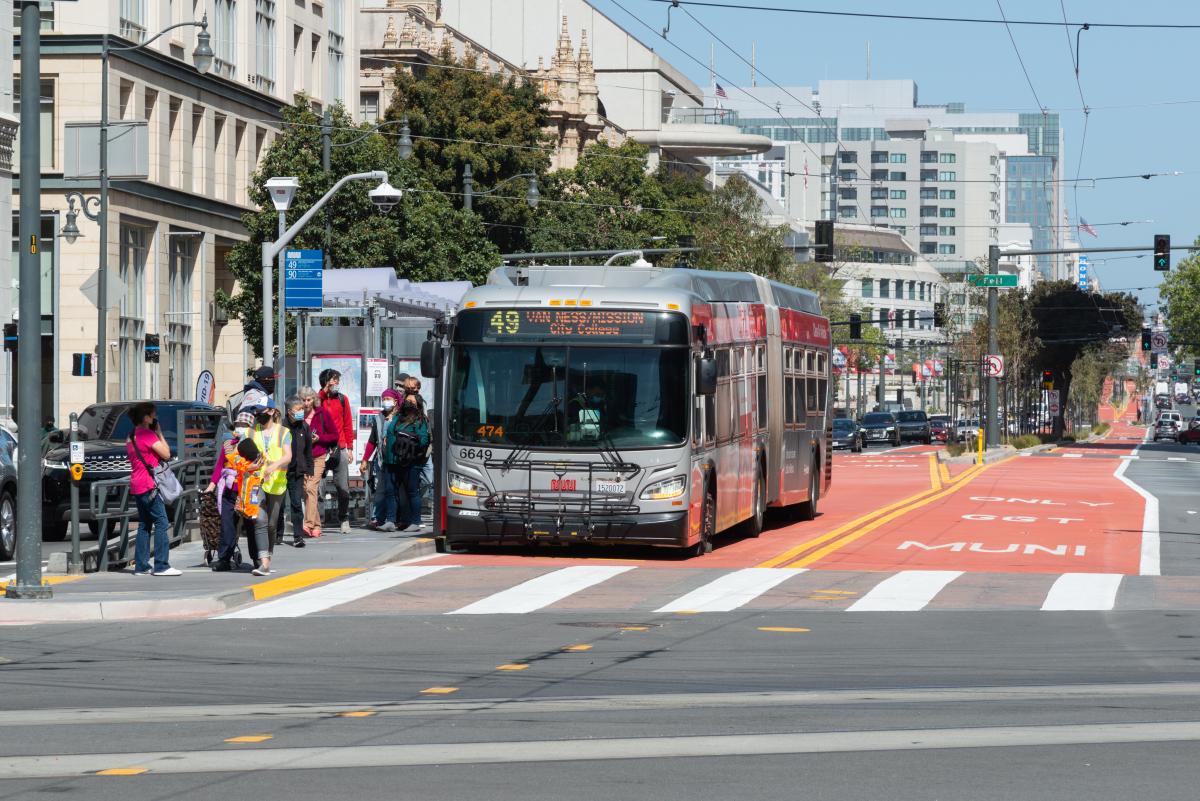
Muni bus stopped at intersection and unloading passengers at bus stop.

49 Van Ness/Mission using the brand new bus rapid transit lanes on opening day in April.

During Transit Month this September, we’re continuing the celebration by looking back to more of the work we’ve done over the last year— some that has been less obvious to Muni customers, but critical to a well-functioning system and other work that is more front and center.

Fix It! Week and Continuing State of good Repair Work

Muni is an impressive transit system. Moving thousands of people on rail and buses every day takes a lot of coordination and a lot of work. Dealing with unique challenges like San Francisco’s geography and shifting travel patterns, we also have to deal with issues related to the Muni system’s age. Proper care and maintenance of a transit system many decades old takes strategic planning as regular maintenance needs to happen while continuing to provide service. Typically, regular Muni Metro maintenance work occurs each night after subway service hours, SFMTA maintenance crews work to maintain the tracks and equipment underground. On most nights, this gives crews only about two hours to get work done. This two-hour window sometimes isn’t enough to complete critical maintenance tasks, so beginning in April, we started Fix It! Week, a quarterly week of planned maintenance that occurs during extended, overnight shifts when trains aren’t in service.

This year Fix It! Week provided 63 total work hours during which several SFMTA teams completed over 2,000 hours of maintenance and inspections. On the busiest nights, the maintenance teams had up to 55 staff in the tunnel from West Portal to Embarcadero delivering safety improvements, station and tunnel enhancements, subway track and wayside equipment maintenance, and traction power upgrades.  

In addition to finding new and creative ways to maintain the system more efficiently, we also had to entirely reimagine the service network to accommodate changing travel patterns and in response to the pandemic. Over the past year alone we’ve increased Muni service multiple times as the impact of the pandemic has eased and we’ve slowly been able to hire new operators.

Trip patterns have changed over the last two years with a noticeable shift in San Francisco residents traveling neighborhood to neighborhood instead of the peak period downtown-centric travel pattern that was prevalent pre-pandemic. And we’ve adjusted. Service is slightly over-supplied so that there is capacity when it is needed. Anticipating how people will move in the future is difficult, but our service planning team is hard at work tracking ridership, customer feedback and operator availability to do our best to accommodate how folks want and need to move around the city. We are working to build back our ridership by providing high-quality, reliable service that people can count on.

Our response was the 2022 Muni Service Network which was developed through an extensive outreach process. Throughout the COVID-19 emergency and recovery, the SFMTA prioritized restoring service to these, and other neighborhoods identified in the Muni Service Equity Plan.

On the more visible side of our work, in April we started bus rapid transit (BRT) service on Van Ness Avenue as part of Muni’s Rapid Network, which prioritizes frequency and reliability for customers. Muni and Golden Gate Transit customers are already experiencing shorter travel times. With dedicated transit lanes in the middle of the street, enhanced traffic signals with Transit Signal Priority, the Van Ness BRT is the fastest way to travel north-south in this part of San Francisco, and riders are noticing. Since the BRT corridor opened on Van Ness Avenue in April, ridership on the 49 Van Ness/Mission has nearly doubled and is exceeding pre-pandemic ridership by 13%.

In other major capital and service news, last October service started on Geary in its new transit lanes after the completion of the Geary Rapid Project. Pre-pandemic, the combined Geary routes had one of the highest bus riderships in the country, with more than 56,000 daily customers relying on the 38 Geary and 38R Geary Rapid. As riders return, they are experiencing a faster, more reliable ride thanks to transit improvements like red colorization and dedicated transit lanes, bus stop optimization and signal retiming that were made along the three-mile stretch of Geary. These quick-build improvements alone resulted in 38R Geary Rapid travel time savings of up to 20%. 

And last but certainly not least, you may have heard we have officially announced the opening of Central Subway! Weekend service starts Saturday, November 19 and will give customers a chance to check out its four new stations, and also allow our operators and crews to work out any kinks while operating. We’re looking forward to welcoming you aboard!

Wishing you a Happy Transit Month! 


Published September 29, 2022 at 11:07PM
https://ift.tt/b75hSVz

Wednesday, September 28, 2022

Celebrating BART at 50: A Critical Link for San Francisco

Celebrating BART at 50: A Critical Link for San Francisco
By Jeremy Menzies

This month, our sister agency BART, celebrates its 50th anniversary. BART service changed transportation in the Bay Area forever, connecting communities in a way that hadn’t been done before. For San Francisco, the construction of BART not only provided new travel options within the city and to the East Bay but also built the Muni Metro system.

Here’s a look at some of BART’s history through the SFMTA’s historic photos.

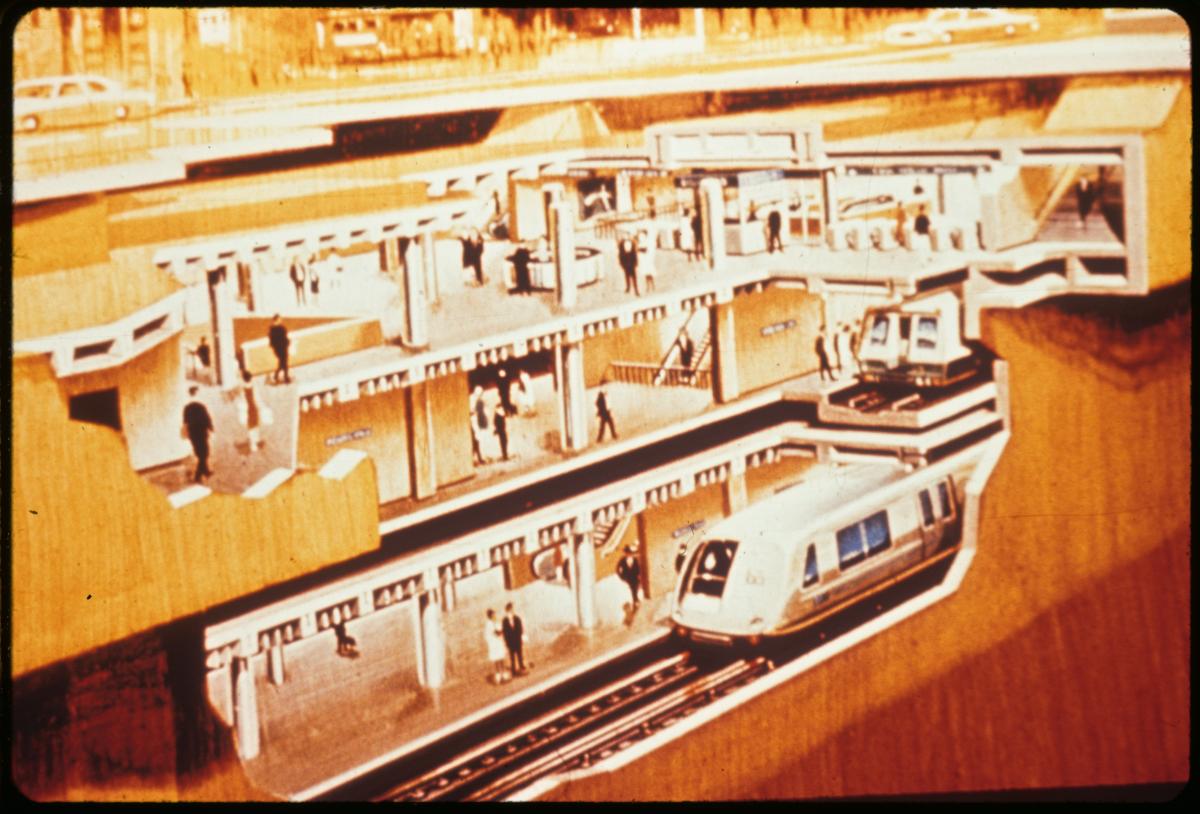
Image of cutaway drawing showing underground subway with Muni and BART trains insideThis conceptual drawing from around 1960 shows the combined BART and Muni Metro subway underneath Market Street at Powell.

The story of BART goes back decades before the opening in September 1972. It wasn’t until the early 1960s that a plan and funding were in place for BART to come to fruition.

Originally, five counties formed the Bay Area Rapid Transit District. In a 1960 engineering report, proposed route maps showed lines extending both north across the Golden Gate into Marin and south down the Peninsula to Palo Alto. After Marin and San Mateo counties withdrew from the district, a final plan was drawn up to serve mainly the East Bay and San Francisco.

Black and white photo of a line of people digging with shovels in shallow ditch on Market Street

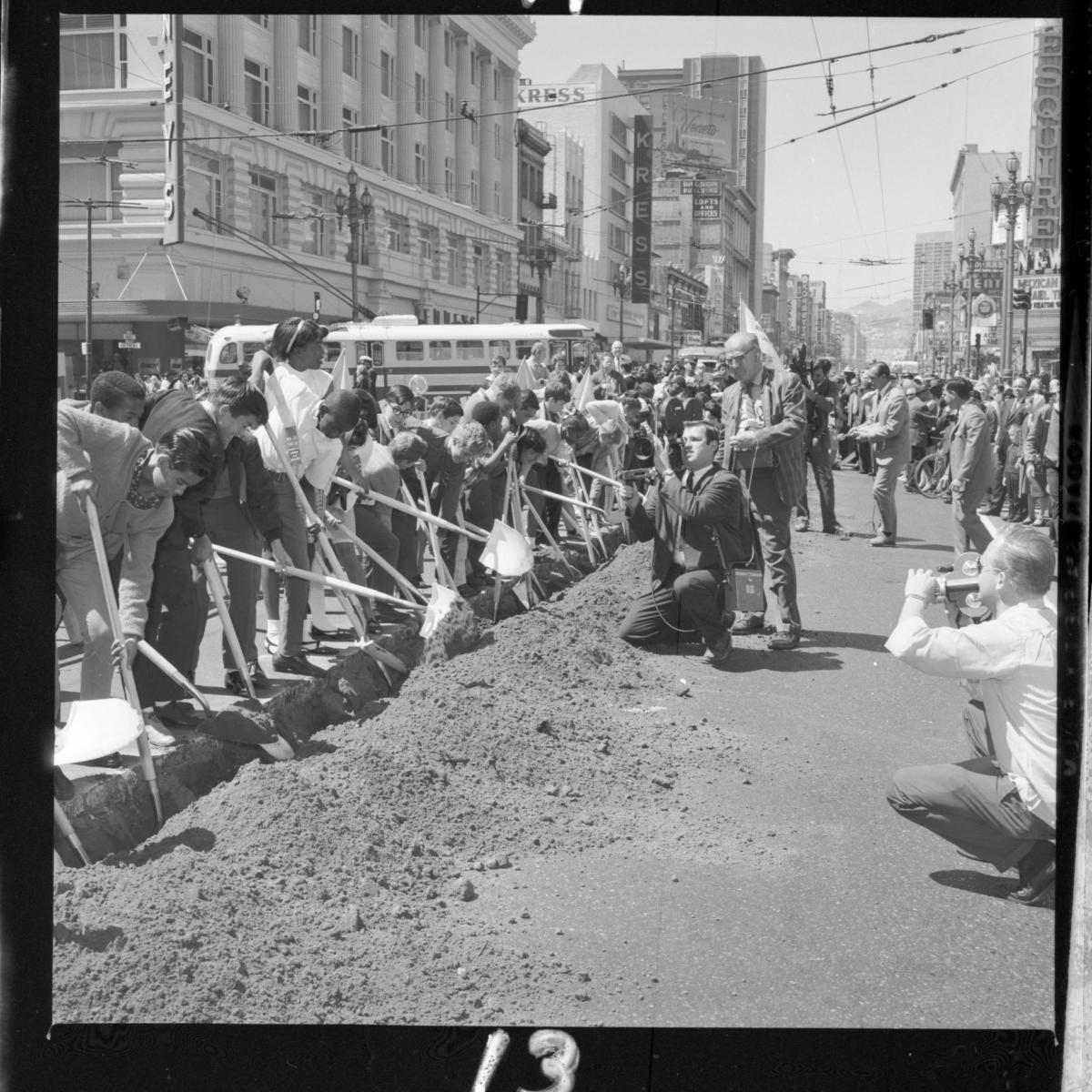
Students with white shovels were on hand for the groundbreaking ceremony for BART/Muni Metro at Market and Powell streets on July 25, 1967.

Groundbreaking on construction for San Francisco’s Market Street Subway took place in July 1967. This construction not only included the main BART stations downtown but also stations for Muni Metro at Church, Castro, and West Portal. Forest Hill Station was modified with new platforms and equipment to fit Muni’s incoming light rail vehicles. The funding and planning power of the BART District brought to life an idea that had been floated since at least 1913.

Color image looking east on Market and Collingwood streets showing excavation with streetcar passing over top of hole in ground

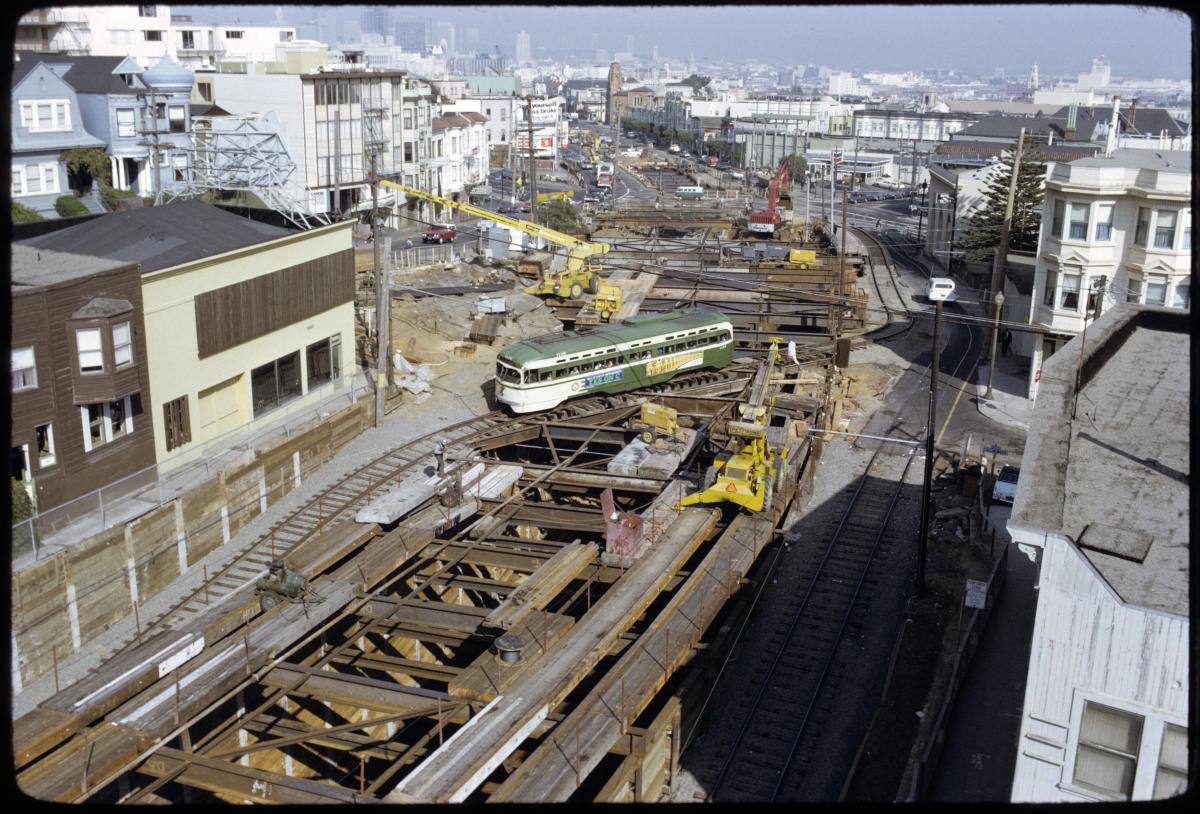
An overhead view looking at the construction of Castro Station in October 1973.

Construction along Market Street was extremely disruptive for the city’s busiest corridor. During construction, Muni streetcars and buses had to navigate constantly shifting reroutes, wooden plank roadways, and sinkholes on top of all the usual street hazards. One of the most dramatic engineering feats was a temporary bridge built over a huge open pit at Collingwood Street. Here, streetcars traveling towards West Portal crossed over top construction on Castro Station to enter the Twin Peaks Tunnel. The temporary ramps built to access the tunnel still exist today and are used for emergency and maintenance needs.

People entering fare gates inside station, some carrying balloons

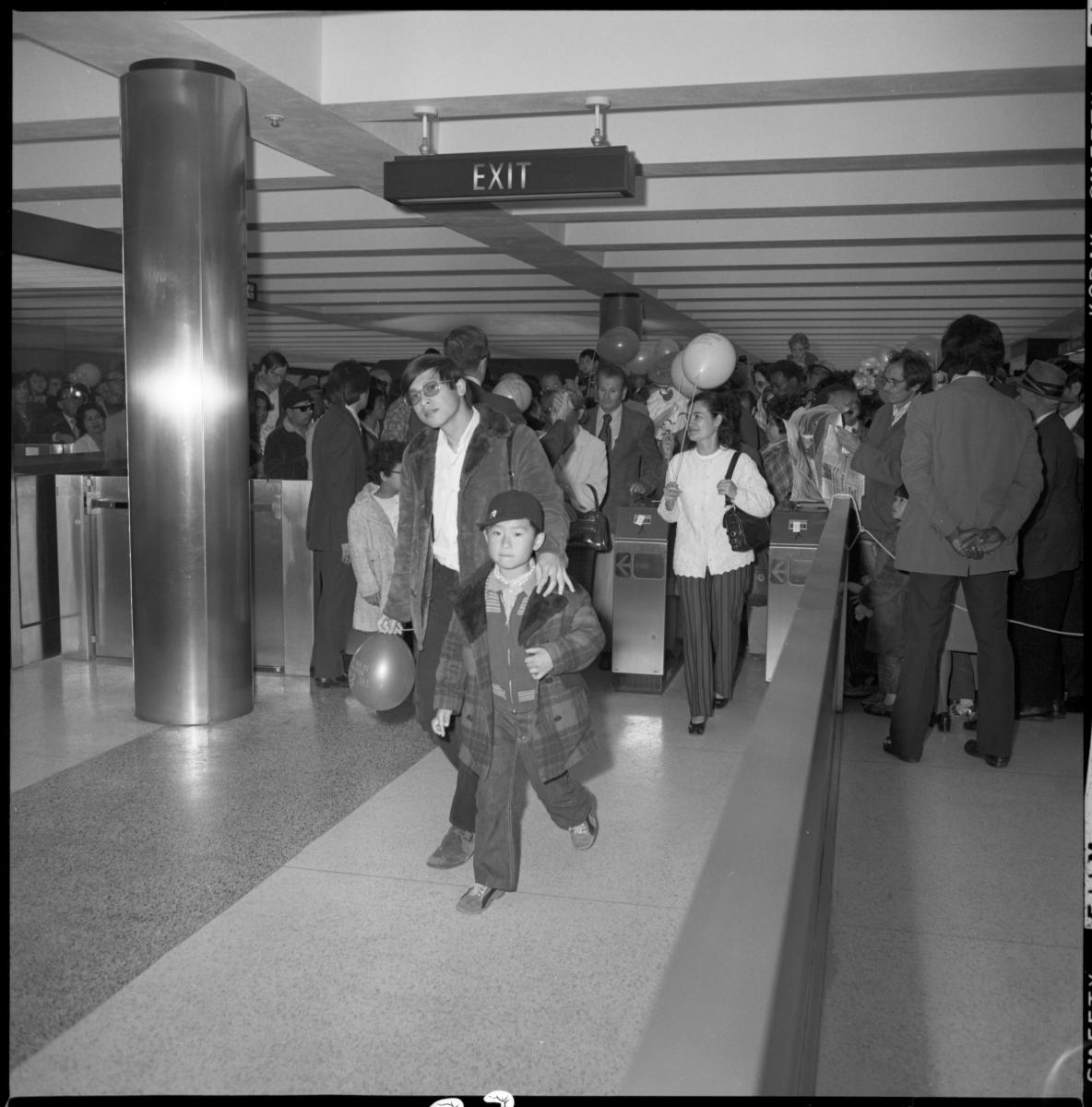
The first passengers pass through Powell Station fare gates at the opening of BART in the city on November 3, 1973.

BART opened in San Francisco on November 3, 1973. For the first time ever, San Franciscans could travel from downtown to the outer reaches of the city on an underground subway system. Service across the Bay opened ten months later in September 1974. BART gave San Franciscans from Balboa Park to downtown improved access to jobs, shopping, and education as well as connections around the region.

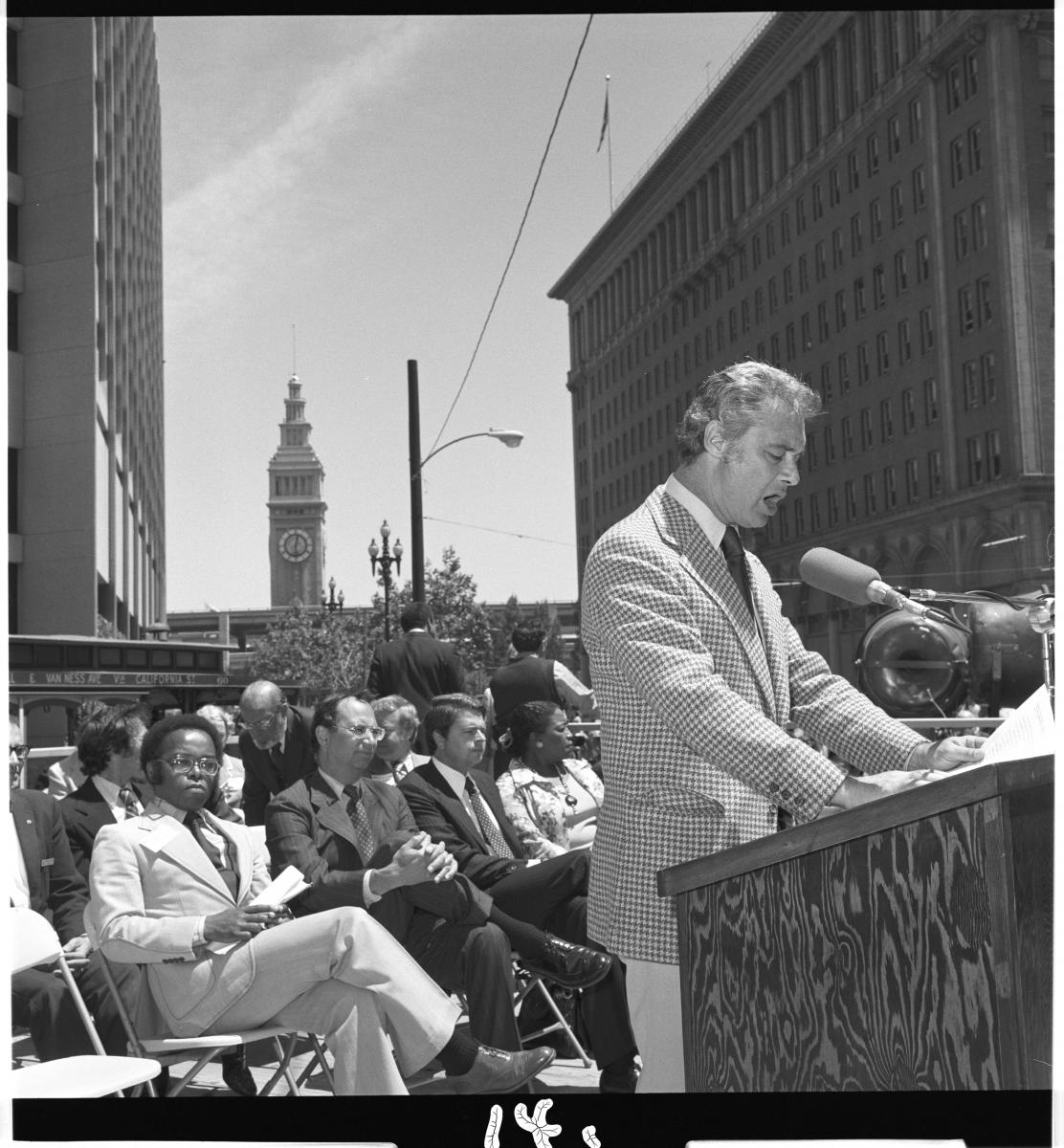
Mayor George Moscone speaking from podium with crowd of people, Ferry Building, and cable car in background

San Francisco Mayor Moscone speaks at the opening of Embarcadero Station at Market and Drumm Streets.

Embarcadero Station, which was not part of the original plan, was built after the main subway. It opened on May 27, 1976, with Mayor George Moscone giving a speech at the end of the California Street cable car line. Today, Embarcadero Station is the busiest in the system, with over 27,000 entries and exits logged in August 2022.

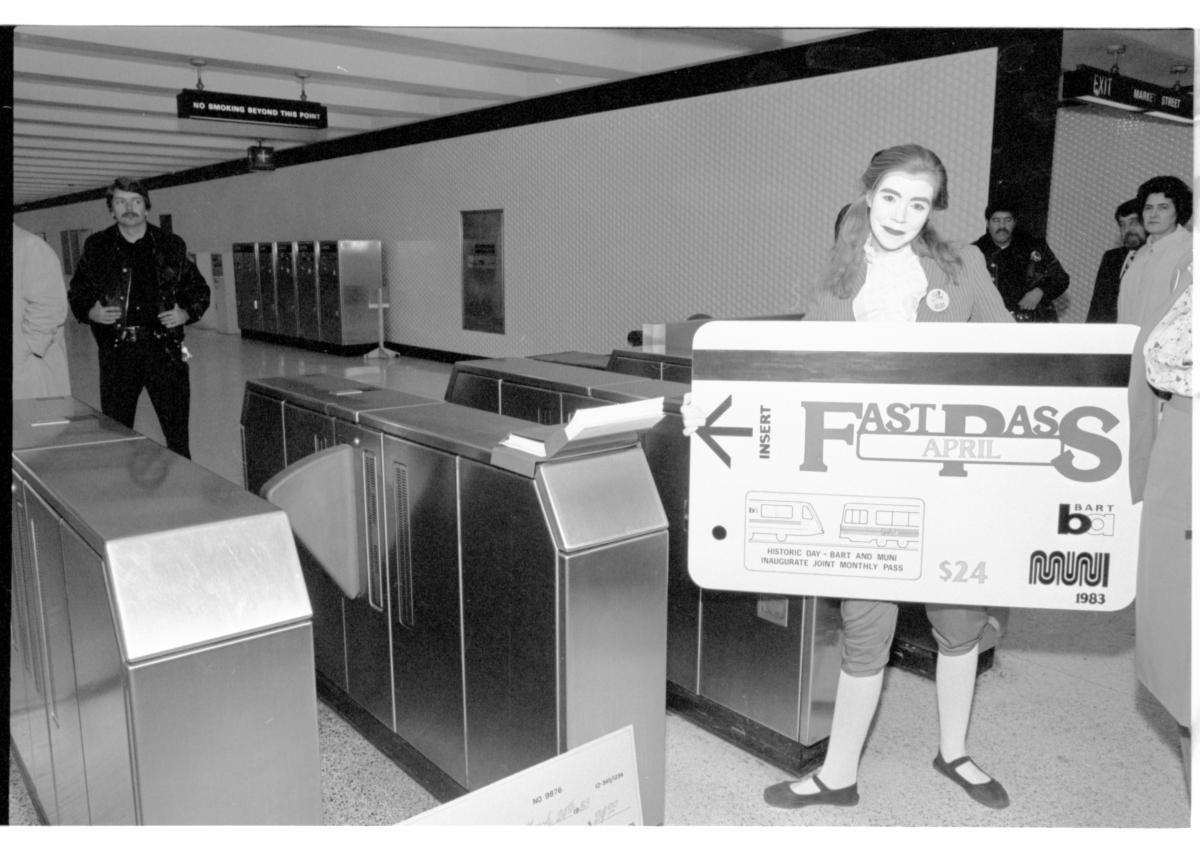
Person dressed as a mime standing next to fare gates holding large replica of Muni Fast Pass transit fare card.

A mime holds up an oversized Muni/BART Fast Pass in Powell Station at the launch of the program on March 24, 1983.

In the early 1980s, Muni and BART partnered to improve transit within the city through a combined Muni/BART monthly Fast Pass. Muni customers could ride BART between Embarcadero and Balboa Park on the same pass, making transfers between the two systems seamless.

Today, BART is a critical part of our regional transportation network. Construction of BART in the mid-century also brought better service to the hundreds of thousands of Muni Metro riders within San Francisco.

As one of our regional transit partners, we congratulate BART on their golden anniversary and look forward to another 50+ years of serving the Bay together!  Read more about BART’s first 50 years and check out some amazing historic documents and a timeline 1947-1991.


Published September 29, 2022 at 03:26AM
https://ift.tt/tpsvlo5

Thursday, September 1, 2022

Let’s Celebrate During Transit Month this September

Let’s Celebrate During Transit Month this September
By Erin McMillan

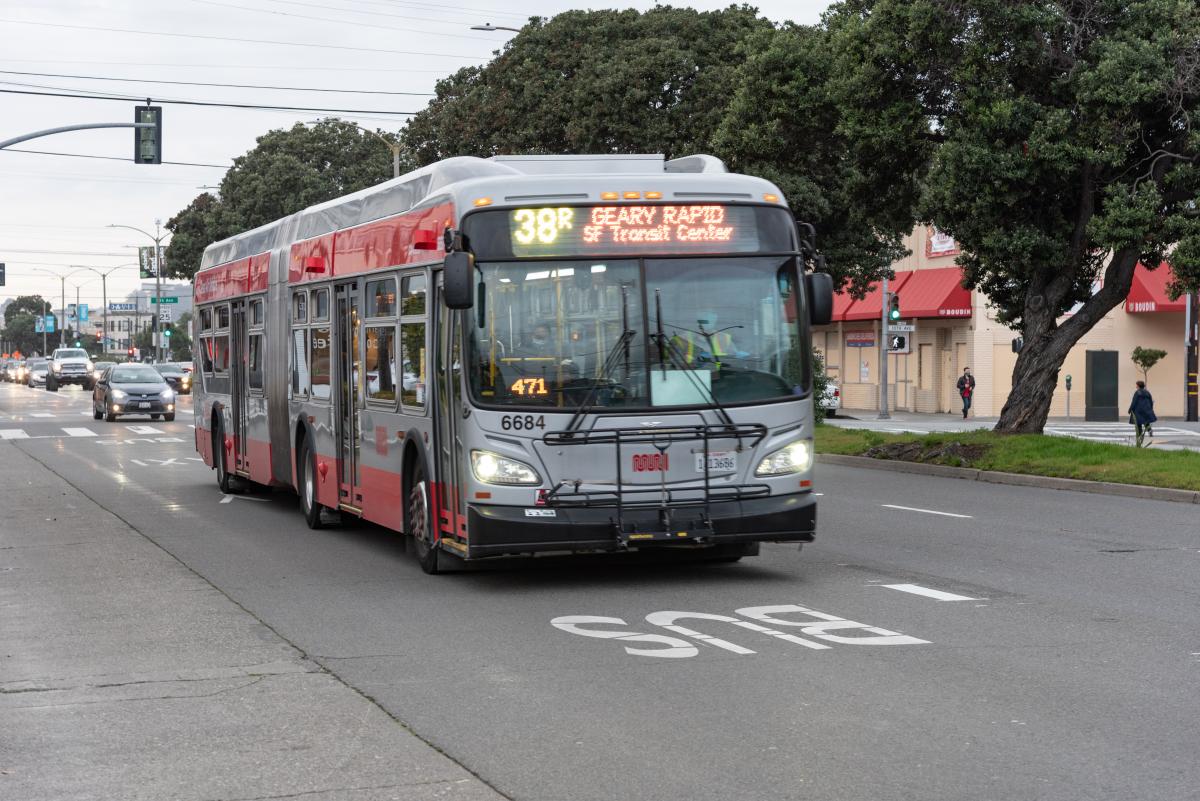
Muni bus traveling in the transit lane on Geary Boulevard.

The 38R Geary Rapid reaping the benefits of the Temporary Emergency Transit Lane on Geary Boulevard.

Today marks the start of Transit Month! Every year we look forward to celebrating Transit Month by looking back at all the successes of the previous year—and also by thinking of our upcoming opportunities to continue to improve Muni.

Over the past year, we have made a series of improvements through our Muni Forward program that reduced travel times, wait times and crowding:  

  • Reduced travel time by up to 31% on key bus routes as part of  the Temporary Emergency Transit Lanes program, giving more riders the benefit of the transit lanes faster.  
    • 10 miles of transit lanes were made permanent benefitting the T Third, 1 California, 14 Mission, 19 Polk, 27 Bryant, 38 Geary, 43 Masonic and the 44 O’Shaughnessy. This cool animation shows how transit priority is improving Muni travel times citywide!
    • As part of the TETL program, last October, the San Francisco Transit Riders gave us an award to honor the “Fastest Expansion of Transit Lanes in San Francisco History.”
  • Started bus rapid transit service on Van Ness Avenue, with initial weekday travel time savings of up to 35% on northbound trips, equating to 9 minutes a trip. And southbound, up to 22% travel time savings, or 5 minutes on a trip.   
  • Completed the Geary Rapid Project, which improved one of the city’s busiest corridors with much-needed safety improvements and more reliable bus service for the 38 Geary and 38R Geary Rapid’s over 56,000 daily customers.
  • Installed the one of a kind urban high-occupancy vehicle (HOV) lanes along Park Presidio Boulevard and Lombard Street that expands the capacity of those streets to carry more people with the same number of lanes.  
  • Reduced collisions on California Street by 64% for all modes and 89% for transit as measured in the evaluation of the California Street Safety Project.
  • Began implementing spot improvements to the top ten corridors where Muni experiences delay as part of the Transit Delay Hot Spots Program. The improvements feel small but benefit the full route.
  • Continued construction of transit reliability improvements on 19th Avenue, Taraval Street, 16th Street, Mission Street in SoMa, and along the 27 Bryant in the Tenderloin.

To see locations where Muni Forward improvements have been made across the city, check out this interactive Photo Map. Whether targeted spot locations, or along major corridors, improvements to the Muni network benefits everyone.

And looking ahead, we have started planning for Muni Forward improvements to the J Church, K Ingleside, M Ocean View, N Judah, 29 Sunset and 38 Geary. For some Muni lines, we hope to implement quick-build improvements as soon as next year! To support this work, and other work across the SFMTA, we were recently awarded $116 million from the California State Transportation Agency of the Transit and Intercity Rail Capital Program (TIRCP). Be on the lookout for more improvements coming soon!

Of course, that’s not all we’re doing to improve transit: we’ve been restoring service across the system, rehabilitating our subway system, and we’re putting the final touches on the Central Subway. Read more about our progress on enhancing transit service and safety in San Francisco.

Happy Transit Month, Muni riders! And for more information on the San Francisco Transit Riders Ride Along & Rally Wednesday, September 7  from 8 am - 10 am, please visit San Francisco Ride Along & Rally.


Published September 01, 2022 at 11:49PM
https://ift.tt/iqL2woV

Tuesday, August 30, 2022

Help Make Muni Safe for Everyone

Help Make Muni Safe for Everyone
By Mariana Maguire

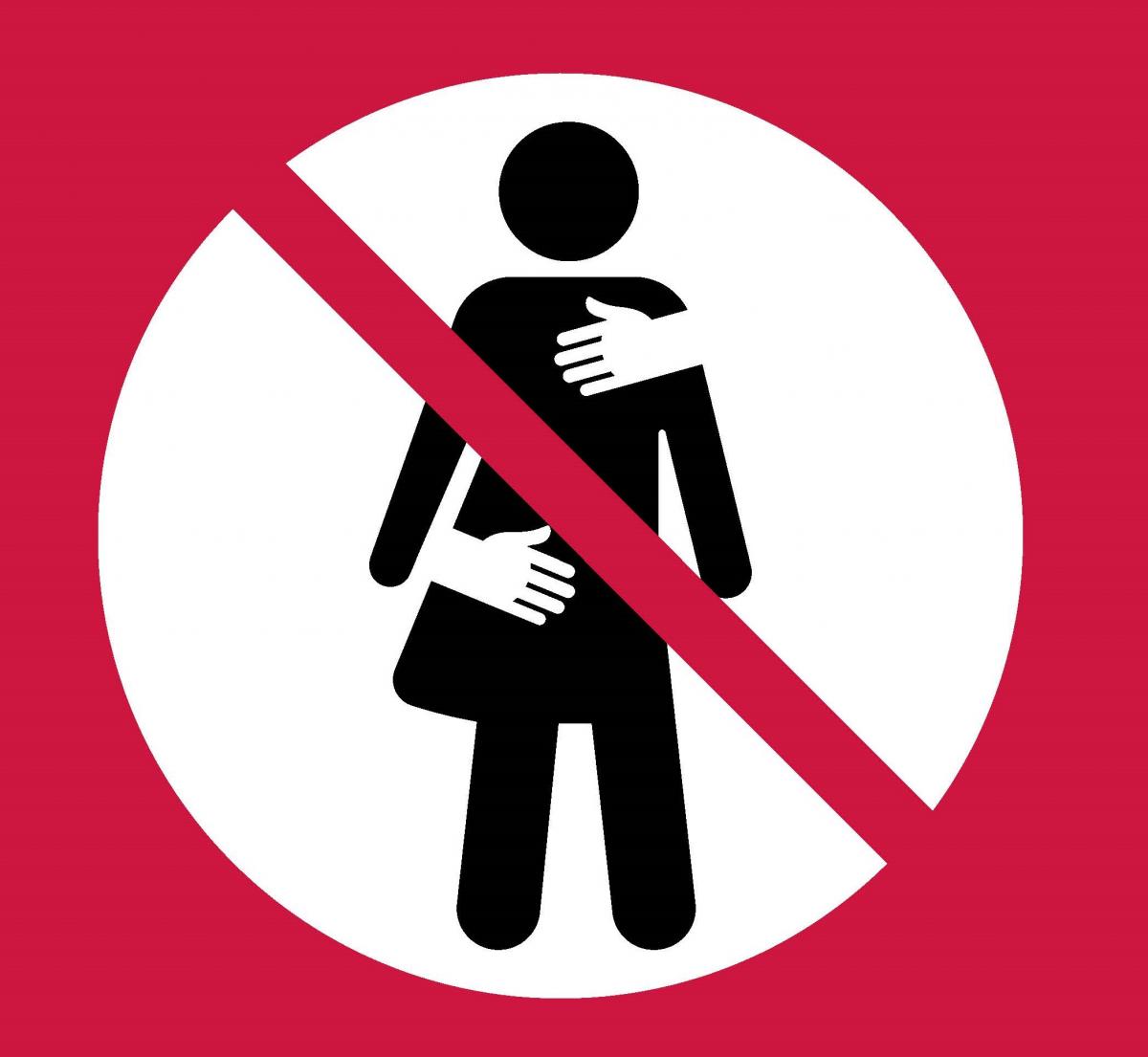
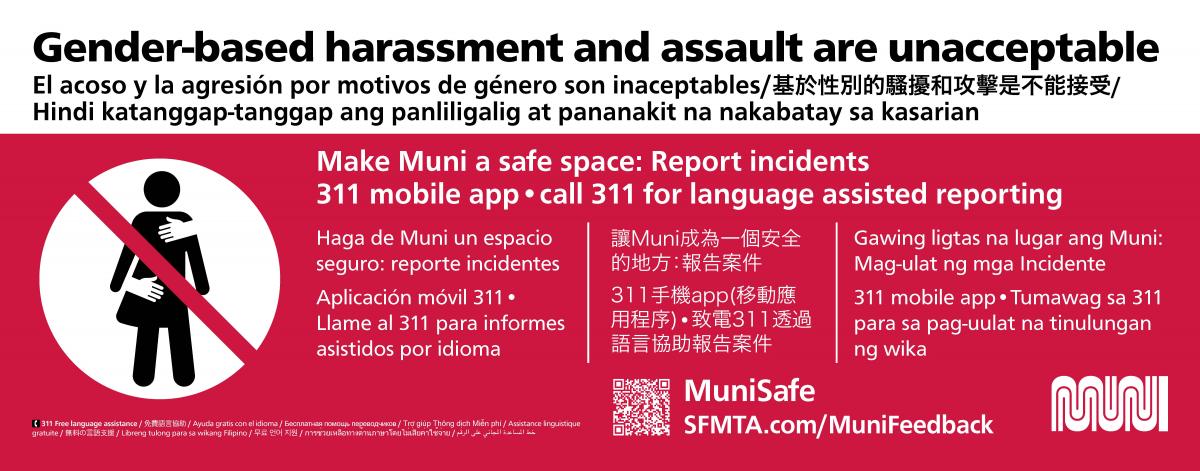
Person figure with hands on its body in the center of a white circle with a red background and red slash-through symbolizing no harassmentNew Muni “no harassment” symbol

The safety of our customers and staff is a top priority for the SFMTA. That is why we are launching MuniSafe – a campaign to increase reporting of gender-based harassment through recently expanded incident reporting options.

If you experience or witness an incident, help us make MuniSafe by reporting it using the Muni Feedback form at SFMTA.com/MuniFeedback, the 311 mobile app or by calling 311.

Non-English speakers should call 311 for language-assisted reporting.

Gender-based harassment takes many forms, affects many people and is absolutely not tolerated on Muni. Survivors should report incidents to the San Francisco Police Department if they feel comfortable doing so. By also reporting incidents directly to the SFMTA, you will help us track events that occur in our system so we can build better safety responses and direct resources to reduce gender-based harassment.

: Person figure with hands on its body in the center of a white circle with a red background and red slash-through symbolizing no harassment on the left quarter of an elongated red rectangle with text in three languages in the right three quarters and black text across the top with white background.New car cards that will be installed soon in vehicles system-wide with information about gender-based harassment reporting.
Use the Muni Feedback Form at SFMTA.com/MuniFeedback

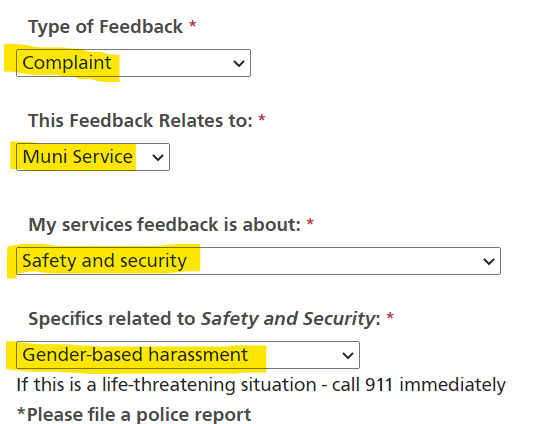
Screenshot of the Muni Feedback Form where "Complaint," "Muni Service," "Safety and Security," and "Gender based harassment" are selected

People should use the Muni Feedback form to report incidents at SFMTA.com/MuniFeedback. Under “Type of Feedback,” select “Complaint,” related to “Muni Service” to access the “Safety and security” topic and the specific topic of “Gender-based harassment.” You have the option to remain anonymous, or to request a follow up.

Your reports made on the form or by contacting 311 go directly to the SFMTA’s Security and Investigations Division. Information is confidential, but descriptions of incidents and behaviors may be shared with the San Francisco Police Department as necessary to support investigation and improve Muni safety.

Our staff will use the information provided in the report to internally investigate the incident, support the survivor and cooperate with law enforcement as needed. Staff will also analyze data from reports to identify and track trends and develop better safety approaches.

Personal Safety and Bystander Tips

  • Always stay alert and aware of your surroundings.
  • When traveling late at night or alone, sit close to the operator.
  • If someone is making you feel uncomfortable, move to a different part of the vehicle.
  • Ask for bystander assistance or call the operator for assistance when necessary.
  • If you see someone in a vulnerable situation or witness a possible incident, ask the individual if they are ok or need assistance. Offer to stay nearby.

The MuniSafe campaign is a multi-functional effort led by SFMTA’s Security Division to improve safety systems, processes and outcomes. SFMTA’s Safety Equity Initiative, announced in April 2022, is an integral part of the MuniSafe campaign. Learn more at SFMTA.com/SafetyEquity. If you have questions about this initiative, please email MuniSafe@SFMTA.com.


Published August 30, 2022 at 11:36PM
https://ift.tt/ny9aSRX

Monday, August 29, 2022

Muni Color Schemes Through the Years

Muni Color Schemes Through the Years
By Jeremy Menzies

Over the 110-year history of the SF Municipal Railway, our transit vehicles have been painted in six main color schemes (known as “liveries”). Here’s a short look at those paint jobs, from the oldest streetcars to our newest buses. 

The timelines of these liveries overlapped and old colors were not always phased out even after a new color was introduced. Not included here are the many colors of cable cars, historic vehicles, variations on the main colors, or any special paint jobs used.

The Original Grey and Red: 1912-1939

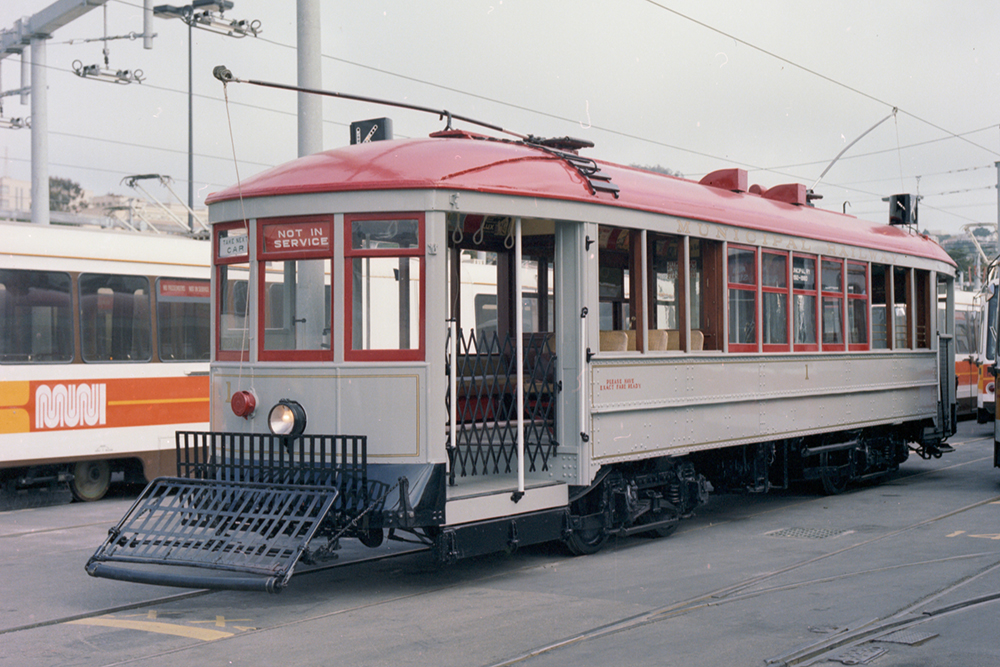
When Muni started in 1912, vehicle paint colors were used to distinguish one transit service from another. Muni’s very first streetcars were painted grey with red windows and roof. Gold was used for lettering, vehicle numbers, and decorative lines. This combination gave the cars a simple yet elegant look.

Color photo from 1980 of Muni streetcar 1 painted grey with a red roof and windows.

Seen here at Green Division rail yard around 1980, Streetcar 1 was built in San Francisco in 1912. It has been restored and operates today during special events.

Magic Carpet Cars Bring “Blue & Gold”: 1939-1946

In 1939, five special new streetcars arrived in the city wearing the second major color scheme for Muni. These cars came painted in a deep blue with bright yellow windows and roof. A small red pinstripe ran along the edge of the roof above the windows. Many older streetcars and buses were re-painted in these colors to help unify the look of the system.

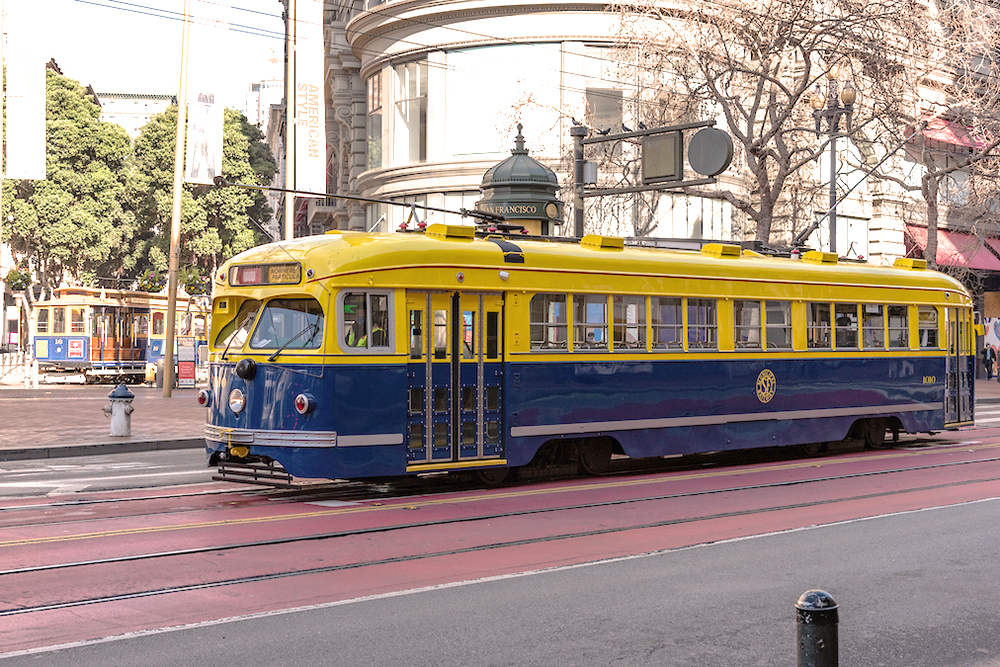
Color photo of streetcar 1010 painted blue and yellow on Market and Powell Streets.

Today, Streetcar 1010 is painted with Muni’s blue and gold colors. The Western Railway Museum has the only surviving streetcar that originally had this paint scheme.

Muni Gets its “Wings”: 1946-1975

A short time after the blue and gold colors came out, a new paint job was launched in 1946. After merging with the Market Street Railway company in 1944, Muni needed a way to unify the two organizations. The new color scheme was a good way to show the public there was no longer two competing transit systems. Known as the green and cream “wings” livery, it used green on the body, windows, and roof of vehicles. Cream was used for the front, stripes above and below the windows, and a decorative design reminiscent of wing tips on the sides. This livery is perhaps one of the most well-known among older-generation San Franciscans and could even be seen on some vehicles into the early 1980s.

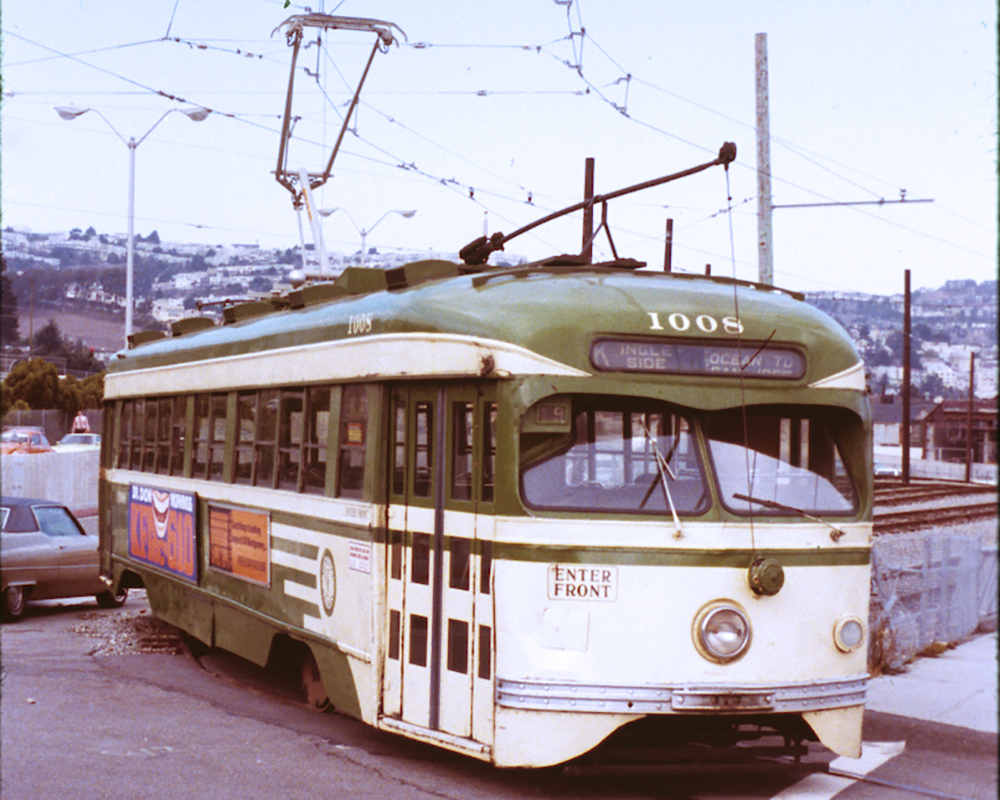
Streetcar 1008 painted green and cream colors with pantograph installed in place of trolley pole.

This photo taken in the mid 1970s shows the “green and cream wings” livery once worn by hundreds of Muni vehicles. This car was delivered to Muni in 1948 and still operates today.

A New Look in “Maroon and Gold”: 1969-1975

Following the green and cream colors came a short-lived but notable paint scheme came in 1969. Muni was trying to revamp its look and introduced the “Maroon and Gold” paint job with a new logo and driver uniforms. The styling of the new logo and maroon color were borrowed from the California Street Cable Cars but first used on brand new buses from General Motors.

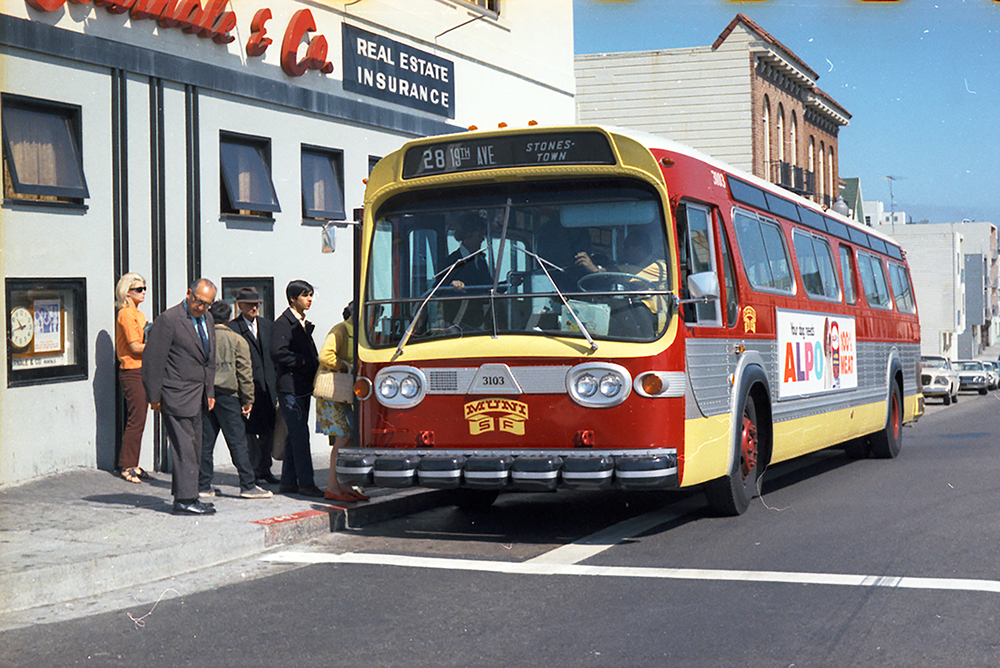
People boarding Muni bus painted red and yellow on 19th avenue.

This photo from 1969 shows a new GM bus with Muni’s fresh logo and paint job. Today, Muni has one of this type of bus in its vintage bus fleet.

“Sunset” Livery Rebrands Muni: 1975-1995

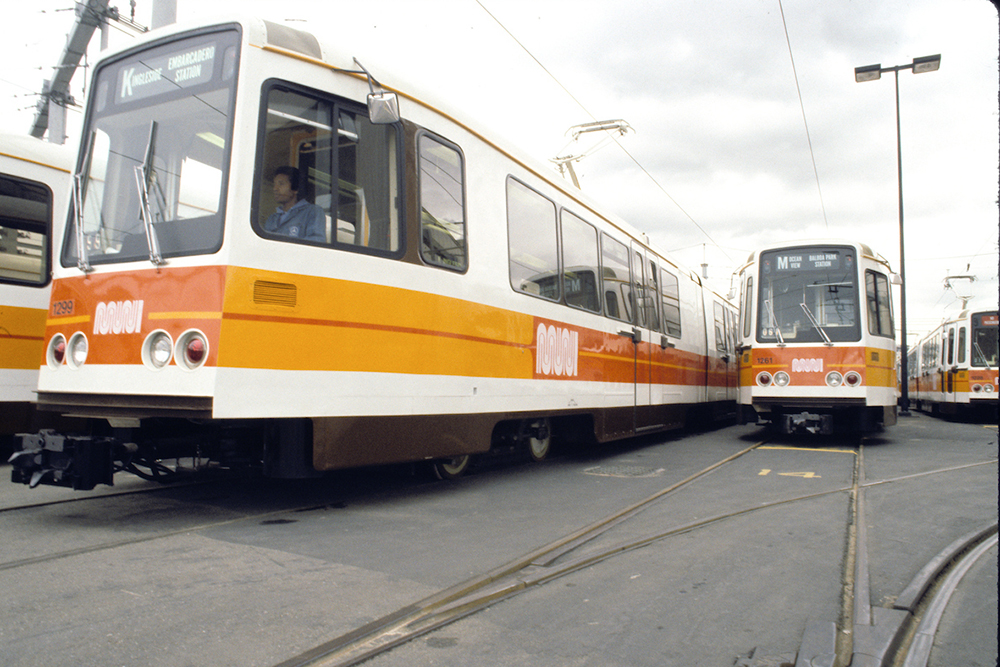
Perhaps one of the most well-known paint schemes was the “Sunset” livery unveiled in 1975. This time, Muni contracted with the world-famous advertising company Walter Landor & Associates for a complete branding package. The new look included everything from a squiggly “Worm” logo, vehicles painted white with “California Poppy” and “Sunset Glow” stripes, new bus stop signage, and matching brown driver uniforms. The new brand was launched at a perfect time. Hundreds of new buses and trains were coming in and Muni was about to open the Muni Metro subway system. Together, these changes really gave riders a fresh, modern transit system.

Muni light rail vehicles painted white, orange, and yellow in rail yard.

Muni’s new 1975 colors were meant to provide a clean look for the system.  Today, many riders remember this paint scheme and logo with nostalgia.

Returning to the Roots with “Silver & Red”: 1995-Present

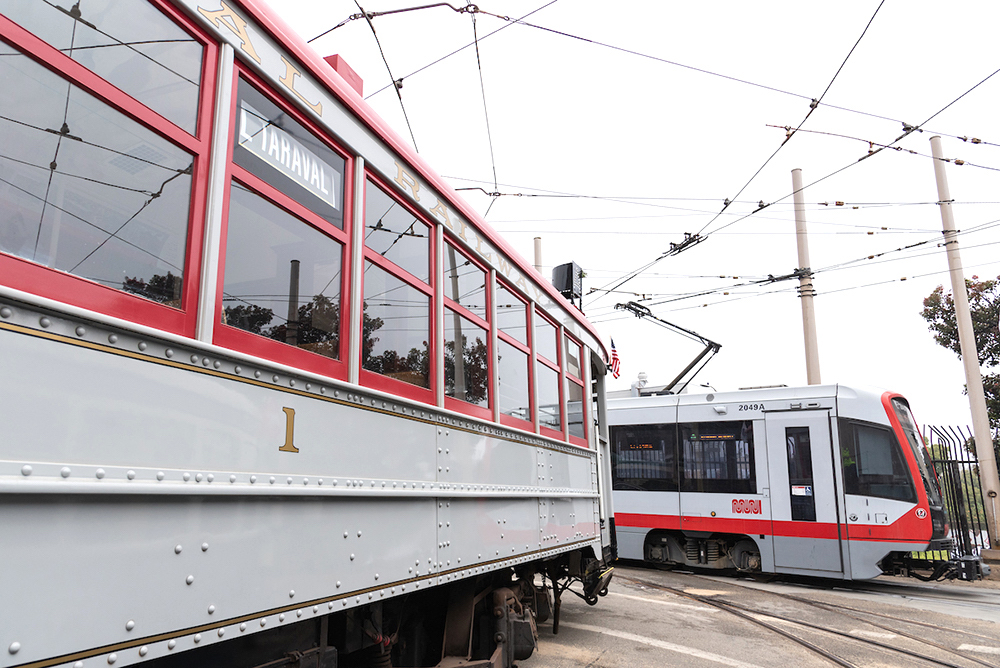
Starting in 1995, Muni returned to its roots with a revised version of the original grey and red color scheme. First used on new light rail vehicles known as “Breda” cars, the new paint features silver with red striping. These colors were phased in over nearly two decades in three variations, depending on the type of vehicle. Today, every bus and rail car in the system, excluding historic vehicles, uses the silver and red look.

Streetcar 1 and LRV in rail yard, both painted in grey and red.

While the colors today fit right in with the modern era, they harken back to the original grey and red of Muni’s very first streetcar.

Aside from the six major color combinations listed here, there were at least five more that have been used at one time or another. Some of these were variations on the main color theme and others were used only on certain vehicles.


Published August 30, 2022 at 12:42AM
https://ift.tt/SoeFjrQ

Friday, August 12, 2022

How Improving Muni Also Makes Life Better for Drivers

How Improving Muni Also Makes Life Better for Drivers
By Andrea Buffa

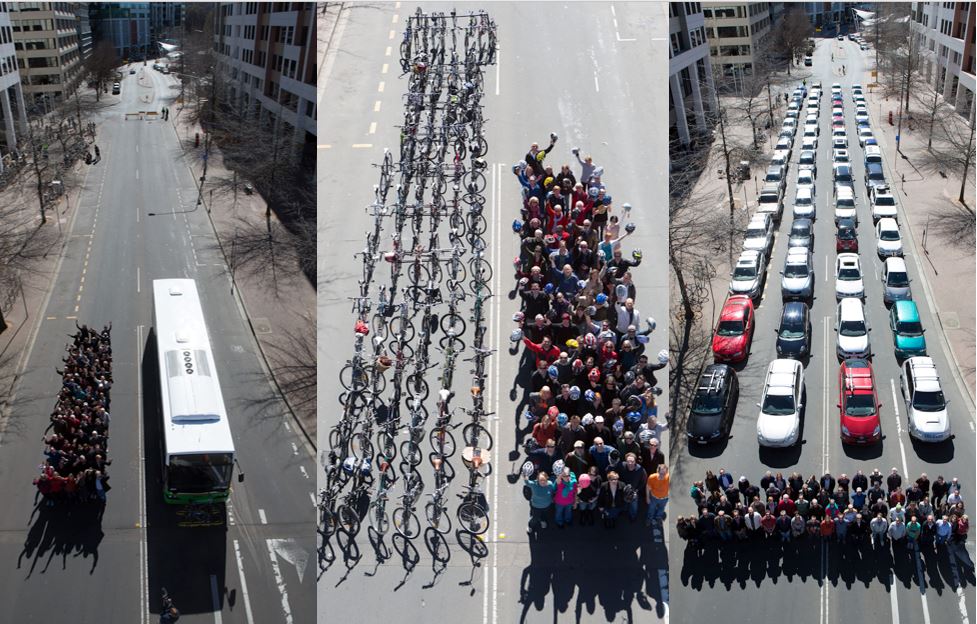
Side-by-side photos of people on a bus, on bikes and in cars; showing a lot more space on road when people use bikes or buses.

Photo credit: We Ride Australia

If you mostly drive to get around San Francisco, you may be wondering, “what has the SFMTA done for me lately?” San Francisco is a “transit first” city, so at the SFMTA we focus our resources on making it easier for San Franciscans to get around by public transit as well as by biking, walking and personal mobility device. While it may seem like adding transit lanes and protected bike lanes doesn’t have anything to do with driving, in fact, it does. 

Since San Francisco doesn’t have room to give more space to roads, we have to change the way we use the limited space on our existing streets. (Not that adding more roads reduces traffic anyway – check out this article.) City Traffic Engineer Ricardo Oleo puts it this way: “When you have a city like San Francisco that was built with density in mind, having everyone drive is not a viable option. There’s not enough room to have that happen. It’s not geometrically possible. You’d have debilitating amounts of congestion without Muni.” 

A well-designed city gives people choices. The many San Franciscans who already do choose to take Muni, walk or bike to get around are taking some pressure off the city's roadways. Imagine if everyone on the 49 Van Ness/Mission that’s zipping down the new Van Ness Bus Rapid Transit corridor were instead driving on Franklin and Gough. That would translate into another 21,000 cars in traffic on a typical day! And think about what congestion would look like on Fell Street if the hundreds of people who use the protected bike lanes there were behind the wheel of a car? 

Every person who takes Muni to get to the Chase Center, their workplace or their doctor’s appointment is one fewer car on the road. So, everything we do to make Muni more appealing—whether it’s transit lanes, new buses or smart traffic signals that give transit priority —is also good for drivers.  

Every person who walks, bikes or hops on an electric scooter to get to Golden Gate Park or pick up something at the local pharmacy is one fewer car that needs a parking space. So, everything we do to make it safer and more appealing to use active forms of transportation is also beneficial for the people who do need to drive to those destinations. 

Bikes take up far less space on the road than cars, and Muni buses and trains can transport a significant number of people in a compact space. 100 people traveling in personal vehicles take up 4,500 square feet. The same 100 people on bikes takes up about 1,200 square feet. And if they were all in a bus? They would take up only 520 square feet. They would also be responsible for far fewer greenhouse gas emissions. 

Reducing greenhouse gas emissions is a priority for the SFMTA and the city of San Francisco. But we realize most people make travel decisions based on their personal lives – not on San Francisco’s climate action plan. As a transportation agency, our job is to make transit, walking and rolling the best travel options for more people. If we’re able to do that, we’ll help fight the climate crisis and simultaneously improve the driving experience for people who still need to drive.  


Published August 12, 2022 at 11:16PM
https://ift.tt/zfOx0v9

Friday, August 5, 2022

Bayshore Boulevard Quick-Build Project Update

Bayshore Boulevard Quick-Build Project Update
By Adrienne Heim

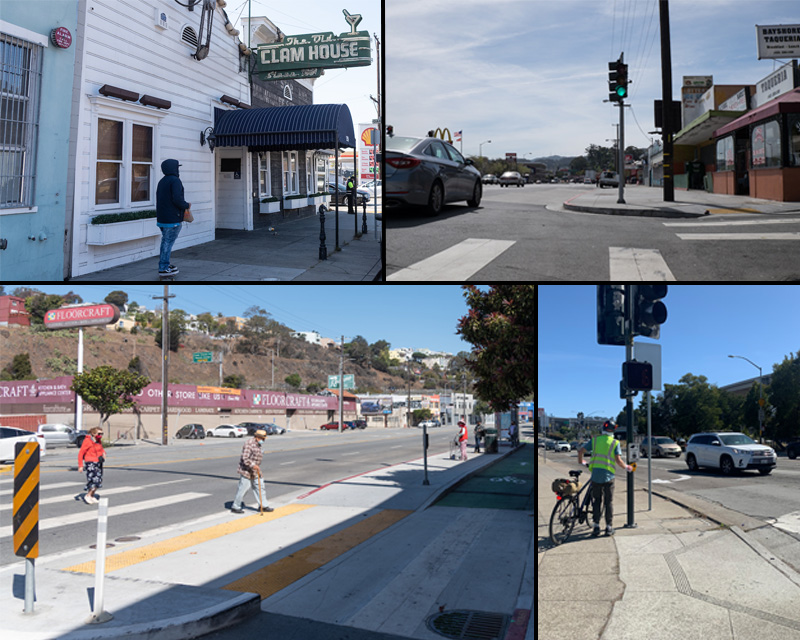
Bayshore Boulevard is a mixture of industrial and commercial ruggedness mixed with historic and family run small business charm. Bayshore Boulevard is also a busy street that runs parallel to Highway 101 and is nestled between Bayview, Bernal Heights, Potrero Hill and Mission neighborhoods. Interestingly enough, one of the oldest restaurants in San Francisco, The Old Clam House, built in 1861 and recently re-opened after two years of closure due to the pandemic and management changes. As you begin to walk Bayshore and Oakdale heading south towards Silver Avenue, you’ll see workers grabbing food and saying hi to owner Tarik at Bayshore Taqueria, you’ll notice parents dropping off their children at the family run business American Gymnastics Club and folks walking to catch the 9 or 9R Bayshore or 23 Monterey Muni bus. For over 30 years, people have been visiting legacy business Flowercraft Garden Center, near Bayshore and Cortland to decorate their homes, patios and backyards with native plants and its sister business Floorcraft, who’ve been in business since 1941. Not only that, but you’ll also see people walking their carts or crates filled with aluminum and glass bottles to family run business Our Planet Recycling Center or folks biking around Bayshore and Industrial.

top left is Old Clam House, then top right Bayshore Taqueria, bottom left is Floorcraft and Muni customers waiting to board at Bayshore and Cortland. Last photo (bottom right) is a bicyclists waiting to cross Industrial at Bayshore.

Bayshore Boulevard has a lot of vehicle/pedestrian/bike activity given all the small and big box businesses sprinkled along the corridor and its important role as a major connector to the north and south sections of San Francisco. The corridor is on the Vision Zero SF High Injury Network, which means 75% of the city’s traffic injuries and fatalities occur on just 13% of San Francisco streets. From 2015 to 2021, 98 traffic collisions have been reported on Bayshore Boulevard between Silver and Jerrold avenues. A total of 11 bicycle-vehicle collisions resulted in four severe injuries and 10 total pedestrian-vehicle collisions resulted in two severe injuries. A few months ago, a fatality occurred between a motorcyclist and another vehicle near Bayshore and Flower.

Mode Collisions

Bike Icon

Bike

11 total collisions with four severe injuries.

Walk Icon

Walk

10 total collisions with two severe injuries.

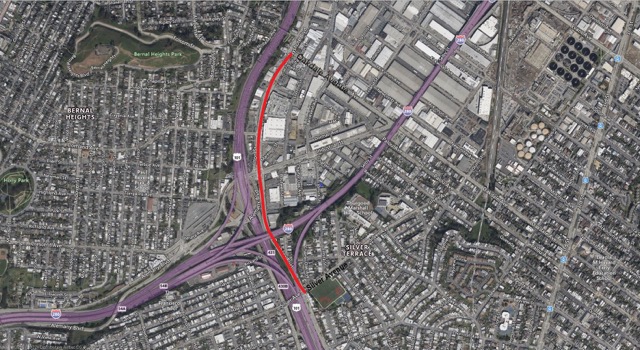
To improve access and safety for people walking and bicycling on Bayshore Boulevard, the SFMTA is proposing a quick-build project on Bayshore Boulevard from Silver to Oakdale avenues (Section 1) and potentially improvements in the future on Bayshore Boulevard from Oakdale to Jerrold avenues (Section 2).

Extant of the quick-build project on Bayshore Boulevard from Silver to Oakdale avenues (Section 1) and potentially improvements in the future on Bayshore Boulevard from Oakdale to Jerrold avenues (Section 2).

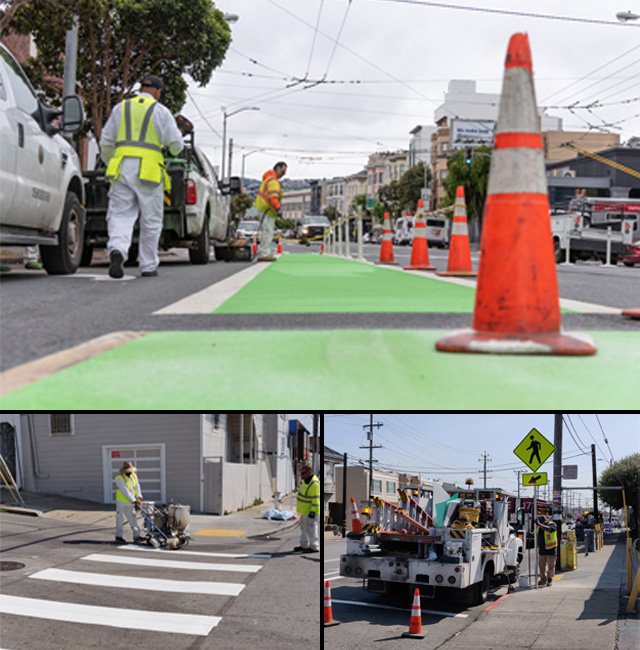
A quick-build project increases safety for all users of Bayshore Boulevard by implementing relatively fast improvements with inexpensive treatments within months, such as: 

  • Paint
  • Traffic delineators
  • Street signs
  • Parking and loading adjustments 

SFMTA Shop Staff painting a bike lane, Shop staff painting a crosswalk, Shop staff installing a pedestrian crossing sign.

The project is then evaluated within 24 months after construction is completed through the Safe Streets Evaluation Program to understand whether the transportation safety treatments are working, need to be revised or removed.   

In May and June, the Bayshore Quick-Build team connected with businesses and stakeholders who use the corridor and there were several takeaways:

  • Unsafe vehicle speeds on the Bayshore 
  • Need for greater protection between the vehicle travel lane and bike lane
  • Need for improved pedestrian and bike safety 
  • Need for improved neighborhood connections by bike

Comments from our survey include:

“Walking in that area is awful today and generally I just feel unsafe if I am not in a car.”
"This is not supposed to be a freeway! It is not safe as it is now and inspires unsafe driving and speeding.”
“I am more concerned about the bike connections north to south. I would love to be able to bike on Bayshore more, but the connections are horrible.”

Based on the feedback received, the project team is considering refinements to the project proposal and will continue to provide updates to all project stakeholders.

The current project timeline includes:

Section 1 (Bayshore Blvd. from Silver to Oakdale Avenues)

  • July to August 2022 – Round 2 Community Outreach and Final Design (showcase the final proposed project design and answer questions). 
  • Summer/Fall 2022 – Approvals/ Legislation for Section 1 – Bayshore Boulevard from Silver to Oakdale avenues (Public Hearing anticipated in late September)
  • Fall 2022 – Construction begins on Section 1 – Bayshore Boulevard from Silver to Oakdale avenues 

Section 2 (Bayshore Blvd. from Oakdale to Jerrold Avenues)

Section 2 will be further analyzed and potentially become part of a future project where the needs of the roadway can be better met through longer-term, capital construction work. 
Stay tuned to see what is in store for a safer Bayshore Boulevard for all users. 
Learn more about the project and subscribe to project updates by visiting the Bayshore Boulevard Quick-Build Project.


Published August 05, 2022 at 11:36PM
https://ift.tt/A6ZIbUt

Photo Exhibit Event: Vintage Bus Display and Tour

Photo Exhibit Event: Vintage Bus Display and Tour By Jeremy Menzies Join us Saturday, Jan. 27 at a special event for our exhibit, " 1...