Wednesday, July 29, 2020

In-person Lifeline Pass Sales to Resume in August

In-person Lifeline Pass Sales to Resume in August
By Sophia Scherr

As in-person sales of the Lifeline pass are set to resume on August 21, 2020, changes to the Lifeline program are also underway. As the state of emergency persists, a new online application process has been launched and changes are being made to locations where the passes can be purchased.

Lifeline is a Muni-only monthly pass for customers with limited incomes. Lifeline customers get unlimited access to Muni service for a calendar month at a 50% discount off the standard adult monthly pass price. Individuals with a gross annual income, also known as income before taxes, at or below 200% of the Federal Poverty level are eligible to receive the Lifeline pass. Currently, Lifeline program applications and requests for replacement cards are still being accepted online or by mail, and expired Lifeline passes have been extended until April 2022.

Lifeline pass holders may also qualify Clipper’s START program, a new regional discount program that provides a 50% single ride fare discount to those who qualify for Lifeline. Clipper START is a great option if you qualify for Lifeline, but don't ride enough to need a monthly pass.

New Application Process

A new online application has been developed for people trying to get a Lifeline pass and those seeking replacement cards, that allows pass holders to securely upload necessary income certification. Once an application is approved, Lifeline pass holders receive a receipt via e-mail that may be used for proof of payment for two weeks (to allow time to mail the program card). The photo element of the Lifeline ID card is also being eliminated to allow online and by-mail applications.

In addition to existing eligibility options such as Medi-Cal or EBT cards, etc., proof of receipt of—or application for—unemployment insurance will also be accepted. For those unable to provide documentation, a self-certification of income will be accepted, with acknowledgement that the application may be subject to audit.

Customers whose eligibility is established through unemployment or self-certification will receive a one-year Lifeline pass. Self-certification will apply to all SFMTA low-income programs (boot, tow, payment plans, etc.).

Lifeline Sales Locations

There are changes to where you can buy your Lifeline pass. Lifeline passes are also now available for purchase via MuniMobile for those that have a valid Lifeline ID. However, due to capacity limitations, Lifeline pass sales will be discontinued at the Human Services Agency’s (170 Otis Street) office, as well as the SFMTA Customer Service Center (11 South Van Ness Ave).

Lifeline passes will be sold seven days a week, from 8:00 a.m. to 8:00 p.m. at the following SFMTA kiosk locations:

  • Presidio Avenue and Geary Boulevard
  • Powell and Market Streets
  • Bay and Taylor Streets

Lifeline passes are also being sold at the locations listed below:

  • EVS Enterprises, LLC (Photo Focus) - 1100 Stockton Street
  • Visitacion Valley Pharmacy - 100 Leland Avenue
  • Lucky Spot - 1944 Irving Street

Visit www.sfmta.com/lifeline for information on operating hours.


Published July 30, 2020 at 04:52AM
https://ift.tt/338lFOE

Tuesday, July 28, 2020

Safe Streets 2019 Year End Report

Safe Streets 2019 Year End Report
By

The Results Are In!

Over the course of 2019, the SFMTA implemented a record number of pedestrian, bicycle and traffic calming projects. But our goal is not only to deliver projects, but to make our streets safer and more comfortable for all San Franciscans. SFMTA’s Safe Streets Evaluation Program is sharing  our annual Safe Streets Evaluation Report which takes stock of last year’s progress as well as lessons learned.

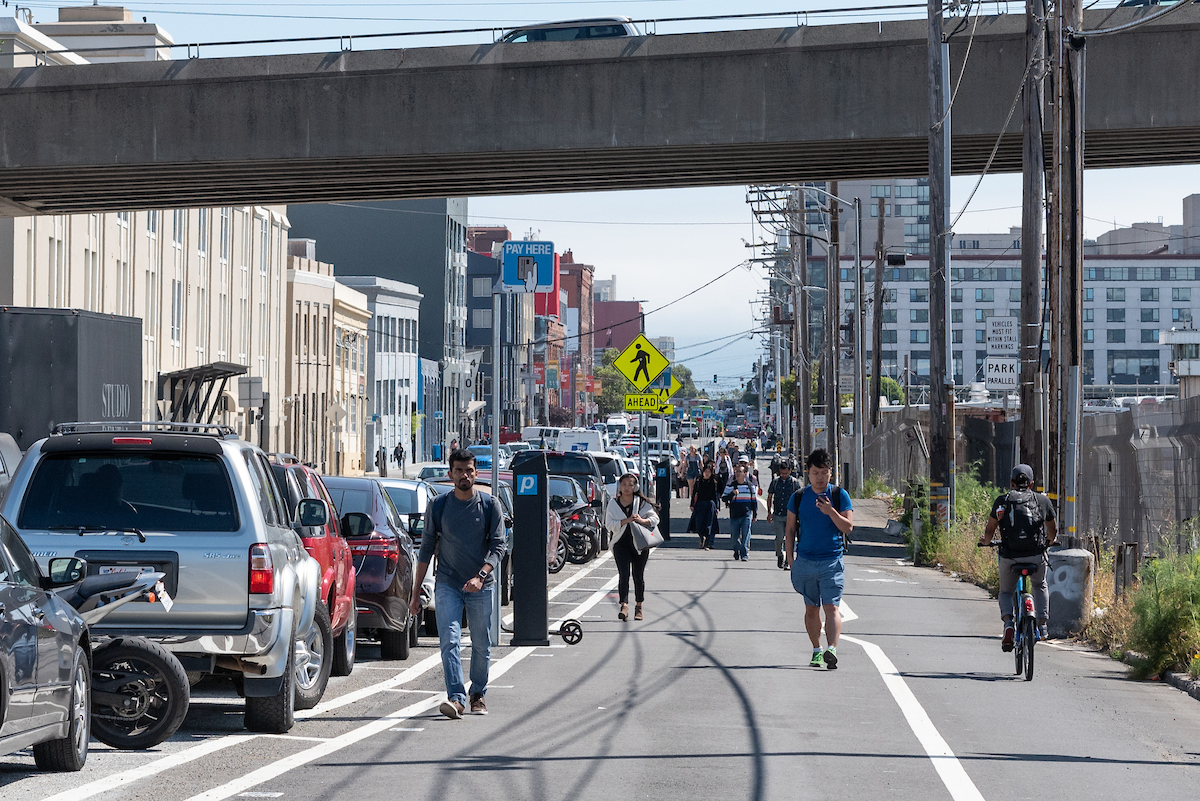
People walking under the freeway in the afternoon
Pedestrians and bicyclist using the bike lane and pedestrian walkway along Townsend Street on June 13, 2019

Under the direction of Mayor London Breed, the SFMTA initiated the Vision Zero Quick-Build Program. This program represented reduced barriers for SFMTA to install pedestrian and bicycle safety improvements on the city’s High Injury Network.

Quick-build projects offer opportunities to take community feedback in real time and make design changes as needed. These projects can be put in the ground in as little as 10 percent of the time and cost as our traditional infrastructure projects, such as Masonic Avenue and 2nd Street.

A key part of the quick-build program is evaluating these fast-tracked projects so we can make the adjustments as we learn more; this report reviews some completed quick-build projects such as 7th Street, 6th Street and Taylor Street.

In addition to the quick build projects, we also evaluated the effectiveness of dozens of city-wide safety measures and corridor projects.  

So…How Are We Doing?

Overwhelmingly, quick-builds, traditional corridor projects and citywide countermeasures completed in 2019 provide clear safety benefits:

  • Corridor pedestrian safety projects reduce vehicle speeds and provide improved loading experiences.
  • Proactive, neighborhood-wide traffic calming leads to reduced vehicle speeds on the City’s residential streets.
  • Protected bike facilities decrease blockages of bike lanes, and nearly eliminate mid-block vehicle-bike conflicts such as near-dooring incidents.
  • Separated bike signals keep turning vehicles from causing conflicts with bicyclists in protected lanes.
  • Through our surveying efforts, we heard from community members from different demographic backgrounds. While we have some things to improve on, new and improved bicycle and pedestrian facilities make people feel safer and more comfortable.

Just as importantly, we are also learning what doesn’t work:

  • While providing safety improvements in addition to public realm benefits, large capital streetscape projects have long timelines and high price tags. Large capital projects should be accompanied by quick-build efforts to implement changes as soon as possible.
  • Partially raised bikeways, especially on commercial corridors, have issues such as bike lane blockage – partially raised bikeways do not provide enough of a barrier to deter cars from the bike lane.
  • We need more reporting on equity. While we improved our survey methods and techniques to better represent a wider demographic and socio-economic range of users, our program must go further. We need metrics that specifically measure equity and inclusivity through the process through implementation.

What’s Next?

Given the many changing parts of the social and physical infrastructure in this year,  our pedestrian and bicycle safety efforts in 2020 will need to be evaluated, analyzed, and assessed in very different ways than previous years. We are considering new evaluation goals to understand what works on our streets within the constraints and unique characteristics of the pandemic and the intersecting racial equity movement.


Published July 29, 2020 at 04:12AM
https://ift.tt/3g9mA5f

Monday, July 27, 2020

Clipper launching START Pilot Discount Program

Clipper launching START Pilot Discount Program
By Sophia Scherr

Clipper START Muni Car Card that says "50% off Muni fares for eligible riders. Start saving with Clipper START. Discounts for signle-ride fares only (no monthly passes). You must be a San Francisco Bay Area resident age 19-64 and meet certain income requirements to be eligible

Clipper is excited to launch the START Pilot Program in collaboration with the SFMTA and other Bay Area transportation agencies (BART, Caltrain and Golden Gate Transit and Ferry). Designed to make transportation more affordable for low-income residents, the Clipper START pilot program moves toward a consistent fare discount standard for the Bay Area region. The discount pilot program will last for 18 months while the program is evaluated. SFMTA has committed to continue to offer the discount after the pilot period ends.

To design, implement and evaluate this pilot program, the SFMTA is working with Clipper, the Metropolitan Transportation Commission (MTC), BART and Golden Gate Transit—as well as community-based organizations, social services and public health sectors.

Am I eligible for the pilot Clipper START Program? How do I apply?

Adults ages 19 to 64 who have a household income of up to 200% of the Federal Poverty Level (approximately $50,000 per year for a family of four) can qualify for the Clipper START discount. Applicants will need to provide proof of eligibility in the form of copies of EBT cards, Medi-Cal cards or tax returns. Participants must also live in the 9-county San Francisco Bay Area.  Income levels and eligibility are available online – see www.clipperstartcard.com for details.

Eligible participants will be able to apply online, mail or fax using a paper applicationOnce eligibility is verified, participants will be mailed a special Clipper card to use to receive the discount. This Clipper Card will show the participant’s name and will look like a regular Clipper Card.

What kind of discount will be offered?

Clipper START pilot participants will receive discounts for single rides on participating agencies. Participants riding Muni will receive a 50% discount each single ride purchased. Discounts vary by agency:

  • MUNI: 50% discount; single rides
  • Caltrain: 50% discount
  • BART: 20% discount
  • Golden Gate Transit and Ferry: 50% discount

If I am a Lifeline customer, should I get Clipper START?

For Lifeline customers who take fewer than 32 trips per month, this option is costs less than buying a monthly Lifeline pass.

 What if I have a pass given to me by a social service program, such as Lifeline?

The discount will only apply to fares paid on single rides (including transfers). It does not apply to Muni passes. Our pass programs, including our free and reduced pass programs, are still available. However, the discount does not apply to them.

Where can I find more information?

More information is available online at www.clipperstartcard.com. The SFMTA is working with community-based organizations, social services and public health agencies to help sign up customers and spread the word about the program once it becomes available.


Published July 28, 2020 at 05:42AM
https://ift.tt/2X1uJB8

Friday, July 24, 2020

Advocacy works! Recognizing the 30th Anniversary of the Americans with Disabilities Act

Advocacy works! Recognizing the 30th Anniversary of the Americans with Disabilities Act
By Jonathan Cheng

This week marks the 30th anniversary of the signing of the Americans with Disabilities Act (ADA). In 1990, the ADA made clear that public transit must be fully accessible to persons with disabilities. The SFMTA continues its commitment to developing a more comprehensive accessible transportation network including improving accessible bus, rail and paratransit services. As we reflect on thirty years of the ADA creating a more accessible transportation system, we also recognize there are many opportunities that lie ahead.

The ADA clearly mandated that both transit service accessibility and paratransit were an obligation of all transit agencies in the nation and moved the needle forward in terms of accountability. However, Muni’s commitment to providing access for seniors and persons with disabilities accessibility predates the ADA. Muni started to purchase buses with wheelchair lifts and initiated a paratransit van and taxi program to for people not able to use bus and rail service in the late 70’s and early ‘80’s.

The ADA came out of the work of the Disability Rights movement and years of protests

Disabled advocates in the Bay Area have long been on the forefront of demanding civil rights for persons with disabilities. As we celebrate 30 years of the ADA and are in the midst of the Black Lives Matter civil rights movement, it’s important to remember how important advocacy and the participation of people with disabilities was to the, passage and implementation, of the ADA.

Congress passed the Rehabilitation Act in 1973. A section of that law, Section 504, stated that any entity that receives any federal money may not discriminate against persons with disabilities. However, by 1977, the rules and regulations to implement Section 504 had yet to be written, so for all intents and purposes, the law had not taken effect.

In April 1977, advocates with disabilities around the country organized demonstrations in frustration. The largest demonstration in the country occurred at the San Francisco Federal Building, with a sit-in lasting for 28 days. More than 100 people sat in at that demonstration. The success of these protests spurred the federal government to further define the Section 504 requirements.

In the following years, however, there was a lack of progress nationwide to make public transit accessible. During the 1980s, advocacy groups held protests at the American Public Transit Association conventions. This determined advocacy eventually led to the much more comprehensive Americans with Disabilities Act of 1990.

Advocacy and prioritizing mobility and accessibility for those who have the fewest transportation choices has made the San Francisco Bay Area a leader both in advocating for and in delivering comprehensive transportation services for seniors and individuals with disabilities. Some of the accessibility-related projects completed at Muni and the SFMTA include:

  • Constructed a network of accessible rail stops on the surface Muni Metro system
  • 100% of Muni bus fleet accessible
  • Innovative accessibility provided to Historic Streetcars, F and E lines
  • First fully accessible T Third Metro line opened
  • Accessible ramped taxis made available for wheelchair users
  • Paratransit Taxi Debit Card introduced for easier payment
  • Shop-a-Round - community grocery, and Van Gogh - cultural activity, Van Services introduced
  • Launched Free Muni for Seniors and People with Disabilities who are low/moderate income
  • Introduction of the Essential Trip Card to address mobility needs during pandemic for older adults and people with disabilities.

Accessibility and Equity – Striving to Do More for Those Who Need It Most
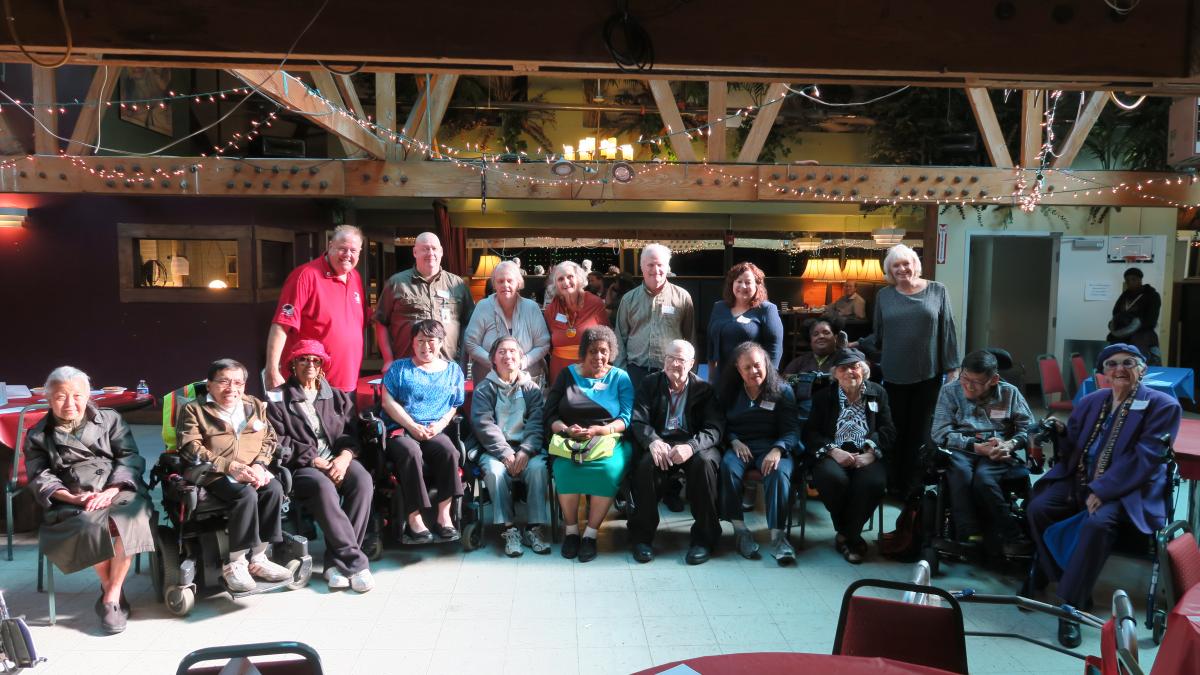
photo of a SFMTA Paratransit Coordinating Council meeting or SFMTA Paratransit Coordinating Council, advocates at work. Photo by Roland Wong

Photo of the SFMTA Paratransit Coordinating Council, advocates at work. Photo by Roland Wong

Amidst the current COVID-19 pandemic, equity and accessibility remain cornerstones of the SFMTA’s mission and guide the agency through these difficult and uncertain times. The SFMTA has been proactive in implementing and communicating practices and policies that address accessibility.  For example, while we have implemented rear door boarding on Muni buses, we have clearly maintained front door boarding for those with disabilities or seniors needing the lift, ramp or kneeler.  

When Muni bus and rail operations had to reduce service in response to the COVID-19 health crisis, the SFMTA recognized that older adults and those with disabilities would experience greater difficulty getting to the Core Service routes. The Essential Trip Card (ETC) program was developed to provided seniors and persons with disabilities with a subsidized $60 monthly allotment to use taxi service to complete their essential trips. As of July 24, more than 2,250 persons have enrolled.

As we continue through the COVID-19 pandemic, SF Paratransit continues to be fully operational and connect riders to the community, providing transportation to fulfill essential trip needs, such as for dialysis treatments, medical appointments, and grocery shopping. Much like Muni, SF Paratransit quickly implemented key preventative measures, ranging from increased cleaning of vehicles, providing personal protective equipment kits to van drivers, and limiting the number of individuals on an SF Paratransit van to maintain physical distancing. 

SFMTA Taxi Services also worked to ensure taxi drivers were provided with, cleaning supplies, PPE kits, and taxi “bubbles” - a plastic shield between the front and back seat to serve as a physical barrier, to best serve taxi customers during the pandemic. As the current situation continues to evolve, the SFMTA and SF Paratransit will continue to prioritize mobility and accessibility for those with the fewest transportation choices.

As we celebrate the ADA’s 30th anniversary, the spirit of the law remains more important than ever. The current COVID-19 pandemic exemplifies the resilience of San Franciscans to collaborate and develop inventive solutions. The SFMTA continues to work on new projects and technologies, such as integrating the updated Clipper Card program to serve as a form of payment for the SF Paratransit program, improving the accessibility of new emerging mobility technologies such like transportation network companies, autonomous vehicles, and scooters. As we look forward to the future, the SFMTA will continue its mission to connect all San Franciscans through a safe, equitable and sustainable transportation system.


Published July 25, 2020 at 05:24AM
https://ift.tt/2BwY3be

Advocacy works! Recognizing the 30th Anniversary of the Americans with Disabilities Act

Advocacy works! Recognizing the 30th Anniversary of the Americans with Disabilities Act
By Annette Williams

This week marks the 30th anniversary of the signing of the Americans with Disabilities Act (ADA). In 1990, the ADA made clear that public transit must be fully accessible to persons with disabilities. The SFMTA continues its commitment to developing a more comprehensive accessible transportation network including improving accessible bus, rail and paratransit services. As we reflect on thirty years of the ADA creating a more accessible transportation system, we also recognize there are many opportunities that lie ahead.

The ADA clearly mandated that both transit service accessibility and paratransit were an obligation of all transit agencies in the nation and moved the needle forward in terms of accountability. However, Muni’s commitment to providing access for seniors and persons with disabilities accessibility predates the ADA. Muni started to purchase buses with wheelchair lifts and initiated a paratransit van and taxi program to for people not able to use bus and rail service in the late 70’s and early ‘80’s.

The ADA came out of the work of the Disability Rights movement and years of protests

Disabled advocates in the Bay Area have long been on the forefront of demanding civil rights for persons with disabilities. As we celebrate 30 years of the ADA and are in the midst of the Black Lives Matter civil rights movement, it’s important to remember how important advocacy and the participation of people with disabilities was to the, passage and implementation, of the ADA.

Congress passed the Rehabilitation Act in 1973. A section of that law, Section 504, stated that any entity that receives any federal money may not discriminate against persons with disabilities. However, by 1977, the rules and regulations to implement Section 504 had yet to be written, so for all intents and purposes, the law had not taken effect.

In April 1977, advocates with disabilities around the country organized demonstrations in frustration. The largest demonstration in the country occurred at the San Francisco Federal Building, with a sit-in lasting for 28 days. More than 100 people sat in at that demonstration. The success of these protests spurred the federal government to further define the Section 504 requirements.

In the following years, however, there was a lack of progress nationwide to make public transit accessible. During the 1980s, advocacy groups held protests at the American Public Transit Association conventions. This determined advocacy eventually led to the much more comprehensive Americans with Disabilities Act of 1990.

Advocacy and prioritizing mobility and accessibility for those who have the fewest transportation choices has made the San Francisco Bay Area a leader both in advocating for and in delivering comprehensive transportation services for seniors and individuals with disabilities. Some of the accessibility-related projects completed at Muni and the SFMTA include:

  • Constructed a network of accessible rail stops on the surface Muni Metro system
  • 100% of Muni bus fleet accessible
  • Innovative accessibility provided to Historic Streetcars, F and E lines
  • First fully accessible T Third Metro line opened
  • Accessible ramped taxis made available for wheelchair users
  • Paratransit Taxi Debit Card introduced for easier payment
  • Shop-a-Round - community grocery, and Van Gogh - cultural activity, Van Services introduced
  • Launched Free Muni for Seniors and People with Disabilities who are low/moderate income
  • Introduction of the Essential Trip Card to address mobility needs during pandemic for older adults and people with disabilities.

Accessibility and Equity – Striving to Do More for Those Who Need It Most

photo of a SFMTA Paratransit Coordinating Council meeting or SFMTA Paratransit Coordinating Council, advocates at work. Photo by Roland Wong

Photo of the SFMTA Paratransit Coordinating Council, advocates at work. Photo by Roland Wong

Amidst the current COVID-19 pandemic, equity and accessibility remain cornerstones of the SFMTA’s mission and guide the agency through these difficult and uncertain times. The SFMTA has been proactive in implementing and communicating practices and policies that address accessibility.  For example, while we have implemented rear door boarding on Muni buses, we have clearly maintained front door boarding for those with disabilities or seniors needing the lift, ramp or kneeler.  

When Muni bus and rail operations had to reduce service in response to the COVID-19 health crisis, the SFMTA recognized that older adults and those with disabilities would experience greater difficulty getting to the Core Service routes. The Essential Trip Card (ETC) program was developed to provided seniors and persons with disabilities with a subsidized $60 monthly allotment to use taxi service to complete their essential trips. As of July 24, more than 2,250 persons have enrolled.

As we continue through the COVID-19 pandemic, SF Paratransit continues to be fully operational and connect riders to the community, providing transportation to fulfill essential trip needs, such as for dialysis treatments, medical appointments, and grocery shopping. Much like Muni, SF Paratransit quickly implemented key preventative measures, ranging from increased cleaning of vehicles, providing personal protective equipment kits to van drivers, and limiting the number of individuals on an SF Paratransit van to maintain physical distancing. 

SFMTA Taxi Services also worked to ensure taxi drivers were provided with, cleaning supplies, PPE kits, and taxi “bubbles” - a plastic shield between the front and back seat to serve as a physical barrier, to best serve taxi customers during the pandemic. As the current situation continues to evolve, the SFMTA and SF Paratransit will continue to prioritize mobility and accessibility for those with the fewest transportation choices.

As we celebrate the ADA’s 30th anniversary, the spirit of the law remains more important than ever. The current COVID-19 pandemic exemplifies the resilience of San Franciscans to collaborate and develop inventive solutions. The SFMTA continues to work on new projects and technologies, such as integrating the updated Clipper Card program to serve as a form of payment for the SF Paratransit program, improving the accessibility of new emerging mobility technologies such like transportation network companies, autonomous vehicles, and scooters. As we look forward to the future, the SFMTA will continue its mission to connect all San Franciscans through a safe, equitable and sustainable transportation system.


Published July 25, 2020 at 05:24AM
https://ift.tt/2BwY3be
Thursday, July 23, 2020

Valencia Street and Grant Street: The first two “Shared Spaces” Street Closures 

Valencia Street and Grant Street: The first two “Shared Spaces” Street Closures 
By Phillip Pierce

To expand public space for physically distanced outdoor dining, retail and mobility, the city’s Shared Spaces program will close parts of Valencia Street to traffic starting this week. This temporary repurposing of Valencia Street from Thursdays to Sundays is similar to another zone created on Grant Street in Chinatown on weekends. 

Valencia and Grant streets are the first two full street closures in the Shared Spaces program, initiated by Mayor Breed to support the economic and social recovery of neighborhood businesses. 

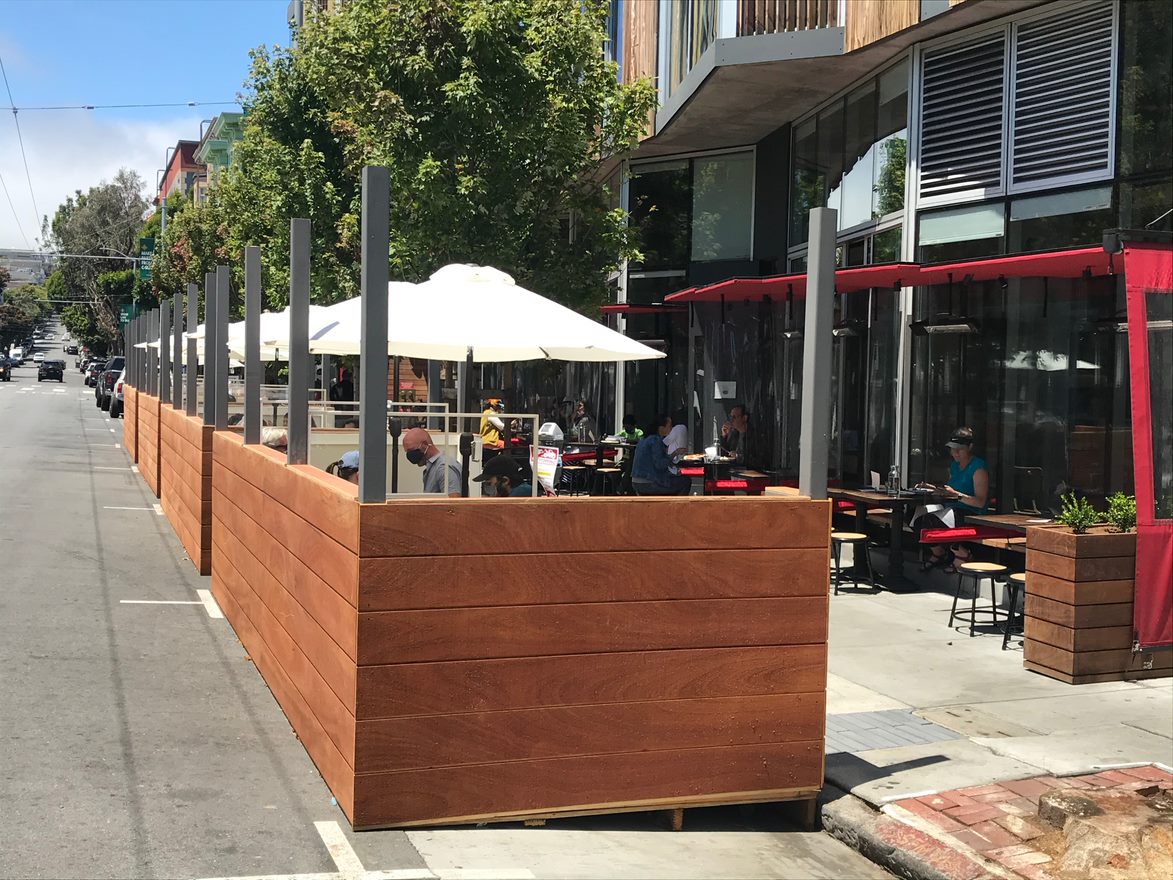
 A shared space in front of a Mano restaurant

a Mano restaurant in Hayes Valley using the area in front of their restaurant as a Shared Space.  

A multiagency city program of the Economic Recovery Task Force, the program allows merchants to use sidewalks, full or partial streets, and other nearby public spaces like parks and plazas for restaurant pick-up and other neighborhood retail activity, as allowed by San Francisco’s Public Health Order.  

Valencia Street Shared Space 

Beginning this week and continuing through the fall, each Thursday through Sunday from 4:00 p.m. to 10:00 p.m., the following blocks will be closed to traffic and open for people: 

  • Valencia between 16th and 17th streets  

  • Valencia between 17th and 18th streets (Local traffic and deliveries allowed)  

  • Valencia between 18th and 19th streets 

Local traffic for residents and deliveries will be tightly controlled by ambassadors on Valencia between 17th and 18th streets. All parking for this block will be converted into short-term loading zones for the same hours each week. These loading zones will support take-out food orders, passenger drop-off and pick-up and similar uses. Normal parking will not be allowed on the block during this time. People walking and biking may pass through the entire length of the Shared Space on Valencia from 16th to 19th streets anywhere on the street. 

Grant Street Shared Space 

As of last weekend and through the fall, parts of Grant and Commercial streets in Chinatown will be temporarily closed to traffic every Saturday and Sunday from 8:00 a.m. to 9:00 p.m. Parking along the following blocks is restricted during the operational time and through traffic is advised to use other routes. 

  • Grant between California and Washington streets 

  • Commercial between Kearny Street and Grant Avenue 

The first weekend was huge success and the community looks forward to the coming weekends. As a reminder, these spaces are not for block parties/gatherings and all rules related to physical distancing, face covering, and other public health requirements apply. 

Find Out How Your Business Can Apply for Shared Spaces

For more information on the program or to apply visit the Shared Spaces website. Each application is reviewed by a city committee with representatives from SF Planning, SFMTA, Public Works, the Fire Department and SFPD to ensure it does not interfere with emergency operations, meets accessibility requirements and has a solid operation plan. Business owners self-manage the Shared Spaces and must have plans for public safety and compliance with the Americans with Disabilities Act (ADA).  


Published July 24, 2020 at 04:49AM
https://ift.tt/2D1LYv7

Tuesday, July 21, 2020

Improving Forest Hill Park and Realizing City Sustainability Goals

Improving Forest Hill Park and Realizing City Sustainability Goals
By Jay Lu

Thanks to agency partners, community support and Supervisor Yee, the Forest Hill Irrigation Improvement Project was completed in late June. This project aims to conserve water, increase biodiversity, and improve the park conditions at the Forest Hill transit station.

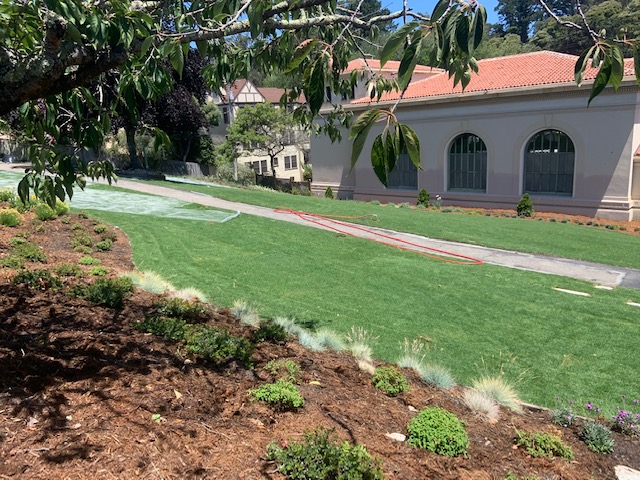
Forrest Hill Station with new sod and irrigation system

Funded by SFMTA and the San Francisco Public Utility Commission’s Large Landscape Grant Program, the project has upgraded the station area’s 40-year-old irrigation system and replaced the existing sod with a new variety that requires less water. The project also introduced drought tolerant and native plants selected with input from the community which will surround the historic Forest Hill station that opened to transit service in 1918.

In addition, a Nature Exploration Area was constructed as part of the project with funding and design by SF Rec & Park. The five-month construction started in February 2020. To give the new sod ample time to establish, the park will remain closed until mid-August.

By saving up to 442,494 gallons of water per year, the project, a multiple city agency collaboration by the SFMTA, SFPUC, Public Works and Rec & Park, supports citywide water conservation, biodiversity and sustainability goals at the Forest Hill Station.

The SFMTA wants to take this opportunity to thank our community partners, Supervisor Yee and our sister agencies for their support in shaping the design and moving the innovative project forward.

For more information, visit SFMTA.com/Foresthillirrigation


Published July 22, 2020 at 01:03AM
https://ift.tt/2WGO6zp

Photo Exhibit Event: Vintage Bus Display and Tour

Photo Exhibit Event: Vintage Bus Display and Tour By Jeremy Menzies Join us Saturday, Jan. 27 at a special event for our exhibit, " 1...