Tuesday, November 21, 2023

Temporary Parking Changes Will Support Valencia Street Businesses

Temporary Parking Changes Will Support Valencia Street Businesses
By Melissa Culross

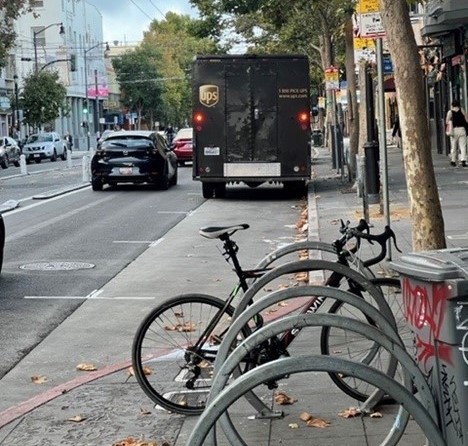
 Parked bicycles on a sidewalk near cars and a delivery truck in a street.

Cars, bicycles and delivery vehicles all share space along Valencia Street. Photo credit: Shayda Haghgoo, SFMTA. 

Valencia Street is home to one of the city's most eclectic and culturally diverse sets of restaurants, shops, nightlife and essential services. The heavily traveled corridor attracts residents and visitors of all ages and interests who get there by walking, biking, rolling and driving.  

As part of our work to make Valencia Street safe and inviting for everyone, we’re making some temporary changes to our loading zones beginning this week to create more general parking on the corridor during the holiday season. These changes will help customers who drive patronize Valencia businesses while keeping the street safe for people on foot, bicycles and scooters. Small businesses are an important part of all that makes San Francisco the incredibly special city that it is, and we all benefit when they succeed. 

In the years since the COVID-19 pandemic hit, the Shared Spaces Program’s parklets and weekend block closures along Valencia have offered a lifeline for businesses and created space for neighbors to come together in joy and community. At the same time, the parklets removed commercial and passenger loading space and parking spaces, and there has been an increase in pick-up and delivery business. The result has been increased competition for limited curb space.  

In response to the concerns of struggling local businesses, we are temporarily adjusting the type and duration of many of the loading zones on Valencia Street between 15th and 23rd streets and on several side streets (18th, 19th, 20th, 22nd) to create more general parking availability in the neighborhood. These temporary changes will be in effect while the project team evaluates permanent curb changes that would be made in early 2024. 

Short-Term Adjustments to Support Small Businesses 

  • We are temporarily turning just over a third (34%) of the loading zones that we recently installed into general parking after 12 noon. 

  • We are also temporarily turning the vast majority (82%) of the new loading zones into general parking after 6 p.m. Previously they ended at 10 p.m. 

  • We are temporarily converting about a third (34%) of the 6-wheel loading spaces into regular commercial loading spaces.  

In addition to on-street parking, the SFMTA operates two garages in the neighborhood: the Mission-Bartlet garage at 3255 21st Street and 16th and Hoff garage at 42 Hoff Street. Parking rates at the Mission Bartlett garage range from $2.00 an hour to $5.00 an hour, depending on the time of day, and the rate at the 16th and Hoff garage is $4.00 an hour (see lists below). Drivers who park in either garage are likely to spend less time looking for a space than those who choose to park on the street, and up-to-date space availability information for the Mission Bartlett garage can be found at our Demand-Responsive Parking Pricing page (SFMTA.com/ParkingRates).  

Mission Bartlett Garage: Open Sunday to Thursday from 7 a.m. to 10 p.m., and Friday to Saturday from 7 a.m. to 12 a.m. Parking rates by time are in the list below: 

  • 12 a.m. to 9 a.m.: $2 per hour. 

  • 9 a.m. to 12 p.m.: $3 per hour. 

  • 12 p.m. to 3 p.m.: $5 per hour. 

  • 3 p.m. to 6 p.m.: $3 per hour. 

  • 6 p.m. to 12 a.m.: $5 per hour. 

16th & Hoff Garage: Open daily from 8 a.m. to 9:30 p.m. Parking is $4 per hour all day. 

Meanwhile, we offer neighborhood businesses the opportunity to purchase parking validation stickers at half price. This allows businesses to offer their customers and employees discounted parking at Mission-Bartlet and Hoff Street garages at a very low cost. Interested merchants can reach out to David Dunham at David.Dunham@sfmta.com or 415.701.4604. 

The Mid-Valencia Bikeway Pilot Project 

We began efforts to improve bikeways along Valencia in 2018 to make the street work better for everyone, and the Mid-Valencia Bikeway pilot project began on August 1, 2023. The pilot includes the following changes: 

  • Center-running bikeway to provide a dedicated and clear path for people on bikes. 

  • Turning restrictions to eliminate or reduce the likelihood of collisions involving turning vehicles. 

  • The restriction of parking near intersections, known as “daylighting,” to help drivers to see people about to cross the street. 

  • Curb management changes to provide more space for loading vehicles and prevent drivers from double parking. 

We are closely evaluating the pilot’s design and will consider adjustments to improve safety and effectiveness. Public input and experiences are instrumental in this process.  

Valencia serves as a major bike route, but most of the corridor is on the city's Vision Zero High Injury Network, the 12% of streets that account for 68% of the city's fatal and severe traffic collisions. While there is no perfect solution, we are committed to improving safety for bicyclists and pedestrians while preserving the economic vitality of Valencia Street.  

As we move forward, SFMTA staff plan to return to the agency’s Board of Directors in early 2024 with an update on how the pilot project is performing. Safety remains our top priority, and our evaluation will encompass a comprehensive range of factors. These include measuring bikeway blockages, vehicle turn restriction compliance, close calls, vehicle speeds and bicycle and vehicle behavior at new intersections with bike signals. Beyond these metrics, we will assess the effectiveness of the new curb management plan, traffic and user volumes, emergency vehicle access, and the interaction of cyclists with the center-running protected bikeway. This evaluation will help us understand how the pilot design is working and whether we need to revise it for enhanced safety and efficiency. 

Two studies are also underway to help inform a future design for Valencia. The first is focused on traffic and circulation to assess the impacts of various design concepts. The second is a public realm/public space study to consider how we can ensure that the corridor is a great place to visit and spend time outside.  

Questions or comments? You can send feedback about the Mid-Valencia Bikeway pilot and the corridor, in general, to Valencia@SFMTA.com, and updates are available at our Valencia Bikeway Improvements project page (SFMTA.com/Valencia). 


Published November 21, 2023 at 11:40PM
https://ift.tt/9lAPMHF

Monday, November 20, 2023

Celebrating SFMTA Staff for a Successful APEC Conference in San Francisco

Celebrating SFMTA Staff for a Successful APEC Conference in San Francisco
By Michael Roccaforte

San Francisco has officially wrapped up the Asia-Pacific Economic Cooperation (APEC) Leaders’ Meeting after an exciting week that put the city on the world stage. We’d like to take a moment to recognize the staff from across our agency who spent countless hours and brought their expertise to make APEC a success. It was truly all-hands-on-deck for this effort, and everyone who works at the SFMTA deserves credit for showing why we are a world-class transportation network. 

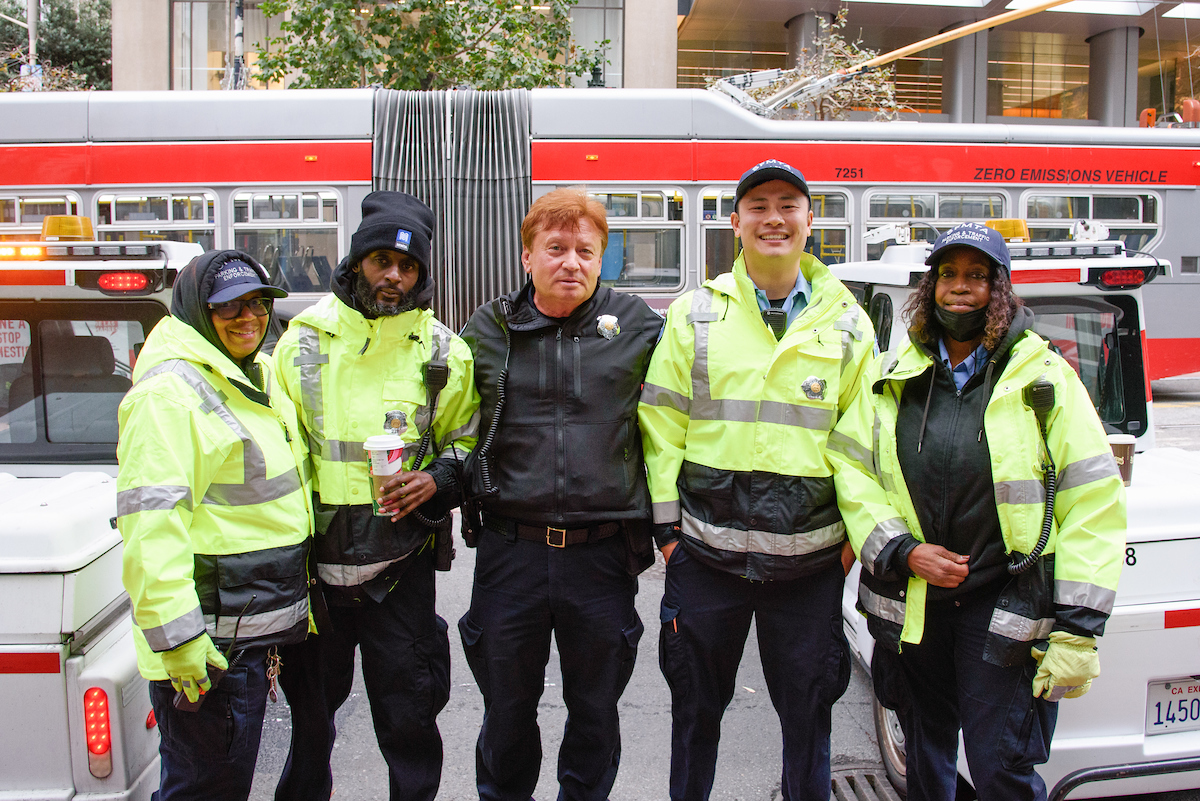
A group of Parking Control Officers and Security Staff from the SFMTA pose for a photo.SFMTA security and Parking Control Officers played a key role in creating safe conditions for the APEC conference.
The restricted areas around the conference zones were carefully coordinated with our street engineers and planners to make sure everyone who attended could remain safe. Our sign shop brought those plans to life with the signage to tell people which areas were closed to traffic. Parking Control Officers (PCOs) then positioned themselves to create a perimeter around the security zones, directing traffic and supporting motorcades. The work by SFMTA security to keep our staff and riders safe during all of this was essential to make APEC possible in San Francisco.   

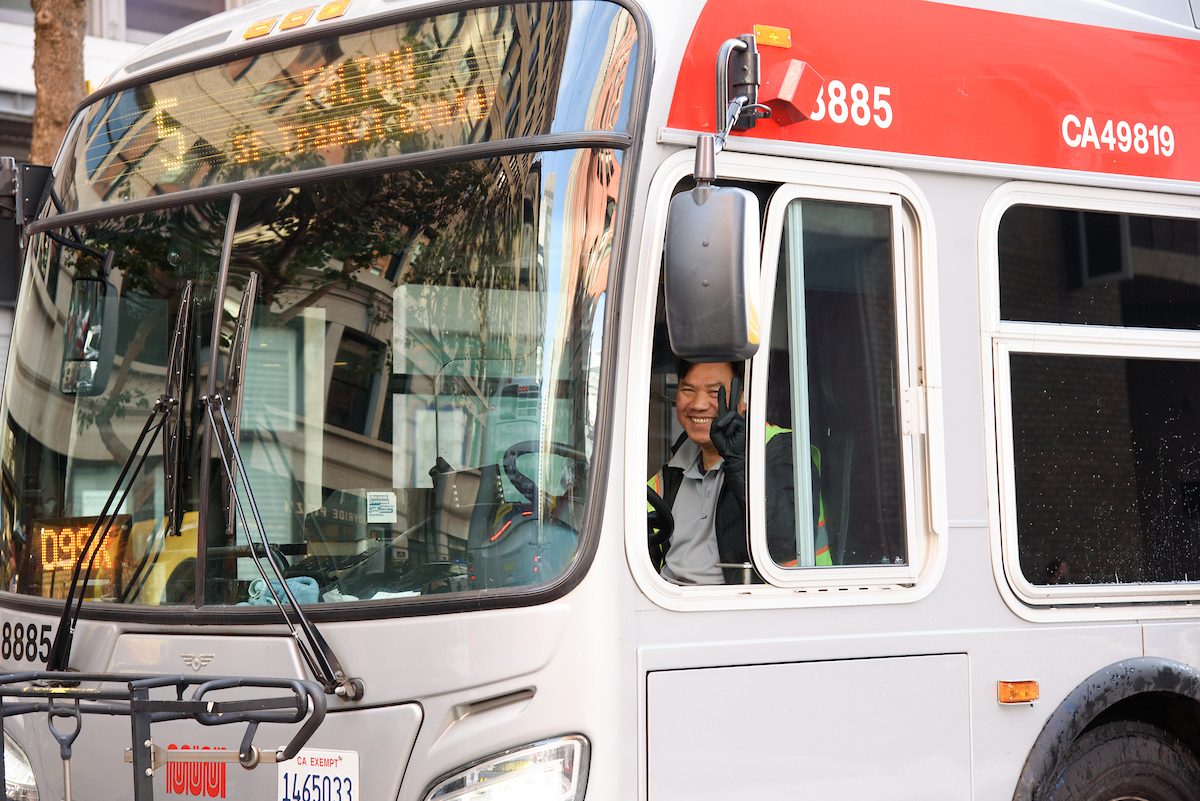
A Muni bus driver waves while on his route.Our Muni transit staff worked hard to create plans around APEC, and harder when those plans faced sudden changes.
Our Transit staff worked for months to plan Muni reroutes around restricted areas and create new schedules, temporary signs to alert riders and contingencies for any last-minute changes. Our Muni operators skillfully navigated the reroutes with help from our Transportation Management Center staff who monitor road and metro conditions. We were able to get riders safely around crowded or restricted areas thanks to these efforts. Our Muni Transit Ambassadors and Transit Fare Inspectors were on our vehicles to prevent any incidents onboard, and our maintenance teams kept Muni running smoothly. 

Paratransit and Taxi services teams worked diligently to make sure that people with mobility needs who live in the security zones were able to access their homes. The Muni Transit Assistance Program (MTAP) made sure our kids got to school without incident. 

An event of this scale and its travel impacts called for immediate public outreach and customer communications efforts, and our Communications, Outreach & Marketing division sprang to action. The team made sure everyone traveling in SF understood the magnitude of APEC, helped people plan ahead and provided real-time travel alerts during unfolding impacts.  

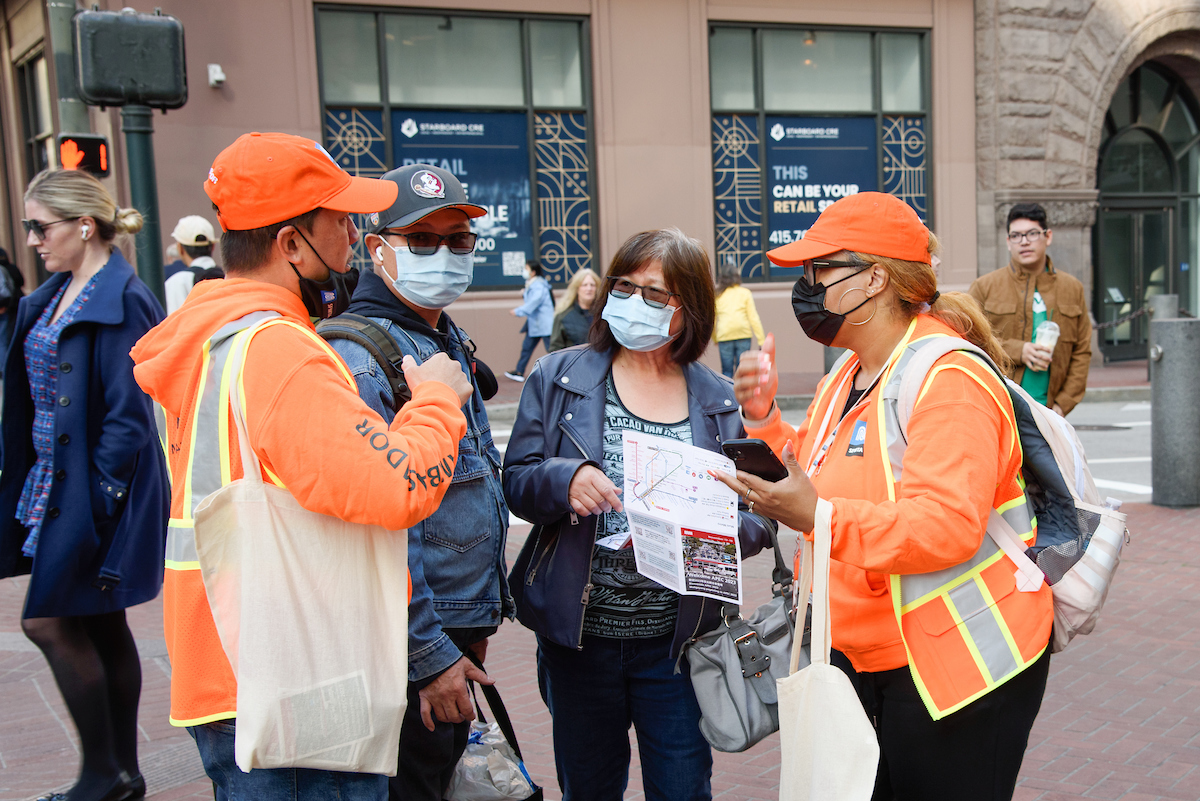
SFMTA ambassadors dressed in orange talk to two people in need of directions.SFMTA staff get dressed in orange to volunteer themselves as ambassadors to help people find their way around San Francisco during large events. 
Members from divisions across the SFMTA volunteered their time to work as ambassadors to help people find their way around the city. They equipped themselves with maps of the temporary Muni reroutes and brought their knowledge of how to make sense out of navigating San Francisco during this busy event.  

We couldn’t be more thankful for all the work by our staff to make APEC successful while keeping life moving for visitors and people who live and work here. Moments like this make us proud to work for this great city. Thank you, San Francisco! 


Published November 21, 2023 at 05:41AM
https://ift.tt/wvKoR1d

Thursday, November 9, 2023

Take Muni to Enjoy San Francisco During APEC

Take Muni to Enjoy San Francisco During APEC
By Mariana Maguire

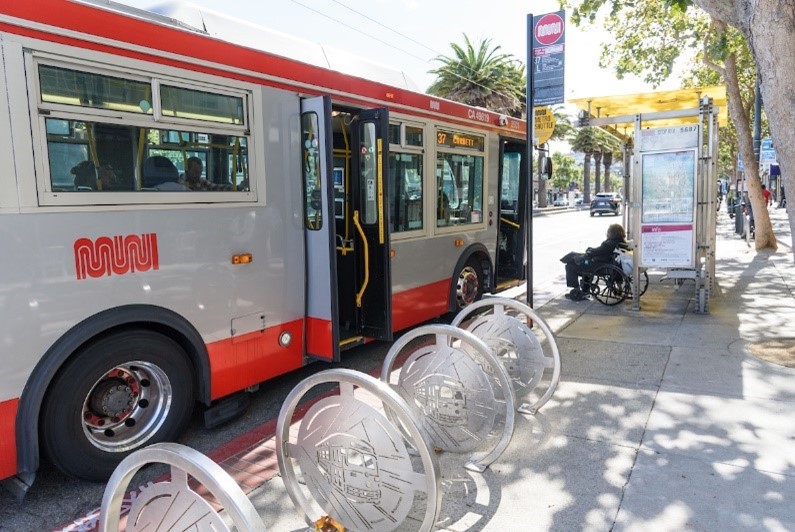
Muni bus with doors open waiting at a bus stop and picking up a person in a wheel chair. There is bicycle parking and an overhead shelter at the stop.

Muni can get you to all corners of San Francisco while the APEC conference keeps the city bustling.

San Francisco is set to welcome global leaders for the Asia-Pacific Economic Cooperation (APEC) meeting on Saturday, November 11. The city will be thriving with activities, so residents and visitors who wish to avoid downtown congestion can take Muni, SF Paratransit or use the SFMTA’s bicycle network to enjoy the city’s many unique neighborhoods. Given that much of San Francisco’s cultural heritage was born of immigrant communities from APEC countries and beyond, you can get into the spirit of APEC by exploring some of the sights and flavors of the world right here at home. 

San Francisco’s culturally distinct and uniquely beautiful neighborhoods are what make the city a world class destination! SF.gov’s Perfect San Francisco Days series is designed to help you explore some of the best the city has to offer. 

Chinatown - The largest in the world! 

No visit to San Francisco is complete without a visit to our world-famous Chinatown. San Francisco is home to the largest community of Chinese people outside of China, and Chinatown is a thriving historic, cultural and economic hub of our city. Service during APEC on the temporary Muni Metro Shuttle to Chinatown-Rose Pak Station has been increased to every five minutes from Union Square-Market Street Station. For Muni Metro service, take the J Church, temporary KT Ingleside-Third, M Ocean View or N Judah to Powell Street Station to transfer to Union Square/Market Street Station. The 8 Bayshore will continue to serve this neighborhood during APEC. Muni riders can also take the shortened 30 Stockton or 45 Union-Stockton north of Market Street to Chinatown during APEC. 

Other SF Neighborhoods 

Visit the Richmond district to experience some of San Francisco’s Burmese cuisine, as well as an array of dumplings, dim sum and other Asian favorites. You may even still find some Russian delis or pastry shops in this once predominantly Russian enclave. The 1 California, 2 Sutter, 31 Balboa, 38 Geary and 38R Geary Rapid Muni lines serve this neighborhood. 

Visit Japantown for fresh sushi, hearty ramen and a bustling bazaar market. The 2 Sutter, 38 Geary and 38R Geary Rapid serve this neighborhood. 

Find some of San Francisco’s best Thai and Vietnamese food nestled in the Sunset district or take a walk to the Japanese Tea Garden in Golden Gate Park. The 6 Haight-Parnassus, 7 Noriega, 29 Sunset and N Judah Muni Metro serve this area. Take the 5 Fulton or 5R Fulton Rapid to Golden Gate Park and enjoy the Botanical Garden or the Conservatory of Flowers. Admission to these gardens of Golden Gate Park is free for San Francisco residents.

Experience a bounty of Latin American cuisine, including Mexican tacos and Venezuelan arepas, in the Mission district. The 9 San Bruno, 9R San Bruno Rapid, 12 Folsom-Pacific, 14 Mission, 14R Mission Rapid, 22 Fillmore, 27 Bryant, 33 Ashbury-18th Street, 48 Quintara-24th Street and 49 Van Ness-Mission serve the Mission. 

To capture epic views of the Golden Gate Bridge, head to the recently opened Presidio Tunnel Tops Park or explore Fort Mason, both now served by the 30 Stockon. You can also take the 9 San Bruno or 9 San Bruno Rapid for a stroll through McLaren Park

Visit the APEC website (APEC2023SF.org) to find events, performances and other experiences during APEC. Stay updated on travel impacts in San Francisco and plan your trip in advance at our traffic and transit webpage (SFMTA.com/APEC). 


Published November 09, 2023 at 10:52PM
https://ift.tt/5pXaR8s

Wednesday, November 8, 2023

How to Get to Chase Center During APEC

How to Get to Chase Center During APEC
By Janice Tan

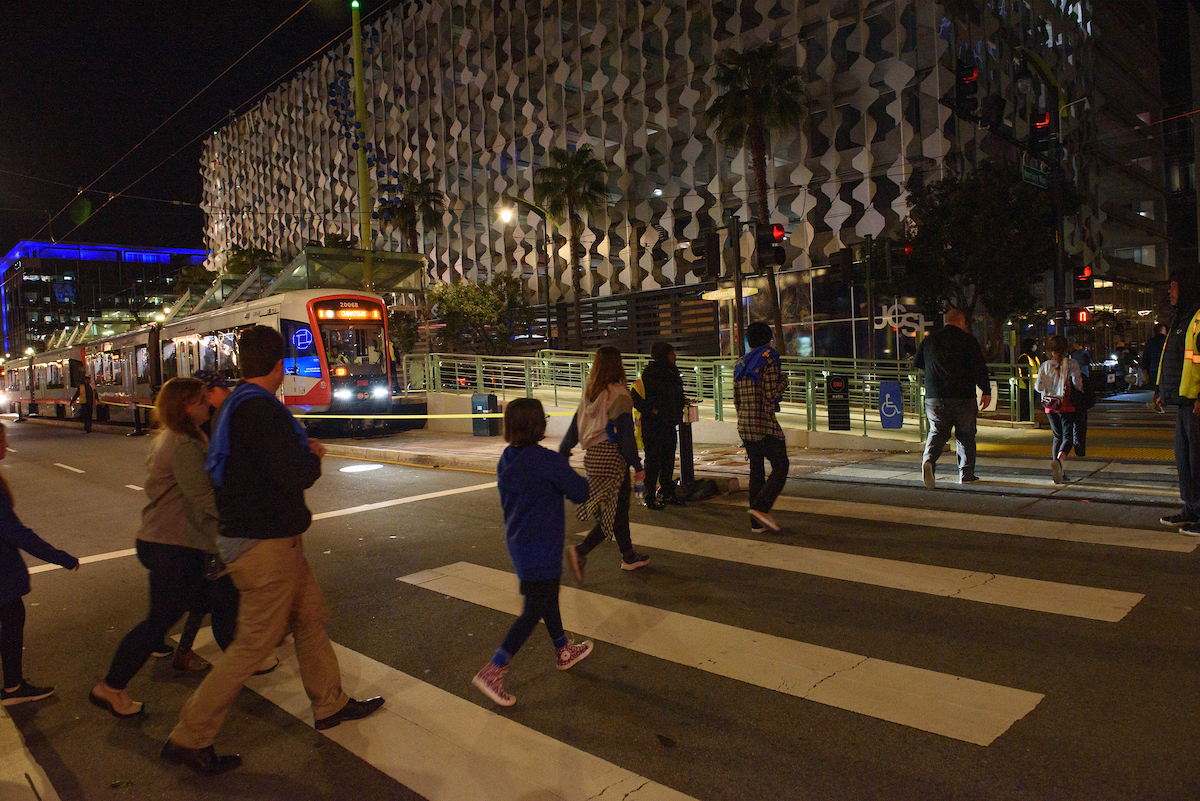
People cross the street to the Chase Center arena in San Francisco at night with a light rail train in the background.Heading to Chase Center during APEC? Muni is your ride. Here’s what you need to know. 
San Francisco is hosting the Asia-Pacific Economic Cooperation (APEC) conference between November 11 and 17. This will require temporary changes beginning November 13 to Muni routes to Chase Center, potentially causing delays. 

If you’re heading to a Warriors game or to the Lauryn Hill & The Fugees concert during this time, plan ahead with this information and allow extra time for travel. Remember, your Chase Center event ticket is your fare—no additional Muni fare needed! Muni, walking and bicycling are the best ways to avoid parking and traffic headaches.  

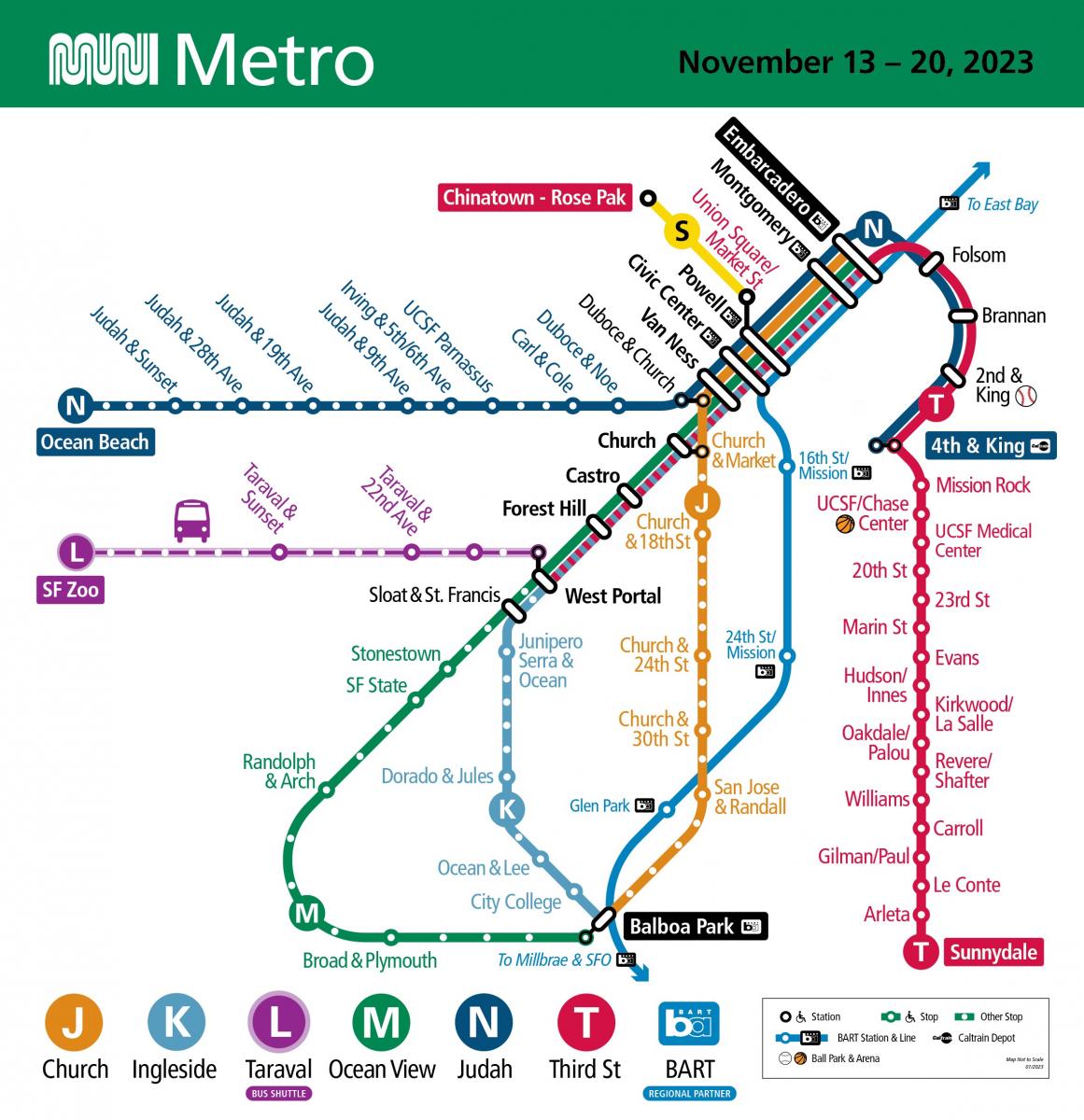
  • T Third and K Ingleside Muni Metro stops from Balboa Park to Embarcadero to Sunnydale will be served by a temporary KT Ingleside-Third Muni Metro from November 13-19. This includes Embarcadero at Folsom and Brannan, and King at 2nd and 4th streets.  

  • Riders should look for train head signs that indicate the K Ingleside westbound, T Third eastbound or KT Ingleside-Third in both directions. 

  • There will be no Muni Metro service provided to the 4th & Brannan or Yerba Buena-Moscone stations. 

  • A Muni Metro train shuttle will operate every five minutes between Chinatown-Rose Pak Station and Union Square-Market Street Station. This shuttle maintains access to Chinatown and areas north of downtown. Transfer at the Powell Street Station to Union Square-Market Street Station to access the temporary train shuttle. 

  • Paratransit drop-offs and pick-ups are available along the curb of 16th Street and Terry Francois Boulevard with accessible entry and exit from the East Entrance.

The image shows the transit changes and ways to access Chase Center that are discussed above.Map of the temporary Muni Metro routing changes during APEC. 
The 78X 16th Street Arena Express will continue to run express service between Chase Center and the 16th Street BART station two and a half hours before events and one hour after events. 

Visit our APEC webpage (SFMTA.com/APEC) for more information about how to get around San Francisco during APEC. 


Published November 09, 2023 at 01:12AM
https://ift.tt/G9sy0bd

Wednesday, November 1, 2023

Taken with Transportation Podcast: More than a Meter Maid

Taken with Transportation Podcast: More than a Meter Maid
By Michael Roccaforte

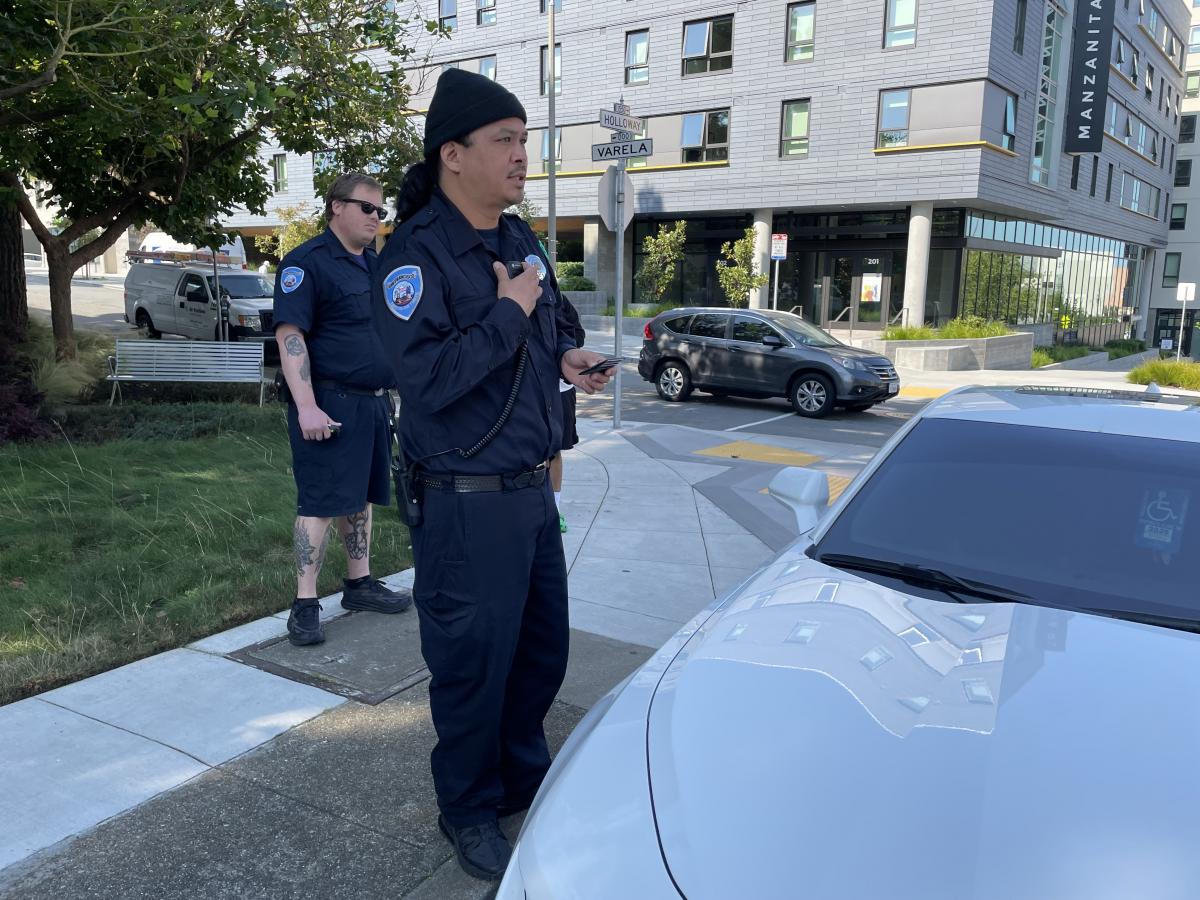
Two San Francisco Parking Control Officers inspect a vehicle on the side of the road.SFMTA Parking Control Officers Scott Ong and Todd Baxter inspect a car to make sure its Disabled Person Parking Placard is compliant. 
One of the most misunderstood roles at the SFMTA is that of the Parking Control Officer, or PCO. In this episode of our Taken with Transportation podcast, host Melissa Culross spends time on the streets of San Francisco with PCOs Scott Ong, Todd Baxter and Ruben Reveles, as well as Parking Enforcement Assistant Director and Captain Kent Chiu. She learns why parking enforcement is essential, what parking control officers do and discovers that they are much more than just so-called "meter maids."  

People often overlook the fact that PCOs help the public access parking. One violation that comes up in the episode is the misuse of Disabled Person Parking Placards. That happens when a driver uses a placard that was not issued to them. 

“These spaces are…they’re needed. The people that park there need them. And making sure that the people that are parking there should be there…it’s needed. So, we always want to make sure that the people that are needing the spot can always have the spot if it’s available,” says Parking Control Officer Todd Baxter. 

It’s a tough job, given that some people believe all PCOs do is write tickets, but Parking Control Officer Scott Ong knows he and Baxter are doing a good thing when they enforce disabled parking regulations. “The general public, I feel, they look at us like we are, I guess you can say monsters,” says Ong. “But on this detail, when we go and take a bad placard off of the street, people that really do need the spot, they see it, and they see what you’re doing, and they thank us for it.” 

The work our PCOs do is critical to keep San Francisco moving. Illegal parking can cause traffic disruptions and even create unsafe conditions on our streets. Parking Enforcement Assistant Director and Captain Kent Chiu describes how PCO duties go beyond parking and traffic control, whether they’re lending the public a helping hand or providing assistance during emergency situations. 

"If there’s any immediate hazard, like a fire, it’s something we get called to. If we can hold a perimeter for something like that, it’s even better for the public at that point,” says Chiu. “It’s an extra layer...and we can keep life flowing, whatever the situation is.” 

You can find “More than a Meter Maid” and all the episodes of Taken with Transportation at our podcast page (SFMTA.com/Podcast).   


Published November 02, 2023 at 02:06AM
https://ift.tt/Id2WACX

Thursday, October 26, 2023

Speed Safety Cameras are Coming to San Francisco with New State Law

Speed Safety Cameras are Coming to San Francisco with New State Law
By Shannon Hake

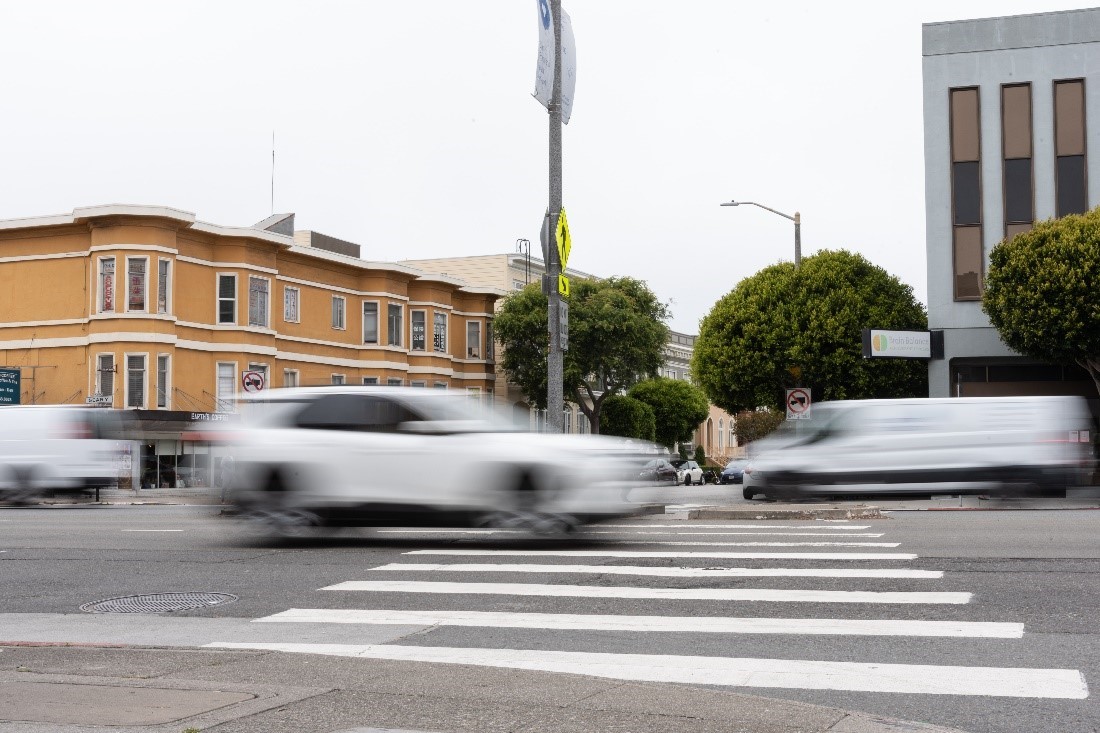
A white car appearing blurry as it speeds through an intersection.

On October 13, 2023, Governor Newsom signed California State Assembly Bill 645 into law, allowing six cities, including San Francisco, to pilot a speed safety camera program. This pilot is an opportunity for San Francisco to employ a powerful traffic safety tool that has been used successfully across the world. More than 200 cities in the United States have implemented speed safety cameras, including New York City which reported 70% fewer traffic deaths and injuries where speed cameras are installed. Portland, Oregon experienced a 46% decrease in traffic deaths and 85% decrease in excessive speeds after implementing an automated speed safety program.  

Unsafe speed is the number one factor in fatal traffic crashes in San Francisco, accounting for 20% to 40% of traffic deaths in recent years. For over a decade, San Francisco has been advocating for additional tools, like speed safety cameras, to help reduce speeding cars on our streets and bring down the number of traffic deaths and severe injuries in San Francisco. 

What does the law do? 

Introduced by State Assemblymember Laura Friedman, AB 645 authorizes San Francisco, San Jose, Oakland, Los Angeles, Glendale and Long Beach to implement a five-year speed safety camera pilot. It goes into effect on January 1, 2024, and allows the SFMTA to install 33 speed safety cameras throughout the city. The speed cameras will be used on San Francisco’s High Injury Network, the 12% of streets where more than 68% of severe and fatal traffic crashes occur, and possibly at other locations where speeding is a known issue. The geographic and socioeconomic diversity of the locations will also be considered. Any revenue from fines that are issued to drivers who are speeding will be used to cover the costs of the program and to calm traffic.  

When will the cameras start? 

We’re committed to installing these cameras as soon as possible, so we’ve already started the prep work. However, our best estimate is that it will take about 12 months to complete the steps required by the legislation to ensure the speed camera technology is implemented equitably and transparently.  

  • Now through early 2024 – System Planning. We are working to identify potential locations for the speed cameras and to create a System Use Policy and Speed Safety System Impact Report for the new system in collaboration with the city’s Committee on Information Technology. We are also developing a plan for outreach and engagement with local stakeholder organizations, including racial equity, privacy protection and economic justice groups. 

  • Early to late 2024 – System Design and Installation. We will hire a contractor to design, build, operate and maintain the system. Construction of the speed cameras will begin in 2024.  

  • 2025 – Implementation. Following a month-long public education campaign required by the law, the 33 cameras will be turned on.  

Once the cameras are up and running, SFMTA staff will collect data and evaluate whether each camera is reducing speeding. If a camera isn’t shown to be effective on the street where it is located after 18 months, it will be decommissioned. 

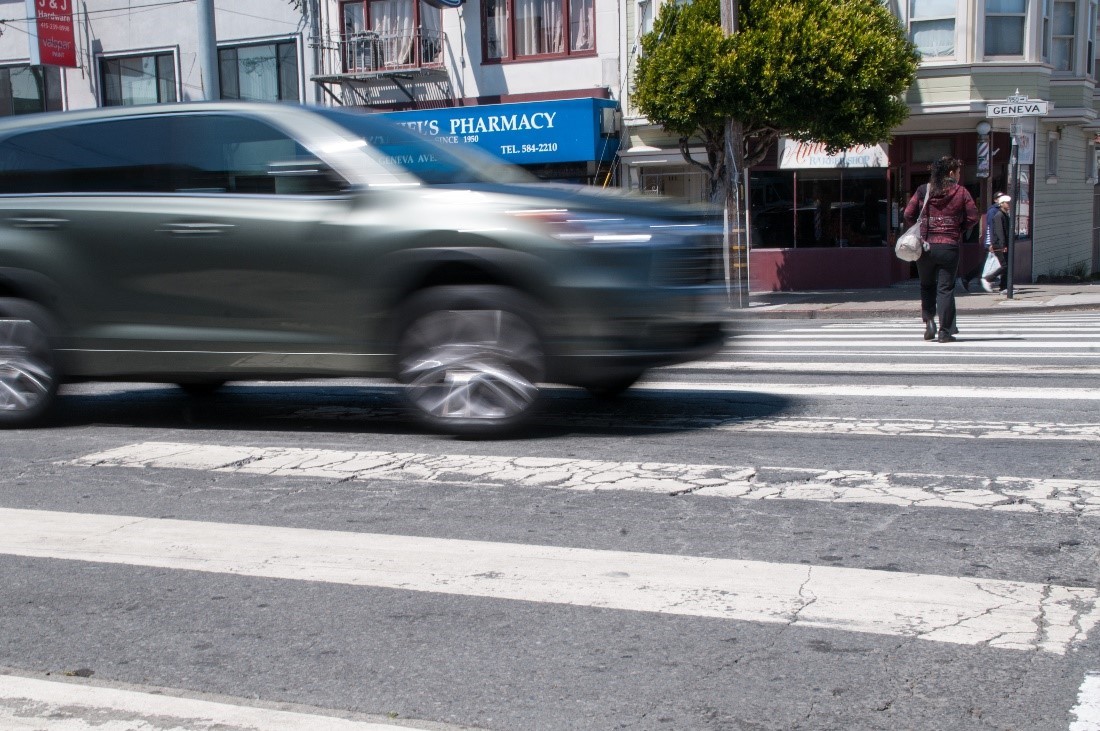
A grey car appears blurry as it speeds through a cross walk with a person crossing to the other side in the background.

What does this mean for drivers? 

Drivers who are abiding by the speed limit won’t need to worry. But, to make sure everyone is prepared, the legislation requires a robust public education campaign to inform drivers about the locations of the cameras in advance of them being turned on. We will also ease drivers into the program by issuing warning notices rather than fees to drivers who exceed the speed limit for the first 60 days of the program, as is required under the law. The law ensures that drivers with low incomes will be able to receive a fine reduction or an opportunity for community service in lieu of a fine. 

To ensure that drivers’ privacy is protected, the speed safety cameras will only photograph the rear of the vehicle and license plate, not the windshield or face of the driver. The SFMTA will retain photos for no more than five days if no violation is issued, and 60 days if a violation is issued. We also won’t share the photos with any other agencies or use them for other purposes. 

The SFMTA is excited to be a part of the pilot and recognizes that the passage of this transformative legislation was the result of years of advocacy by Vision Zero supporters such as the Vision Zero Coalition, San Francisco Bay Area Families for Safety Streets, WalkSF and the many residents who wrote letters and participated in public hearings to voice their support for speed safety cameras. We appreciate their commitment and the leadership of Assemblymember Laura Friedman, Senator Scott Wiener, Assemblymembers Phil Ting and Matt Haney and former Assemblymember and current City Attorney David Chiu, who sponsored the first speed safety legislation in 2017. We thank Mayor London Breed for sponsoring the bill and her leadership in creating safer streets, the Board of Supervisors for their resolution showing unanimous support for the bill in April and the San Francisco Police Department for their partnership in traffic enforcement. We stand committed to safer streets in San Francisco and will work urgently to reduce speed limits to save lives. 

Next steps

We, in coordination with the city’s Committee on Information Technology (COIT), will draft a Speed Safety System Use Policy and a Speed Safety System Impact Report in early 2024 to establish the purpose of the system, outline authorized uses and set standards for data management and protection. These documents will need to be approval by the SFMTA Board of Directors and the Board of Supervisors. 

The Board of Supervisors and the SFMTA Board of Directors will also ultimately need to approve the camera locations. 

We will need to plan and design the system, gain all of the policymaker approvals, obtain a contractor to do the work and install the signals. We are working closely with other agencies and the mayor to eliminate unnecessary bottlenecks while meeting the requirements of the legislation.

For more information and regular updates about the program please visit the Speed Safety Cameras program page (SFMTA.com/SpeedCameras).


Published October 26, 2023 at 11:47PM
https://ift.tt/09bK1dJ

Wednesday, October 18, 2023

APEC is Coming to SF! What You Need to Know to Get Around

APEC is Coming to SF! What You Need to Know to Get Around
By Mariana Maguire

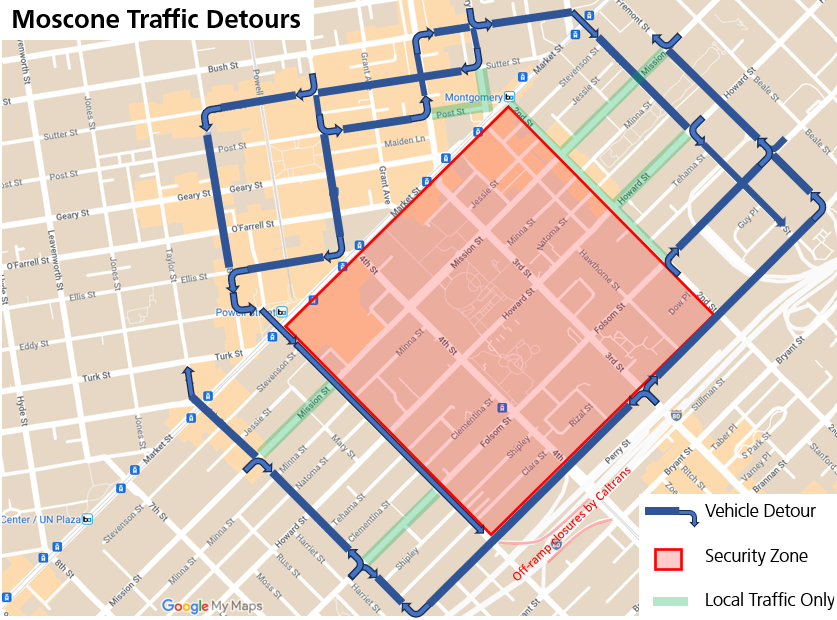
Map of the security zone boundary on Market Street to 2nd Street to Harrison to 5th Street and back up to Market Street. The security zone is bounded by Market, 2nd, Harrison and 5th streets. These listed streets which form the boundary of the security zone will remain open to the public.

Map of the main security zone around the APEC conference at Moscone Center, with vehicle detours. Security zones have been set and are managed by the United States Secret Service. Only conference attendees and those who live or work inside this zone will be allowed to enter following security screening procedures.

San Francisco is proud to host the Asia-Pacific Economic Cooperation (APEC) conference in November, one of the largest gatherings of global leaders in San Francsico. This is an exciting opportunity for San Francisco to shine on the world stage. Most APEC activities will take place in the South of Market and Nob Hill neighborhoods. Due to the scale of the gathering, APEC may have some impacts on travel in other areas of San Francisco as well. The bulk of the travel and transit impacts will take place from Nov. 14-19.

More than 20,000 people are expected to attend this historic conference, including heads of state and dignitaries from over 20 member economies in Asia, the Pacific, North America and South America. Visit the APEC website (APEC2023SF.org) for further information about the conference.

For security, areas around events and activities will be closed to vehicles and pedestrians except for event attendees or people who live or work within the security boundaries.

Street Impacts

Streets and freeway ramps in SoMa will be closed from Tuesday, Nov. 14 - Sunday, Nov. 19. These closures will result in significant traffic impacts.

Visitors and residents — whether driving or taking Muni or SF Paratransit — should expect congestion downtown, traffic delays, transit reroutes and potential crowding on Muni during the APEC conference and any additional conference-related events or activities. Additional events and activities may arise with little notice and may impact Muni and SF Paratransit routes, as well as traffic and pedestrian access.

Additional APEC-related events will take place in multiple locations. Some events require a temporary security zone that will restrict traffic and may require Muni reroutes. We will make information available as events are announced.

Please note that predictions and third-party navigation apps may not display information properly during this period. We advise Muni customers and anyone traveling through the city to allow ample extra time for travel and be prepared for possible delays.

We understand that these changes will present some challenges and we appreciate your support and patience as San Francisco hosts one of the world’s premier global leadership events.

For the most up to date information in real-time, subscribe to our Muni SMS and/or email alerts. For free language assistance, please call 3-1-1 within San Francisco or 415-701-2311 outside of San Francisco. For TTY, press “7”.

Muni Impacts

For additional details on transportation impacts visit our main APEC page (SFMTA.com/APEC).

The following lines will be impacted:

  • T Third Muni Metro
  • T Third Bus
  • 1 California outbound
  • 5 Fulton Owl
  • 8 Bayshore, 8AX Bayshore Express A and 8BX Bayshore Express B
  • 12 Folsom inbound
  • 14 Mission and 14R Mission Rapid
  • 15 Bayview Hunter’s Point Express
  • 30 Stockton
  • 45 Union-Stockton
  • 91 Owl
  • 714 BART Early Morning Shuttle
  • California Cable Car
  • Powell/Mason Cable Car
  • Powell/Hyde Cable Car
  • 18 46th Avenue (single day reroute)
  • F Market and Wharves (single day reroute)

The 30 Stockton and 45 Union-Stockton will only operate north of Market Street and continue to serve connections from Union Square to Chinatown, Fort Mason, The Marina and the Presidio.

Temporary KT Ingleside-Third substituting T Third service

T Third and K Ingleside Muni Metro stops from Balboa Park to Embarcadero to Sunnydale will be served by a temporary KT Ingleside-Third Muni Metro from Nov. 14 - 19. This includes Embarcadero at Folsom and Brannan, and King at 2nd and 4th streets. Customers should look for train head signs that indicate the K Ingleside westbound, T Third eastbound or KT Ingleside-Third.

There will be no Muni Metro service provided to 4th & Brannan or Yerba Buena-Moscone Stations.

A Muni Metro shuttle train will operate every five minutes between Chinatown-Rose Pak Station and Union Square-Market Street Station to maintain access to Chinatown and areas north of downtown. Transfer at the Powell Street Station to Union Square-Market Street Station access the temporary shuttle.

For further information, maps and more visit our APEC information page (SFMTA.com/APEC).


Published October 19, 2023 at 04:11AM
https://ift.tt/BrZ2Gf7

Photo Exhibit Event: Vintage Bus Display and Tour

Photo Exhibit Event: Vintage Bus Display and Tour By Jeremy Menzies Join us Saturday, Jan. 27 at a special event for our exhibit, " 1...