Tuesday, August 8, 2023

How to Pay for Parking at The City's New Multi-Space Paystations

How to Pay for Parking at The City's New Multi-Space Paystations
By Pamela Johnson

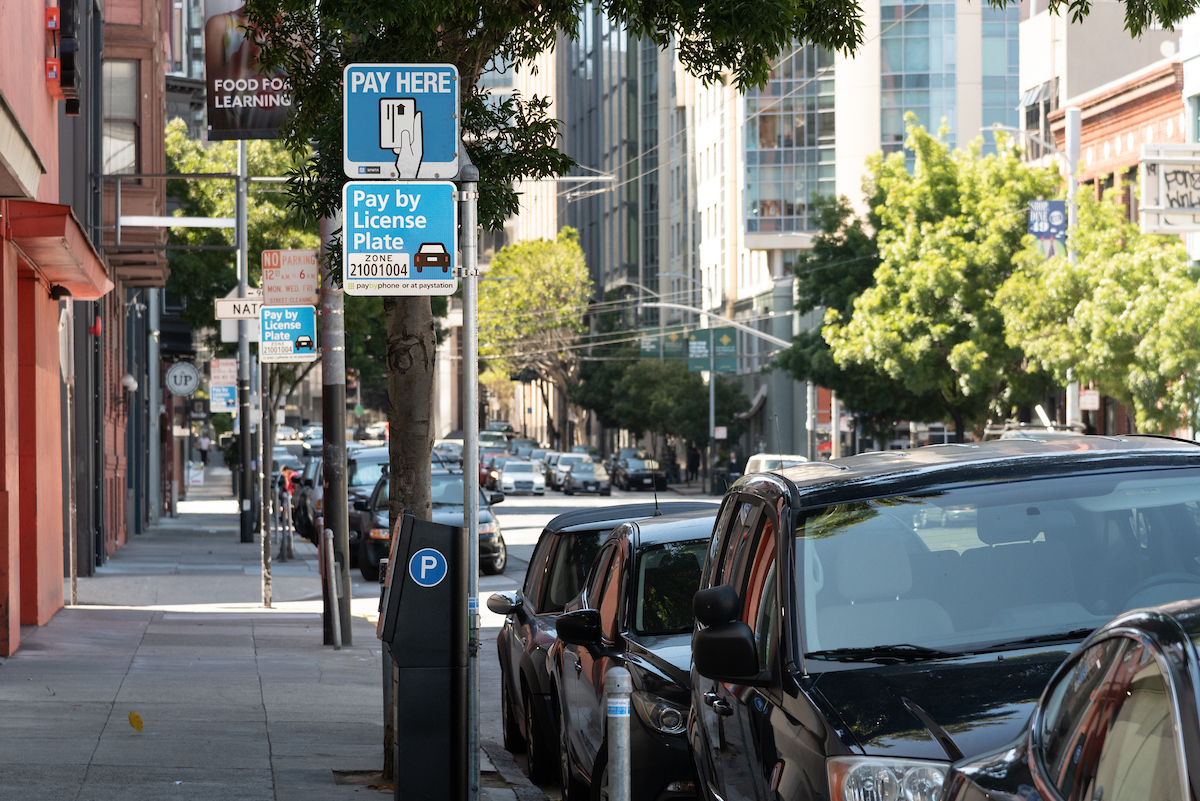
A Pay by License Plate system in San Francisco on a street with cars and trees.One of San Francisco's new paystations as the city moves away from its aging parking meters.

How drivers pay for street parking in San Francisco continues to evolve. In March 2022, the San Francisco Municipal Transportation Agency (SFMTA) began the Citywide Parking Meter Replacement Project to replace San Francisco's aging 27,000 parking meters. Half of the parking meters will be replaced with new single-space meters and the other half with multi-space paystations that use a brand-new pay-by-license-plate system. The project is expected to be completed by the end of 2024. 

San Francisco uses paid parking to create curb availability in commercial districts and high-demand neighborhoods. When parking meters are in operation, drivers spend less time circling the block looking for a space. Less circling means less congestion and fewer greenhouse gas emissions.  

To help drivers use the new multi-space paystations and pay-by-license-plate parking system, we’ve collaborated with SFGovTV to produce the instructional videos “How to Pay for Parking by License Plate” and “How to Pay for Parking with a Smartphone.” These videos are available in English, Spanish, Chinese and Filipino. The new paystations feature larger multilingual instruction panels in English, Spanish and simplified Chinese.  

The multi-space paystations replace outdated parking meters that relied on 3G communications technology phased out by wireless companies. They use state-of-the-art technology to validate parking payments and automatically transmit this information to our enforcement staff. Drivers no longer need to remember the space number where they parked, as the vehicle’s license plate number is used to verify that parking fees have been paid on a pay-by-license plate block. Payments can be made at paystations, on the pay-by-phone mobile app or by phone call. For more information on how to pay using each method, see the Ways to Pay section on our Parking Meters webpage. 

Benefits of the New Multi-space Paystations

  • More resistant to vandalism     

  • No need to display a parking receipt on the dashboard. 

  • No need to return to your car to feed the meter.

  • Payment can be made from any kiosk on the block where you are parked. 

  • You can print a receipt from a kiosk or get a digital receipt if paying by mobile device. 

  • You can leave and repark on the same block and not pay again if time remains from the original payment. 

  • Find instructions and follow prompts on larger, more legible full-color touch screens in multiple languages (simplified Chinese, English and Spanish)

  • More powerful batteries will increase reliability and reduce maintenance visits. 

Visit Citywide Parking Meter Replacement Project for more details including the locations of the multi-space paystations. 

Visit  Parking Meters | SFMTA to learn more about parking meters in San Francisco.  

Visit  Demand-Responsive Parking Pricing to view current parking meter rates and learn how to save money by finding cheaper parking a few blocks from your destination.  


Published August 08, 2023 at 10:37PM
https://ift.tt/QcgLTXW

Wednesday, August 2, 2023

150 Years Ago Today – The Cable Car is Born

150 Years Ago Today – The Cable Car is Born
By Kelley Trahan

August 2, 2023, marks the 150th anniversary of the world’s first successful cable railway, born right here in San Francisco. To celebrate the occasion, we bring you the story of Andrew Hallidie and the very first cable car company, the Clay Street Hill Railroad. 

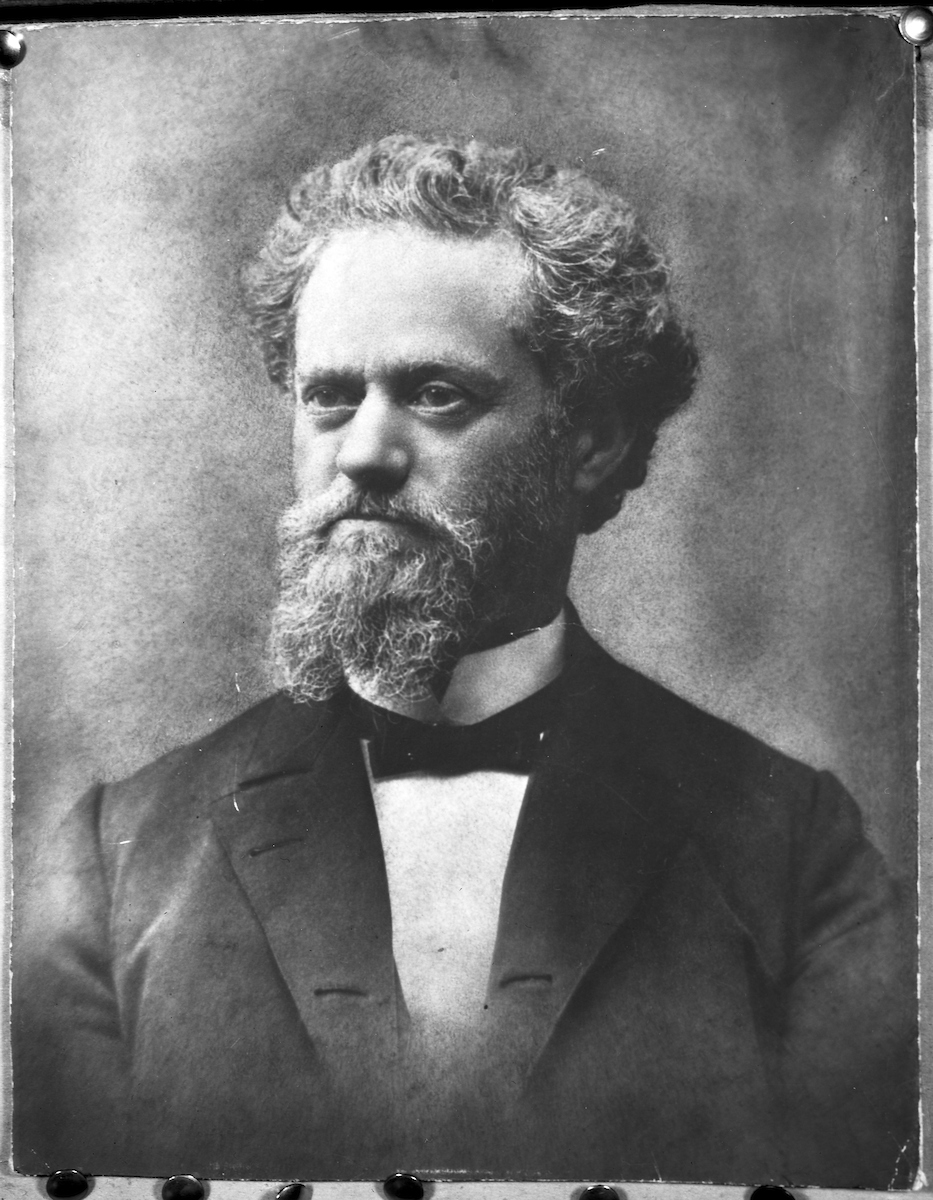
Andrew Hallidie (1834-1900) was a pioneering inventor and entrepreneur who changed urban transportation. In 1852, at the age of 18, Hallidie emigrated with his father from the United Kingdom to San Francisco during the California Gold Rush. His father, an engineer and inventor, had a wire rope patent that played a crucial role in his son's future success.  

Black and white photo of Cable Car Inventor Andrew Hallidie.

Portrait of Andrew Smith Hallidie in 1890.

Inspired by his father's wire rope business, Hallidie developed a steel cable mineral mine hauling system in 1857. About a decade later, he designed a wire rope aerial tramway for transporting materials over mountainous terrain. Then, after a stint in bridge construction across California, he returned to San Francisco. 

Legend has it that the idea to build a cable car came to Hallidie one foggy, wet San Francisco evening in 1869 when he witnessed a tragic accident. A team of horses pulling a streetcar up a steep cobblestone hill slipped, causing the streetcar and horses to slide down the hill into a heap of wreckage. Drawing on his mining experience, Hallidie believed he could come up with a better way to transport people up and over San Francisco’s many hills.

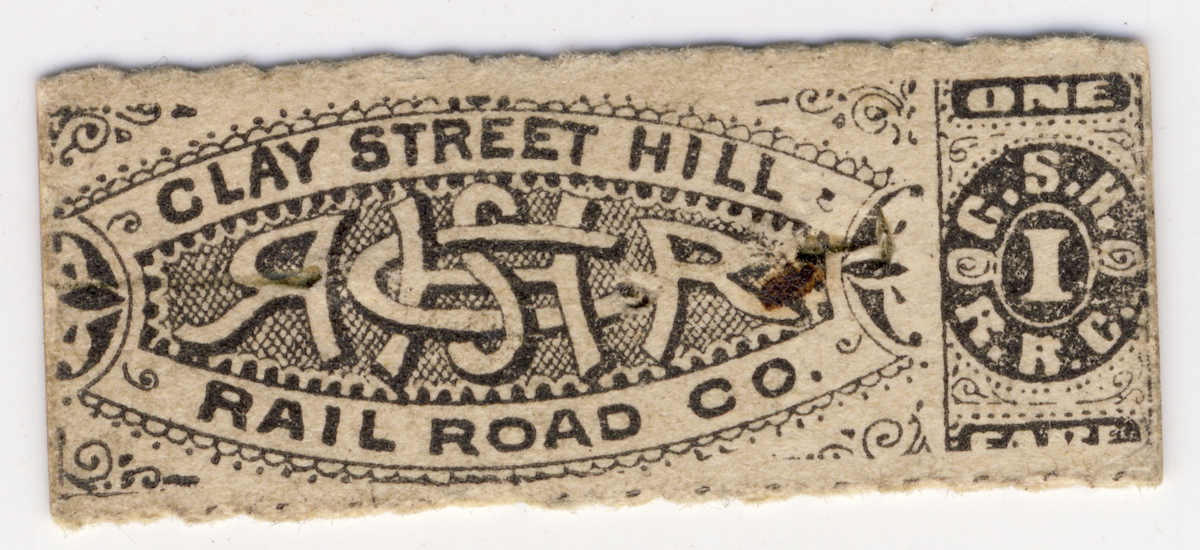
Picture of an 19th Century bus ticket that says Clay Street Hill Railroad Co.

Transfer from the Clay Street Hill Railroad Company used until early 1875.

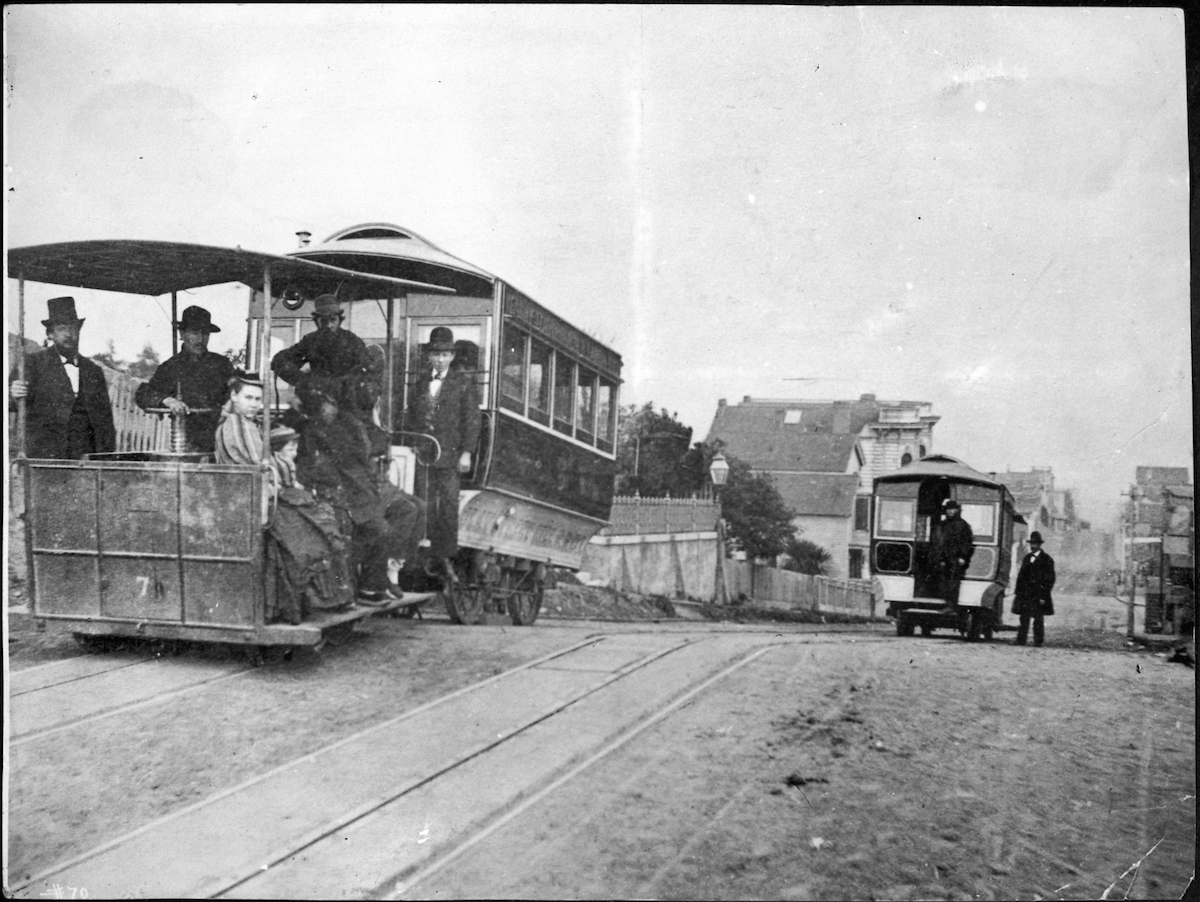
Hallidie chose Clay Street between Kearny and Jones as the first route and raised $118,000, including significant investments from the residents of Clay Street. With engineering design work by William Eppelsheimer, construction began in early 1873. By mid-summer, the double-track line, powerhouse, cable and cars were completed at a total cost of $85,150. The first test run took place in the pre-dawn hours of August 2, 1873, and proved to be a tremendous success. One month later, on September 1, 1873, the Clay Street Hill Railroad Company began regular passenger service with a fare of five cents.  

Black and white photo of two cable cars with people riding on the back and looking at the camera.

Clay St. Hill Railroad Co. Dummy 7 and Trailer on Clay and Jones Streets in 1873.

Hallidie's historic efforts not only revolutionized transportation but also yielded profitable returns for his investors. His invention provided a safe and efficient means of travel up and down the city's hills and spurred the expansion and development of San Francisco's neighborhoods and businesses. The Clay Street Hill Railroad marked the beginning of many cable car railways in San Francisco and around the world. Within just two decades, eight different companies operated cable cars on 54 miles of track around the city. 

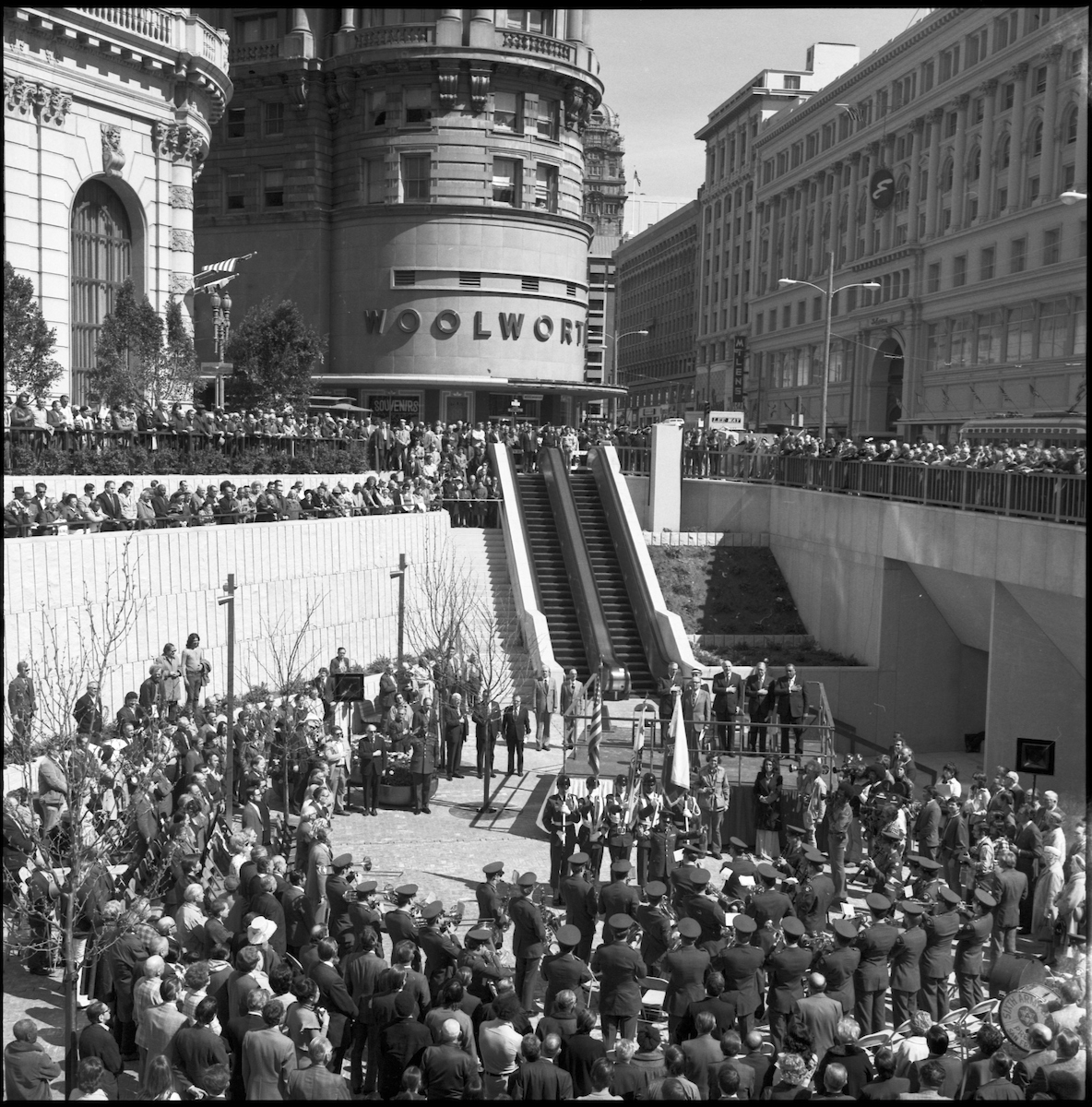
Throughout his life, Hallidie remained active in various engineering ventures and played a vital role in founding the San Francisco Mechanics' Institute, promoting scientific and technological education. Hallidie Plaza, near the Powell and Market Street cable car turntable, and the Hallidie Building in the city's Financial District are named after him. 

Black and white photo of a ceremony at the bottom of an escalator with crowds watching a speaker.

Dedication Ceremony for Hallidie Plaza at Market and Powell Street on March 14, 1973

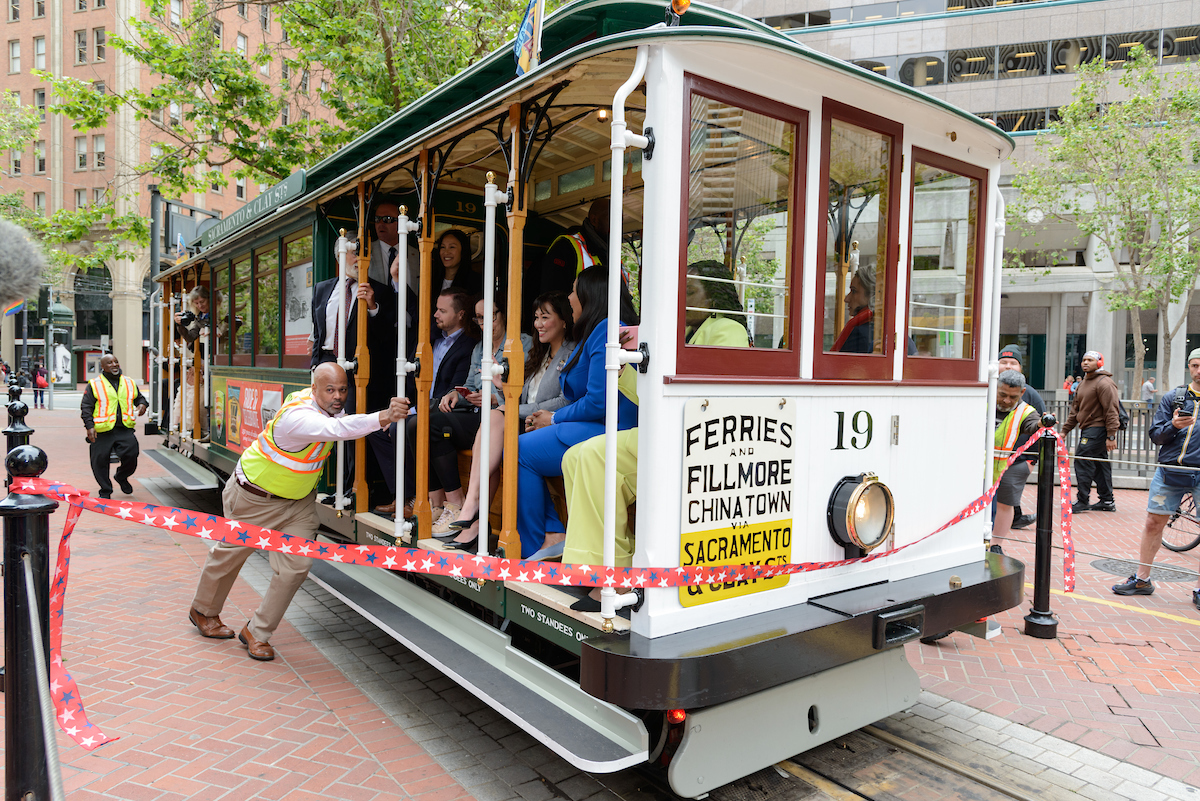
Although none of the original Clay Street Hill Railroad line remains today, its legacy lives on. Muni’s 1 California bus route traverses the same path over Nob Hill and two cable cars that once served the line survive to this day. An original 1870s grip car, number 8, is on display in the San Francisco Cable Car Museum, and “Big” Cable Car 19, one of the last cable cars to run on Clay Street, is back in limited service through the fall in honor of the 150th anniversary. 

Color photo of a cable car with people riding on board and a man giving it a push start.

150th Anniversary of the cable cars kickoff event with "Big 19,” on July 10, 2023

Celebrate the 150-year legacy by hopping on San Francisco’s iconic cable cars or catching a special anniversary event. Find more information at SFMTA.com/CableCars150 and https://sfcablecars.org


Published August 03, 2023 at 12:33AM
https://ift.tt/jsVYgEO

Thursday, July 27, 2023

Updated Muni Service as Students Return to School

Updated Muni Service as Students Return to School
By Clive Tsuma

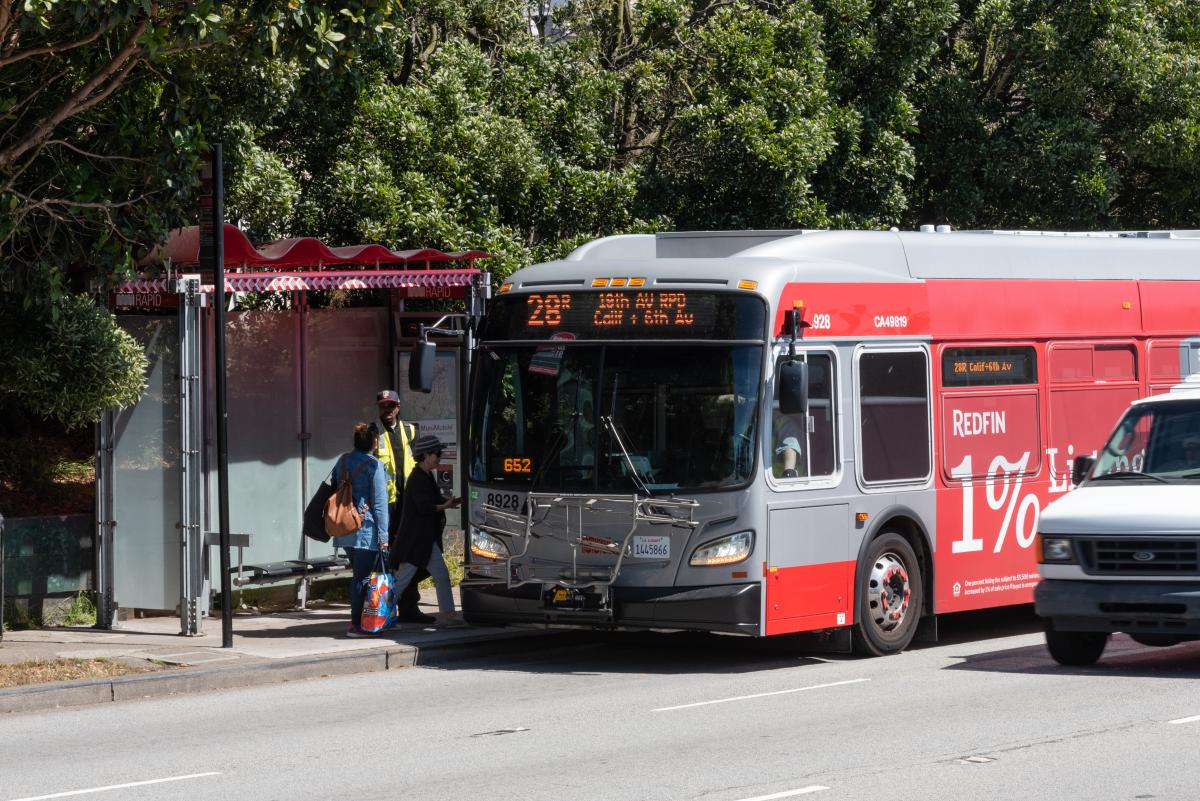
A bus labeled "28R" is pulled over to a bus stop with three people walking onto the bus.28R 19th Avenue will run on weekdays between 7 a.m. and 7 p.m. starting Monday, August 21.
Muni will make changes to service to address crowding starting August 19 as SFUSD students return to school. This includes the return of the 28R 19th Avenue and bus stop changes to the 29 Sunset to improve travel times.

28R 19th Avenue Rapid Service  

The return of the 28R 19th Avenue Rapid is a highlight of the upcoming August 19 Muni service changes. The restoration of the line since its suspension at the start of the pandemic will address crowding that riders on the 28 19th Avenue bus currently experience. The 28R 19th Avenue Rapid will run on weekdays between 7 a.m. and 7 p.m., every 12 minutes. Combined with the 28 19th Avenue, service on the corridor will be every six minutes.  

The 28R 19th Avenue Rapid will run on a modified route that ends at the Daly City BART station, rather than at the Balboa Park BART station as it used to. The new route will include the same 28R stops from 19th Avenue & Holloway Ave north, but after serving the 19th & Holloway stop, the bus will go directly to the Daly City BART.   

While the new 28R 19th Avenue will not provide service to stops on Arch or Alemany, it will provide a more direct route to BART for people along the 19th Avenue corridor. Riders along the Alemany corridor going to the Balboa Park BART station can continue to use the 54 Felton.  

Back to School 

With SFUSD students returning to school August 16, many families who rely on Muni to get to school will see Muni service increase after school as part of the new schedule. Because Muni vehicles often become crowded during morning peak hours and sometimes pass up stops when there is not enough room for extra riders, families are encouraged to plan their trips ahead of time and hop on Muni early to make sure students get to school on time. Since school for SFUSD students starts Wednesday, August 16, and the Muni service changes won’t be implemented until August 19, we will be providing supplemental Muni service that is the same as the school Tripper service that we provided in spring for the first three days of school.

Highlights for the August 19 Service Changes 

  • As part of the 29 Sunset Improvement Project, 11 stops will be removed in each direction on the 29 Sunset to improve reliability and reduce travel times. The 29 Sunset’s northern terminal will also change to 25th Avenue and California Street after 10 p.m. 

  • With the return of the 28R 19th Avenue Rapid, the 28 19th Avenue will see a decrease in weekday frequency from every 10 minutes during morning and evening peaks to 12 minutes all day. Combined weekday frequency with the 28R 19th Avenue Rapid will be every six minutes. 

  • To address crowding on the 14R Mission Rapid during the early morning and afternoon school hours, peak frequencies are shifting to more closely match demand. More frequent morning service will start at 6 a.m. and school service will ramp up around 2 p.m. 

  • The 31 Balboa will extend to Townsend and 5th (Caltrain) with 10 new stops on weekdays only. 

  • The 38 Geary service to Geary and 32nd Avenue will see an increase in service 8 a.m. to 11 p.m. on weekends to address evening crowding. The frequency 6 a.m. to 8 a.m. on weekends will decrease from 10 minutes to 20 minutes. 

  • The southern terminal for the 19 Polk in the Hunters Point Shipyard will change to Donahue & Innes, from Galvez Avenue at Hill Drive. All current stops on the line will continue to be served and the terminal will be in a location with better lighting to prioritize operator and passenger safety. 

  • The 30 Stockton will go back to terminating at Sports Basement (Crissy Field) until 8 p.m. The northern terminal after 8 p.m. will be on Divisadero at Chestnut. 

  • Inbound (16448) and outbound (16449) stops on Sloat at 43rd Avenue served by the 18 46th Avenue and 23 Monterey will be discontinued as part of the Sloat Quick Build Project

  • The 6 Parnassus inbound stop at Parnassus/Hillway (15892) will go out of service due to long-term construction. 

  • The 91 3rd Street/19th Avenue Owl inbound stop at North Point and Larkin (15465) will be removed due to long-term construction. 

  • The 48 Quintara/24th Street pilot reroute and eastern terminal change to 22nd at Iowa will be made permanent and will also apply to the 48 Owl. One weekday bus will be added to the 48 Quintara/24th Street to address crowding. 

  • To improve reliability without sacrificing frequency on the 57 Park Merced, we are adding a bus on weekdays from 11 a.m. to 7 p.m. This will allow the line to continue providing service every 20 minutes while contending with severe traffic congestion along the route.  Weekend frequencies will change to 25 minutes from 20 minutes to account for additional running time in light of congestion. 

  • The 55 Dogpatch will decrease in frequency from 15 minutes to 20 minutes to account for additional running time due to due to congestion and construction on 16th Street. 

We’re also prioritizing safety on Muni. If you experience or witness customer or operator harassment on Muni, report it directly to the SFMTA by calling 311 or using the 311 mobile app or the Muni Feedback form (SFMTA.com/MuniFeedback).  


Published July 28, 2023 at 01:26AM
https://ift.tt/t7w86Gg

Wednesday, July 26, 2023

SFMTA Celebrates Disability Pride Month and Introduces the Accessibility Strategy

SFMTA Celebrates Disability Pride Month and Introduces the Accessibility Strategy
By Katie Heuser

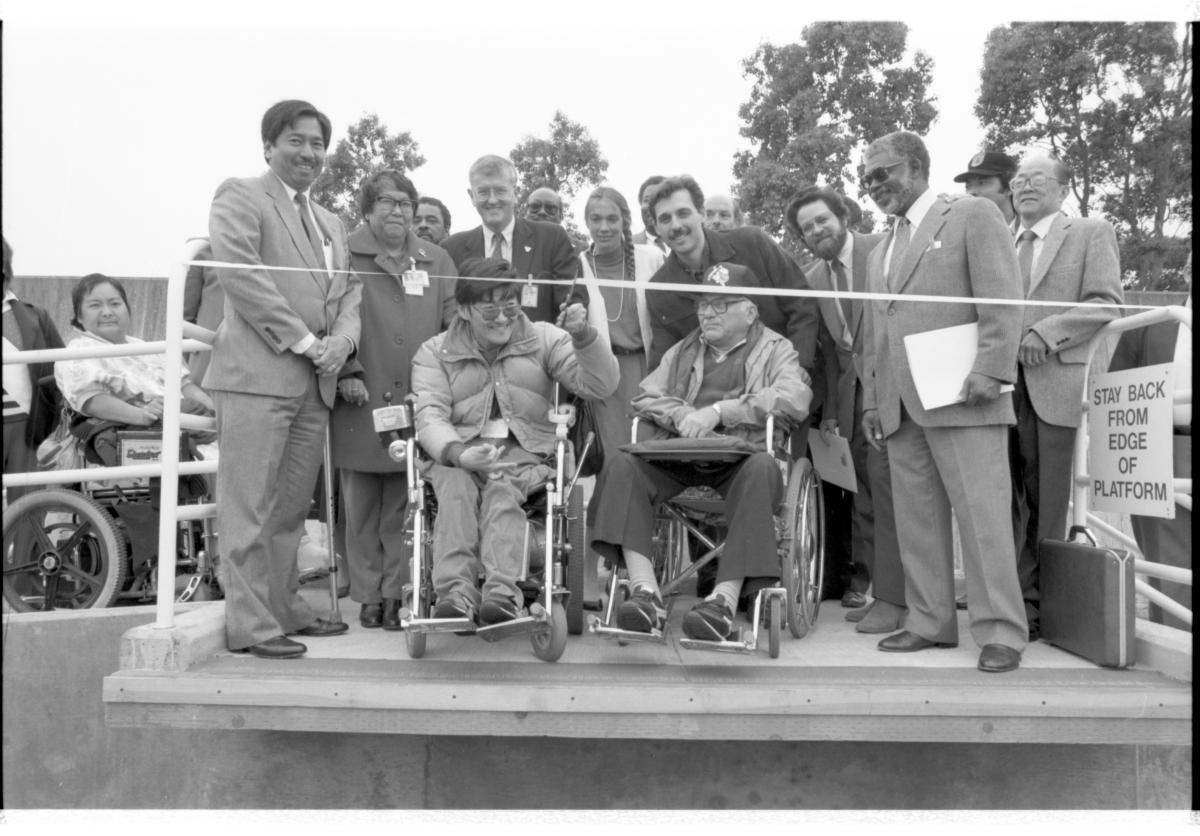
Black and white photo with a crowd of people on an accessibility ramp at a bus stop. Some of the people are standing and some are in wheelchairs. Two people in wheelchairs are in front of a ribbon, one has scissors and smiles as he cuts the ribbon.Disability rights activist Bruce Oka leads the ribbon cutting ceremony for an accessibility ramp on the K Ingleside platform in 1989. 
Did you know one in ten San Franciscans has at least one kind of disability? July is Disability Pride Month, and San Francisco joins the celebration every year to honor the disability community and mark the anniversary of the Americans with Disabilities Act (ADA). The ADA, which turns 33 on July 26, is the landmark civil rights law that prohibits discrimination on the basis of disability.  

The disability rights movement has a long history in the Bay Area, and much of that activism has focused on accessible transportation. You can hear more about the evolution of San Francisco’s accessible transportation on our podcast, Taken with Transportation. During July and all year round, we honor the experiences, achievements and struggles of people with disabilities, and celebrate how disability is a rich part of human diversity.

Staff across the SFMTA are responsible for making our programs, policies and services accessible to older adults and people with disabilities. We work to go beyond legal accessibility requirements to provide safe and efficient service to all. For example, we require scooter companies to provide adaptive scooters. We provide free Muni for seniors and people with disabilities, and those who are unable to independently ride public transit can use paratransit. Since 1978, we have worked to improve and expand paratransit services.  

To address the evolving and diverse transportation needs of people with disabilities and older adults in San Francisco, we are developing an Accessibility Strategy. This strategy will guide the agency in our mission to ensure that older adults and people with disabilities can get to where they need to go safely, reliably and affordably. 

There are three phases to the Accessibility Strategy.

  1. Phase One, the Needs Assessment, begins with a history of accessible transportation services in San Francisco. It discusses the local populations of older adults and people with disabilities and their unique needs. The document examines transit, paratransit, street infrastructure and newer transportation options like scooters and bikeshare.  

The Needs Assessment documents San Francisco’s successes in making these modes accessible to all and identifies additional work that needs to be done. The Accessible Services group analyzed existing agency strategies, rider surveys and performance data and consulted with community members to understand opportunities for improvement. The Needs Assessment will be available for public feedback later this summer. To receive updates on this work, including how to provide feedback, please email AccessibilityStrategy@sfmta.com

  1. Once the Needs Assessment is adopted, the Accessibility Strategy work will focus on Phase Two, the development of Goals and Actions. These goals and actions will provide a guide for how to address the issues and opportunities that have been identified. Your input on the Needs Assessment will be very important during Phase Two work.

  1. Phase Three (Implementation & Performance Measurement) will help us measure the progress of the Accessibility Strategy. It will also set expectations for how we communicate this progress within the agency, to our partners and to the public.  

Stay with us for more news on the Accessibility Strategy and how the SFMTA is working to support transportation for all. We invite you to learn more about transportation for people with disabilities and older adults in San Francisco by visiting our webpage or contacting our Mobility Management Center.


Published July 27, 2023 at 12:25AM
https://ift.tt/9lszOa4

Friday, July 14, 2023

The Slow but Steady Transformation of Page Street

The Slow but Steady Transformation of Page Street
By Michael Delia

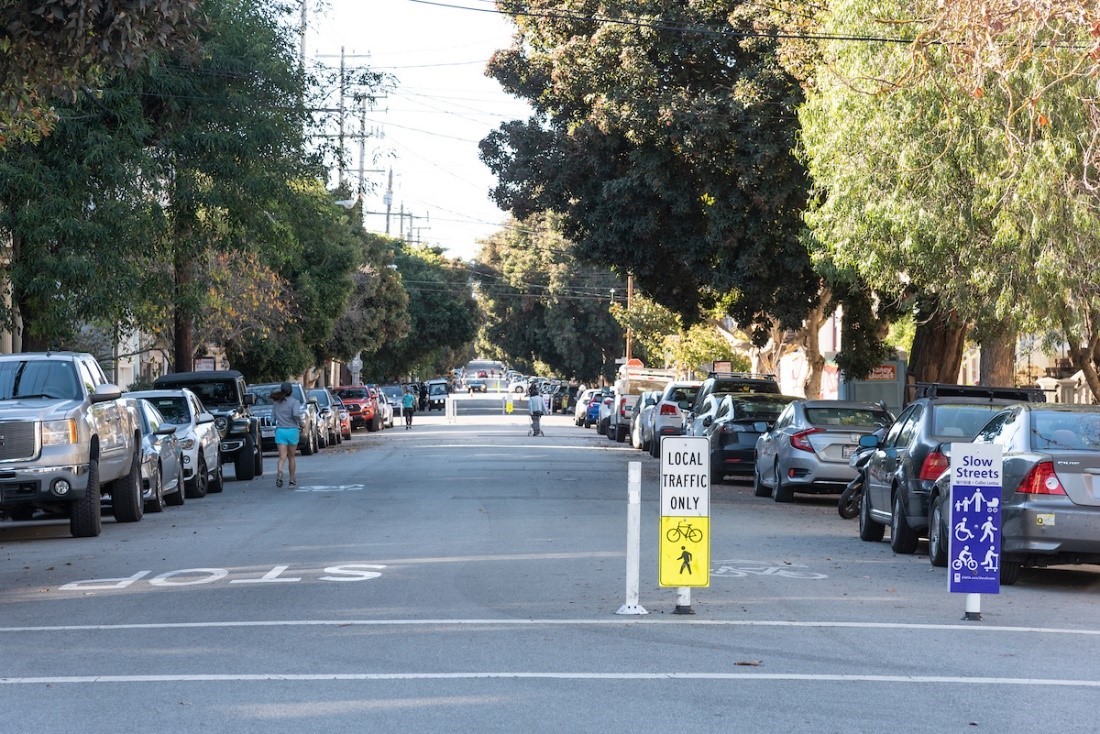
People walk up and down a street that is lined with trees and cars on both sides with signs that read local traffic only..The transformation of Page Street from a congested to calm thoroughfare continues with the goal of making it safer for everyone. 
The Slow Streets Program and other infrastructure upgrades are breathing new life into Page Street, creating a vibrant route connecting the Haight/Ashbury, Lower Haight and Hayes Valley neighborhoods. Widened sidewalks, a significant reduction in traffic and colorful, community-built street artwork have made Page a place where people want to walk, bike and live. 

The tree-lined west end of Page Street serves as a gateway to Golden Gate Park. To the east, there have been numerous changes to the approach to Octavia Boulevard that are being welcomed by those who live in the area. There are now new sidewalk extensions and stormwater rain gardens at three locations near Octavia – including a decorative, traffic-calmed intersection at Page and Buchanan Streets. 

Once a popular cut-through for cars to get to Octavia Boulevard and the freeway, Page Street’s recent transformation is the result of a process that took nearly a decade. The SFMTA began public outreach in 2014 to find ways to slow traffic and reduce the number of cars. The same year, the Planning Department designated Page Street as a Green Connection which paved the way for landscaping and urban design enhancements. 

In 2016, an eastbound center-running bike lane from Laguna to Octavia opened with much fanfare, since it helps separate people biking downhill from the steady stream of right-turning vehicles. The lane was later extended a second block to Buchanan Street, but the issue of chronic congestion and turn conflicts at intersections remained. 

The SFMTA worked closely with the community over several years to improve Page Street. The wider sidewalks and rain gardens were approved in 2018 as part of the Page Street Neighborway project. Initial improvements were focused on the stretch between Webster and Gough streets to address speeding, especially in the John Muir Elementary school zone, drivers and bicyclists running stop signs and traffic signals, steep grades at certain blocks and all-day congestion. An additional bikeway project that restricted access to Octavia Boulevard and the Central Freeway was implemented in February 2020.  

During the COVID-19 pandemic emergency, Page became part of the pilot Slow Streets Program to limit car flow and open streets to expanded recreational use. With overwhelming community support of 85%, Page was adopted into the permanent Slow Streets program by the SFMTA Board this January. More robust traffic diverters were installed at all major signalized crossings, including Octavia, Divisadero, Masonic and Stanyan streets. 

Today, we are seeing progress in the form of increased pedestrian and bicycle use and speed reductions. In the last two years, vehicle traffic on Page Street has gone down steadily, with an average daily vehicle volume of 1,120, down from 3,370, and an average speed of 16 mph. These numbers are getting closer to our recommended criteria of fewer than 1,000 cars per day with a median speed of 15 mph. There were also 39% fewer traffic collisions on Slow Page Street than before it became a Slow Street. 

Our work is far from done. The community is hopeful that we can realize the full potential of “Slow Page.” Later this summer, we plan to install new signs to better communicate speed limits and restrictions at the approaches from cross streets. 

While many of these changes have been implemented using quick build materials such as paint, posts and signs, we are also looking into what traffic restrictions we can add to the corridor and which ones can be made permanent. The recent completion of the neighborway project offers insight – and potentially lessons learned – into how adding infrastructure affects the Slow Streets experience. The potential for additional stormwater greening measures will also be studied. We expect to begin another round of public engagement focused on the western half of the corridor later this year into 2024. 

The future of Page Street looks bright as progress continues. Evolving designs that prioritize people over traffic have helped foster a sense of community and encourage more public art and neighborhood-focused activity. This corridor is transforming into a safer, quieter residential street that offers a better quality of life for all of us who love this neighborhood. 


Published July 14, 2023 at 10:57PM
https://ift.tt/jGwp1Td

Wednesday, July 12, 2023

Innovation to Icon: 150 Years of Cable Cars Exhibit Opens

Innovation to Icon: 150 Years of Cable Cars Exhibit Opens
By Jeremy Menzies

We are happy to announce the opening of a special history exhibit at the San Francisco Public Library, as part of the ongoing celebrations for the 150th anniversary of the cable cars. The “Innovation to Icon: 150 Years of Cable Cars” exhibit runs from July 1 to September 30 on the 6th floor of the public library’s main branch library at 100 Larkin Street.

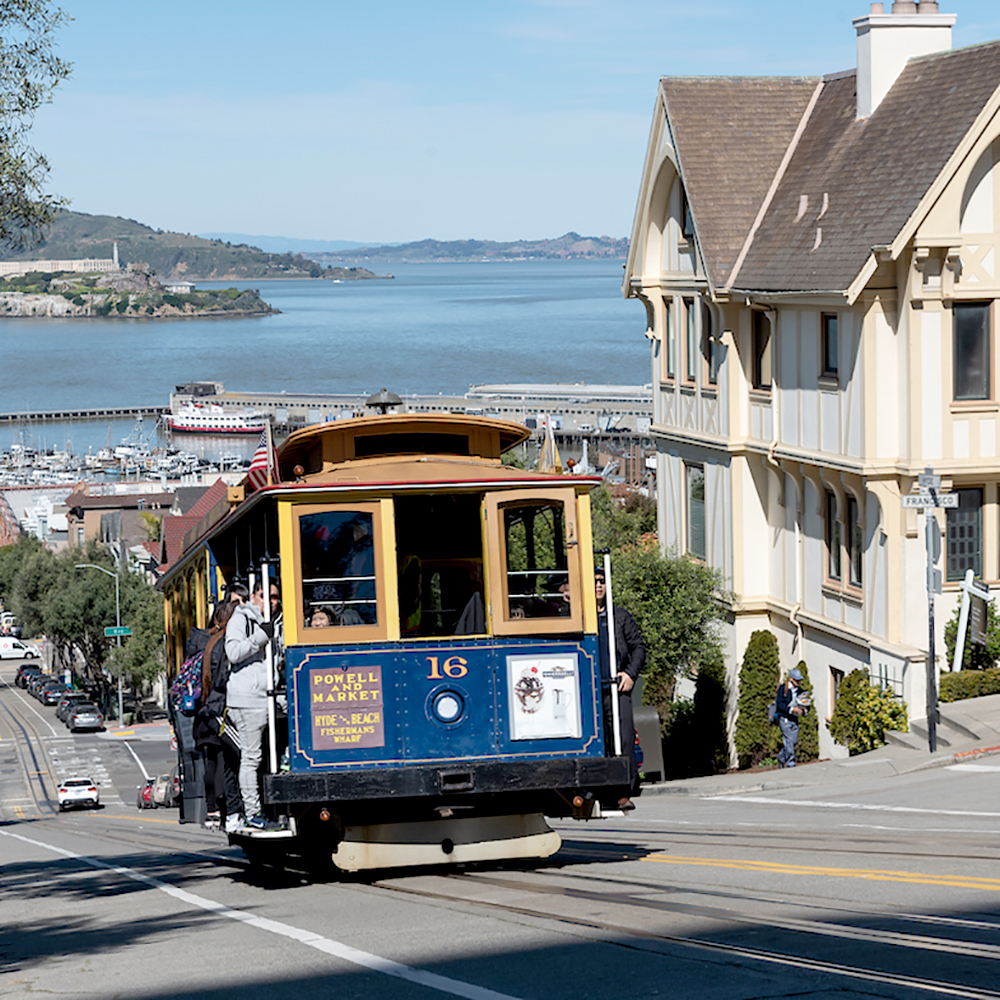
Color photo of cable car 16 climbing hill on Hyde Street with view of San Francisco Bay in background.150 years strong, San Francisco’s cable car system is a symbol of the city. 
"Innovation to Icon: 150 Years of Cable Cars" takes a visual journey through time that brings the incredible history of San Francisco’s beloved cable cars to life. Combining photographs, original documents, and unique memorabilia from the San Francisco History Center and the SFMTA Photo Archive, this exhibit showcases the spirit, ingenuity and timeless allure of a city icon.  

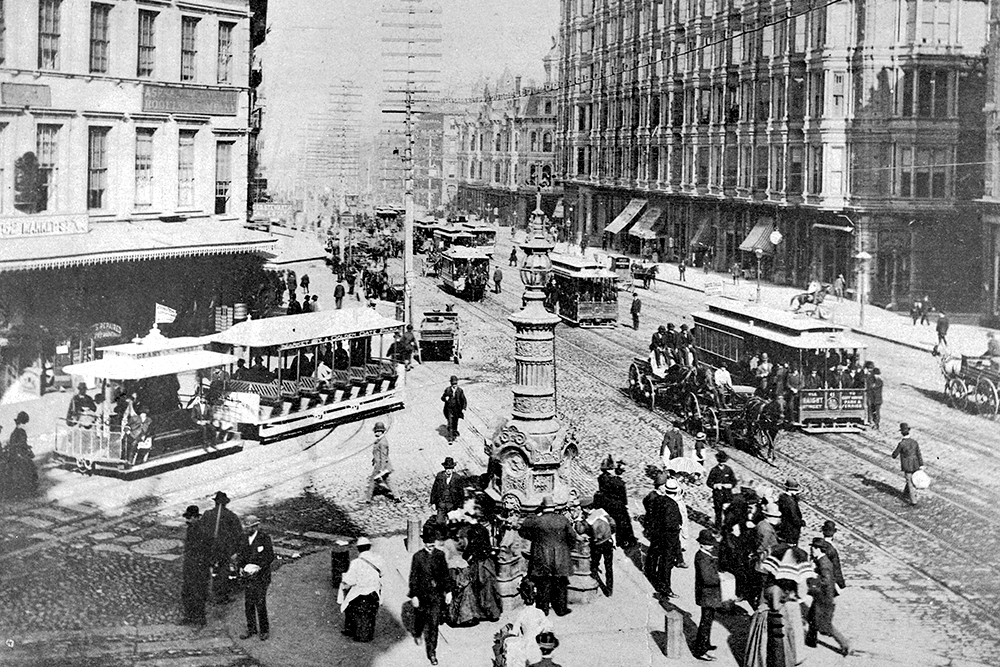
Black and white photo of intersection showing people and cable cars on streets. Cable cars once dominated the transit scene in San Francisco. This 1890s shot was taken at Market and Geary Streets in the center of the city. 
Invented in 1873 to conquer the city’s challenging topography, cable cars evolved from a groundbreaking transportation mode to a symbol of San Francisco. The cars have endured multiple boom-bust cycles, nearly becoming extinct more than once thanks to natural, political and economic turmoil. During the post-war era, they rose in popularity locally and nationally and became a “must-see” attraction for visitors. 

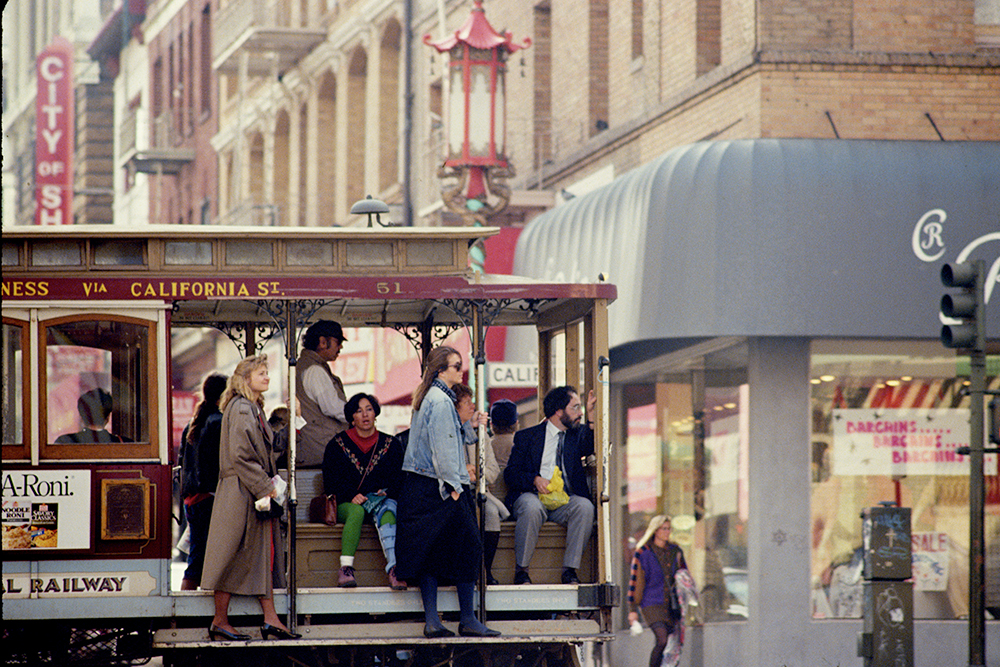
Color photo of the side of a cable car with people sitting on board and standing on the running boards.California Street cable car passing Grant Avenue in Chinatown in the late 1970s. 
Years of use and deferred maintenance in the 1970s left the system battered and unsafe. From 1982-1984, the entire system was shut down and rebuilt from the ground up. Reengineered for improved safety and structural integrity, the new system held onto its 19th century roots. 

Today, San Francisco’s cable cars are landmarks of American history and culture. Rather than being static relics from the past, they are living and moving museums, reminding us of what makes San Francisco such an extraordinary place. Drop by during regular library hours to immerse yourself in the world of the “little cable cars” that forever changed our city.


Published July 13, 2023 at 02:53AM
https://ift.tt/IAcrzVe

Monday, July 3, 2023

Get Your Transportation Needs Met in the Bayview

Get Your Transportation Needs Met in the Bayview
By Christopher Kidd

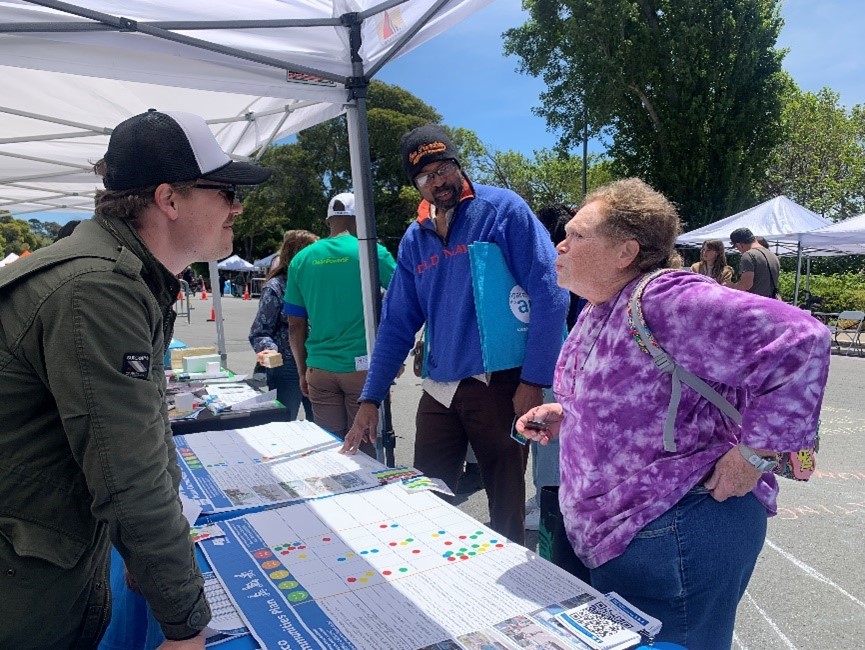
People talking under a tent with charts on a table and more tents in the background.SFMTA staff tabling at Bayview Sunday Streets in May of 2023. 
Starting this summer, Bayview-Hunters Point residents can get their transportation service needs met without having to leave the neighborhood! The Transportation Resource Center (TRC) at 5009 3rd Street is now open from 10 a.m. to 5 p.m., Monday through Friday, and offers access to Muni resources. 

Run by the SFMTA and Community Youth Center of San Francisco, the TRC is part of the larger SFMTA Bayview Community Shuttle Program

There are many programs that make transportation more affordable and accessible for youth, seniors, low-income residents and residents with a disability – but learning about these programs or registering for them can be a challenge. The TRC makes information and services for transportation easily available for residents in Bayview-Hunters Point, with staff on site to help navigate forms and requirements. At the Center people can: 

We’re also partnering with the HOPE SF Youth Leadership Program (led by Bay Area Community Resources) to share information about the TRC with residents at HOPE SF housing sites across Bayview-Hunters Point. These youth champions will help expand mobility to those who find it hardest to access transportation.   

Mobile Sales Van Partnership 

We’re also bringing the SFMTA Mobile Sales Van to the TRC for pop-ups on July 11 and July 18 from 10 a.m. to 2 p.m. Residents can buy Clipper cards, buy or renew transit passes and pay parking citations at the Mobile Van. The SFMTA Mobile Van also stops at Mendell Plaza in Bayview-Hunters Point the first and last Friday of every month from 10 a.m. to 2 p.m.  

You can get involved with the Bayview Community Shuttle in a number of ways: 

Find more information on the Bayview Community Shuttle Fact Sheet


Published July 04, 2023 at 01:26AM
https://ift.tt/up0dHZF

Photo Exhibit Event: Vintage Bus Display and Tour

Photo Exhibit Event: Vintage Bus Display and Tour By Jeremy Menzies Join us Saturday, Jan. 27 at a special event for our exhibit, " 1...