Thursday, April 28, 2022

SFMTA Recently Approved Budget Serves San Francisco

SFMTA Recently Approved Budget Serves San Francisco
By Stephen Chun

Delivering on Your Service Priorities 

The Fiscal Year (FY) 2023 & 2024 SFMTA Budget was passed by the SFMTA Board of Directors last week. It will be submitted to the Mayor’s Office by May 1, and the mayor will then send the budget to the Board of Supervisors on June 1.  

This budget cycle, we approached outreach as a city-wide listening session. Rather than presenting a pre-set budget to our stakeholders, customers and the wider community for feedback, we focused on soliciting feedback and then crafted our budget to address the top community priorities. 

Community Survey Highlights 

  • Surveys were offered in English, Chinese, Spanish and Filipino both online and in print. They included an open-ended question to ensure San Franciscans had a real opportunity to provide specific feedback about service priorities. 
  • 1,295 responses from online and paper surveys in four languages  
  • 917 additional comments from listening sessions, phone calls, and emails 
  • Feedback from the SFMTA Board of Directors and Citizens Advisory Council 
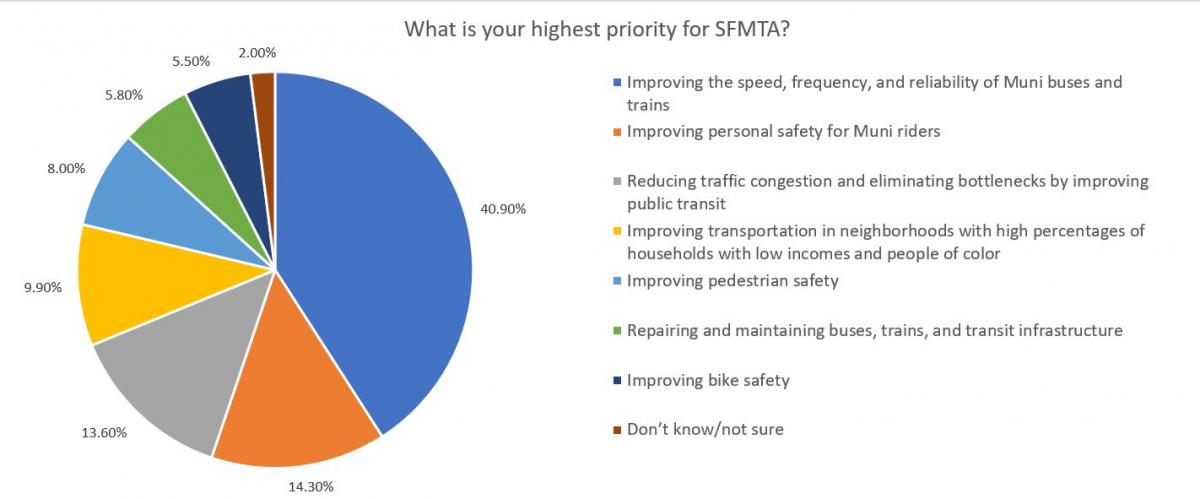
Pie chart showing data from responses of various priorities of the SFMTA

Budget Highlights: Equity, Reliability and Safety   

As a direct result of your feedback, the SFMTA FY 2023 & 2024 budget has doubled down on our long-standing commitment to ensuring equity in San Francisco’s public transportation network. To improve reliability, we’ve made the largest investment in decades for State of Good Repair, which refers to the condition in which the SFMTA’s capital assets can operate at a full level of performance. To ensure that all our riders feel safe, we’ve increased investments in Muni safety, including funding a new Safety Equity Initiative designed to reduce gender-based harassment and violence on Muni.  

EQUITY   

For San Francisco to be an equitable community, we must fully invest in a robust transportation system that ensures that everyone--especially people who have the fewest transportation options and rely most on Muni--can access jobs and services throughout San Francisco. This means that we made the following investments to ensure Muni remains safe and affordable for all who rely on it, including: 

  • No fare increases for the two-year budget period (pause fare indexing)  
  • Free Muni for All Youth continues  
  • Pilots of new fare programs , such as a 10-Trip Pass 
  • More Muni service, especially for neighborhoods identified by the Muni Service Equity Strategy  

RELIABILITY 

To make Muni faster and more reliable, we’ll be investing an unprecedented amount in State of Good Repair because a broken bus or train reduces reliability and impacts all our riders. Based on what we have heard and the feedback we have received, the updated 5-Year Capital Improvement Program (CIP) will fund critical investments in transit speed and reliability projects, through significant investments in State of Good Repair:  

  • Continue replacement of the Breda Light Rail Vehicles  
  • Replacement of the subway’s Muni Metro Train Control System  
  • Muni Bus Fleet Mid-Life Overhauls  
  • Upgraded Facilities for improved maintenance  

The FY 2023 & 2024 budget also invests in street improvements that have proven to increase Muni reliability, such as transit lanes, bus bulbs and smart traffic signals. Similar improvements on the 9R San Bruno, 5R Fulton and 14 Mission have improved the rider experience and increased both reliability and ridership. 

To further increase reliability, we must invest in larger infrastructure projects, like upgrading our 100-year-old bus yards so we’re able to repair modern buses more quickly. We are aggressively pursuing state and federal grants to support San Francisco’s transportation infrastructure needs and fill holes on the capital funding side of the budget. We will know how much funding is needed after voters decide on the Muni Reliability and Street Safety Bond measure that’s on the ballot in June 2022. 

SAFETY 

The FY 2023 & 2024 Budget includes 53% more funding than the previous two-year budget for Quick Build projects that slow down vehicle speeds and increase pedestrian visibility and safety, which will help us achieve our Vision Zero goal to eliminate traffic-related fatalities and serious injuries.  

We also know that for the SFMTA to increase ridership and reduce car use – one of the most important changes in our fight against climate change – riders need to feel safe. Consequently, the FY 2023 & 2024 Budget: 

  • Increases the number of staff in our Security Intelligence Center. These staff will analyze data, gather intelligence and review security video footage to identify patterns and direct security response 24 hours a day. 
  • Funds a new Safety Equity Initiative designed to reduce gender-based harassment and violence on Muni.  
  • Fully funds the security budget and staffing from our last two-year budget cycle that included 20 new Muni Transit Ambassadors who began riding Muni routes at the end of 2021 to assist customers, defuse and deter conflicts, prevent acts of vandalism and assist bus operators.   

The 2-year Consolidated Operating and Capital Budget will go into effect on July 1 and will end on June 30, 2024. To learn more, view our full budget


Published April 29, 2022 at 05:31AM
https://ift.tt/wnkqdpK

Bikeshare Pricing Frequently Asked Questions (FAQ)

Bikeshare Pricing Frequently Asked Questions (FAQ)
By Adrian Leung

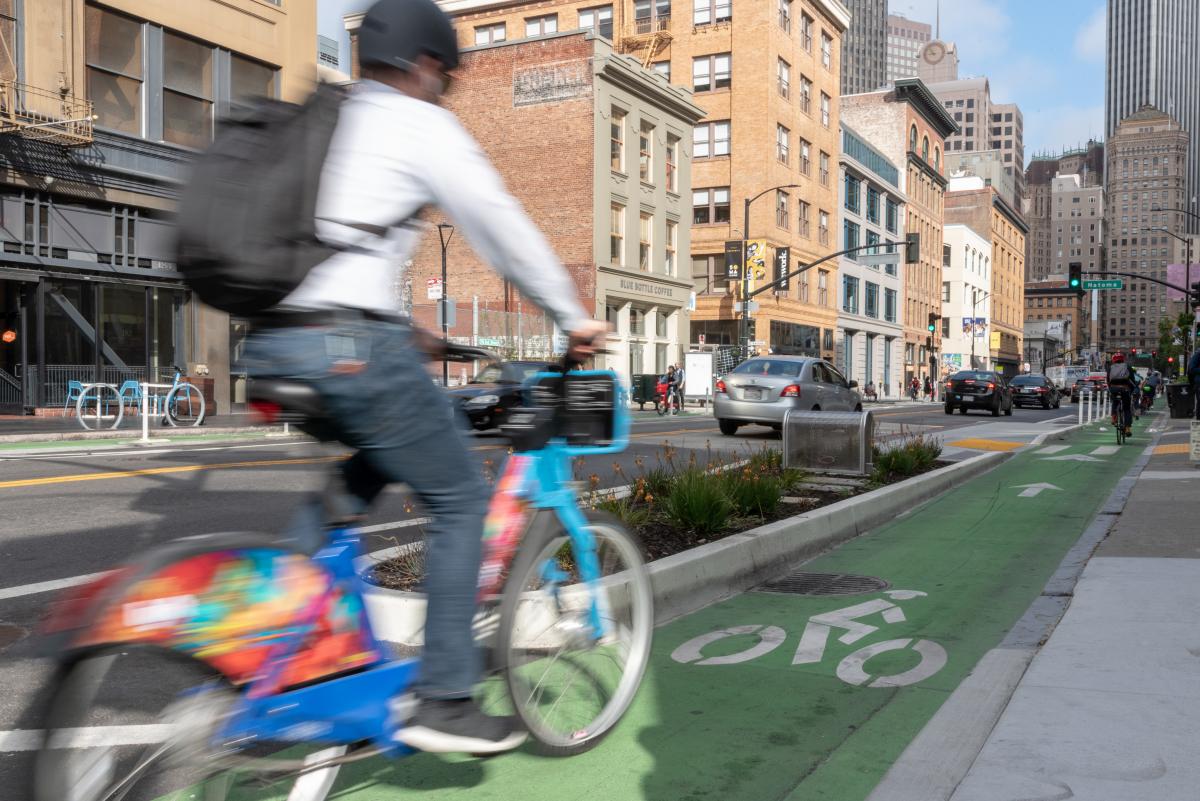
Image of a bikeshare rider using a designated bike lane on city streets

With Spring in the air and a recent expansion of up to 275 stations in SF, more people are riding bikeshare. Our major goal is to make bicycling easy by making bikes available while simultaneously reducing the burden of ownership (e.g. theft, storage, maintenance).  We’ll see discount codes for new members in Bike Month May. And Lyft is providing ride credit for anyone riding a regular pedal bike in the last 30-days, who’ve never tried the e-Bikes. 

We get a lot of questions about pricing—How does pricing work? Who sets it? Is this Private or Public? We figured a dedicated FAQ could help to cover the basics. 

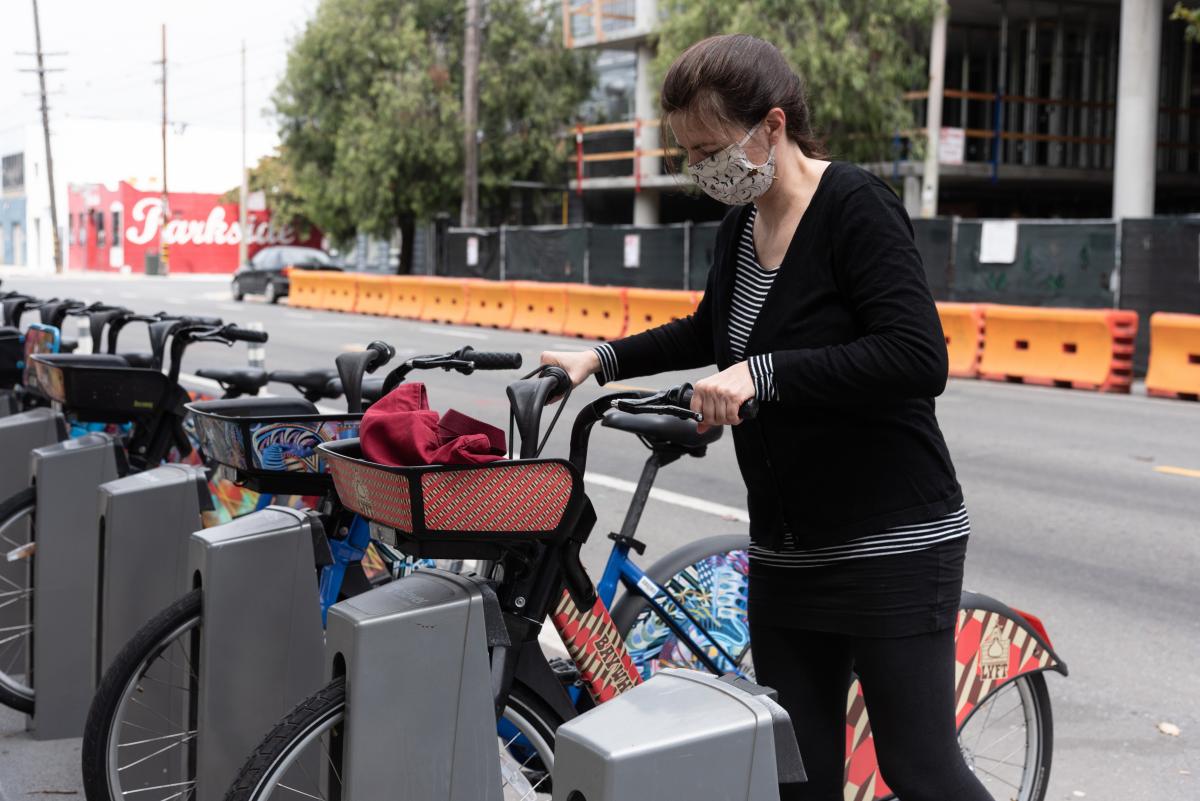
Photo showing an e-bike user undocking an e-bike

How much does bikeshare cost?

Bikeshare is the most affordable mobility option in San Francisco and the Bay Area. An annual bikeshare membership costs about $14/month, which includes unlimited 45-minute trips on regular pedal bikes with no additional fees anywhere in the five-city service area.  

Why do e-bikes cost more? 

E-bikes contain batteries that need charging and more expensive parts like motors and sensors that require more maintenance and more work to locate and redistribute. The city and our bikeshare operator, Lyft, try to balance these costs with maintaining and improving service for all San Franciscans, especially ones who can't afford higher prices.  

The 2015 bikeshare agreement grants exclusivity to the contractor for station-based bikeshare. In 2019, the SFMTA sought to offer e-bikeshare operator permits to increase competition. An ensuing lawsuit resulted in Bay Wheels exclusivity and SFMTA approval power over pricing while allowing the operator to push towards financially sustainability.  

How is pricing decided? 

The annual membership pricing was specified by the 2015 regional agreement, managed by Metropolitan Transportation Commission and unanimously approved by SF Supervisors. E-bike per minute pricing is subject to SFMTA approval (keeping increased operating costs and program financial sustainability in mind), and all other pricing, like per-trip unlock fees and overages, is up to Lyft. 

How has the city used pricing approval power to expand equity measures for bikeshare? 

The city can’t lower e-Bike prices, but it has negotiated public benefits like  

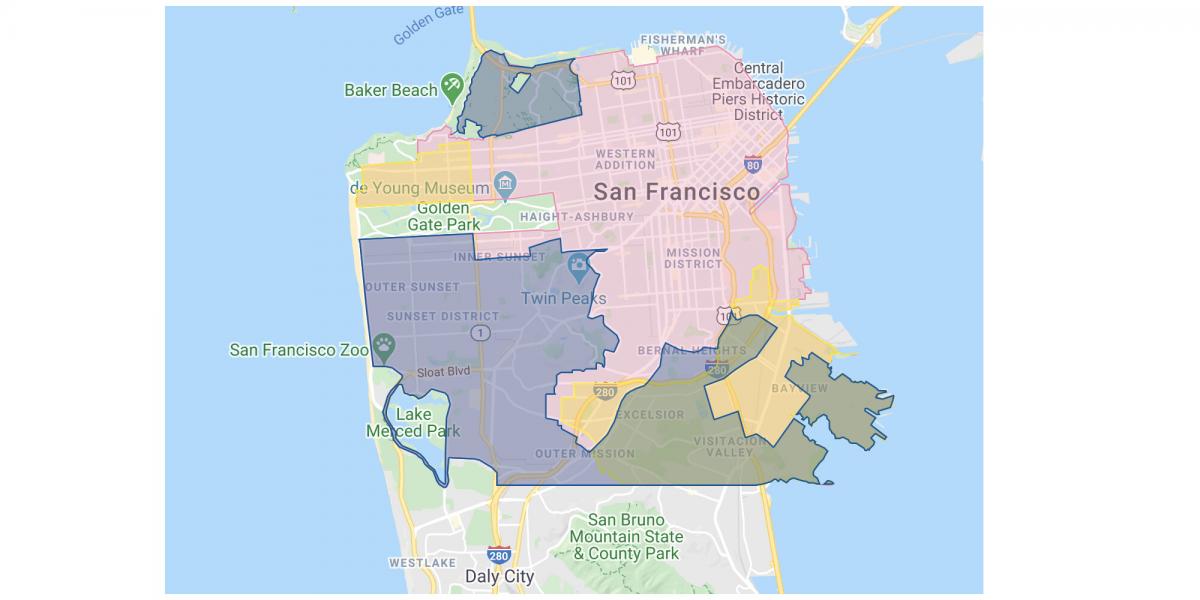
City map showing Bay Wheel service area

Why is there a 45-minute time limit?  

Bikeshare is designed for shorter duration trips. The system works by circulating—sharing—bikes between users. When a bike is checked out, it reduces the number of total available bikes in the system and increases the possibility there won’t be enough bikes for people who need them and this hurts system dependability. If a rider needs a bike for longer than 45 minutes, they can always check out a new bike mid-trip to complete their ride. For longer trips, the city recommends looking into other non-bikeshare options, like bike rentals.    

What are the costs associated with bikeshare, and who pays for them? As a public private partnership, all expenses—including labor and maintenance--are paid by the operator, and San Francisco and its regional partners offer this service at no cost to taxpayers. Bikeshare provides living wage union jobs to station technicians, bicycle mechanics, and system rebalancers, and city planners and engineers support the research, expansion, communications, and customer service needs for the program.

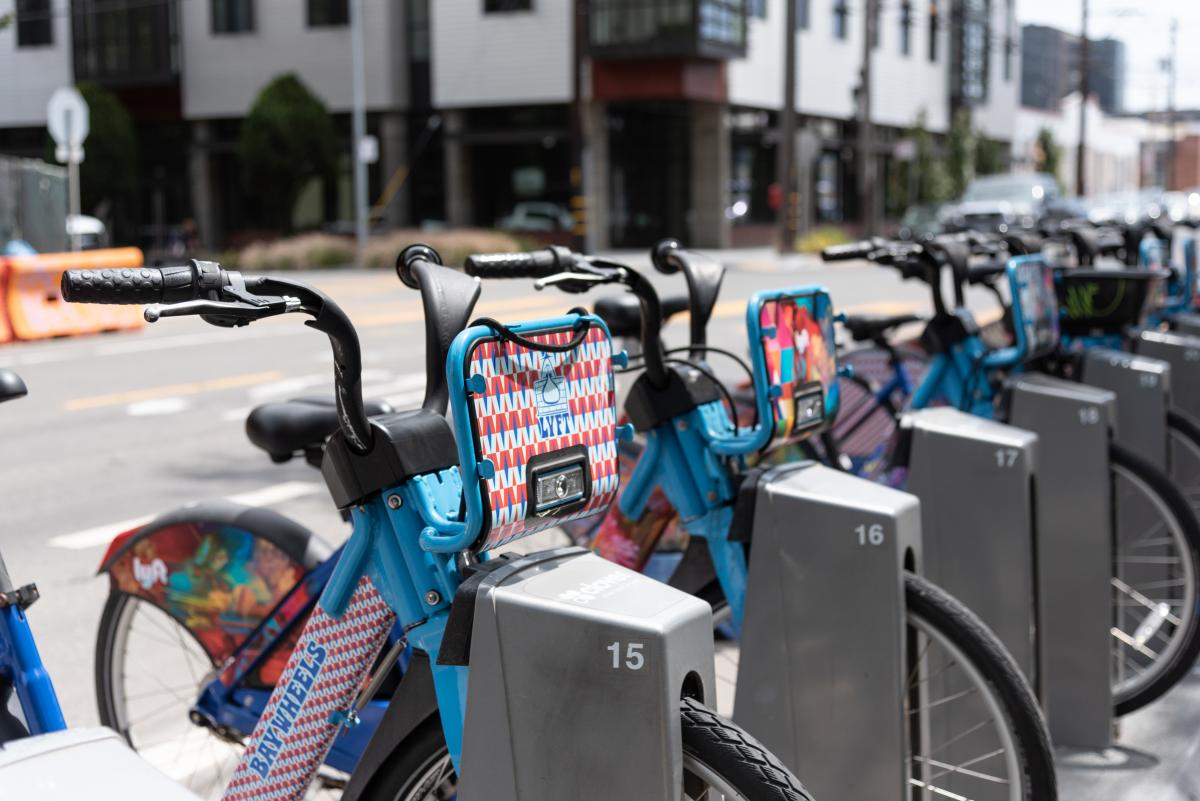
  Photo showing e bikes lined up at a docking station

What’s next for pricing?  

The current e-bike agreement ends in 2024; the regional regular pedal station-based contract ends in 2027. The city and regional partners are exploring services, pricing, and partnerships that may come next, with the goal of continuing to expand bikeshare as an accessible, sustainable transportation choice for San Francisco.  

If you have thoughts on bikeshare pricing, we want to hear from you. Feel free to reach out with ideas to bikeshare@sfmta.com. 

And to celebrate National Bike Month, starting May 1, Bay Wheels is providing 20% off annual or monthly Bay Wheels membership. Enter one of the codes below at checkout and enjoy membership benefits for less. 
 
20% off Annual Memberships: BWMAYANNUAL20 
20% off Monthly Memberships: BWMAYMONTHLY20 


Published April 29, 2022 at 01:20AM
https://ift.tt/t1VB5iP

Tuesday, April 26, 2022

SFMTA Announces New Initiative to Address Safety

SFMTA Announces New Initiative to Address Safety
By Kimberly Burrus

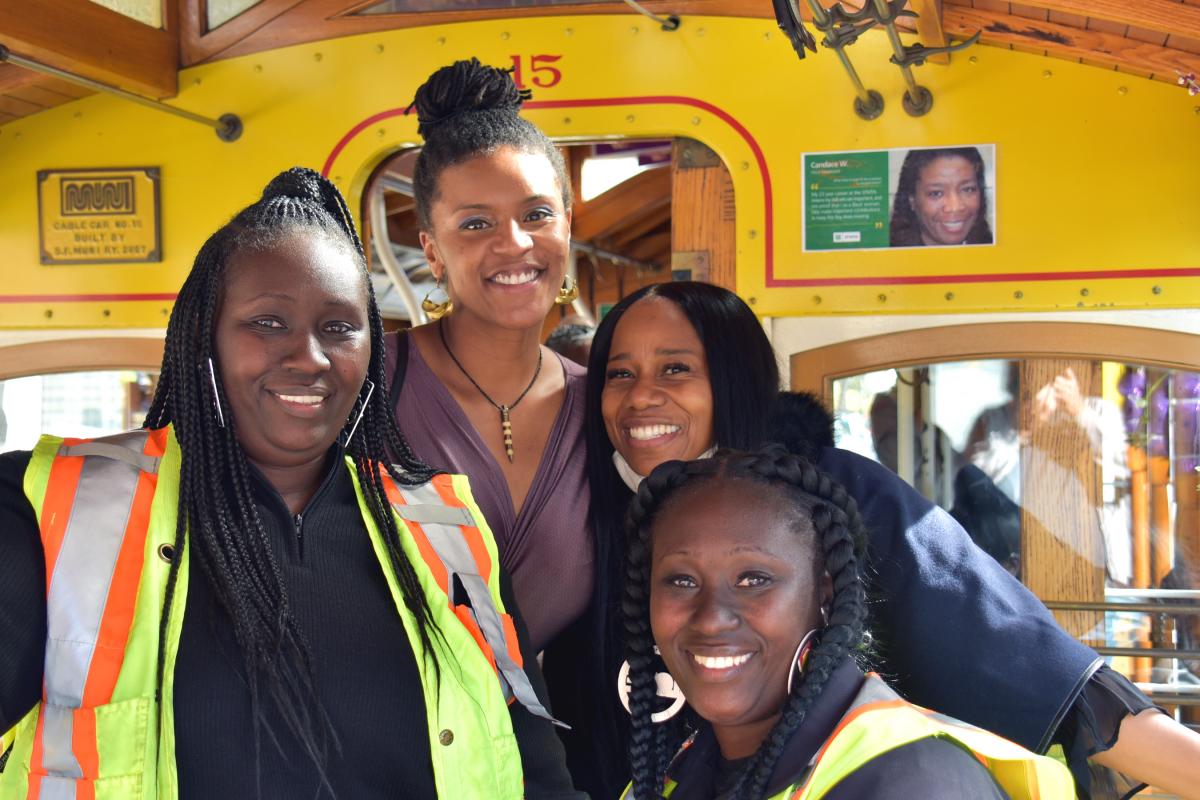
Photo of four African American female SFMTA staff

SFMTA staff celebrating women’s history

Safety is an absolute priority for the SFMTA. We’ve heard loud and clear that personal safety is a growing concern for the public and staff and we’ve taken a lot of steps to increase safety across our system. We also know there is much work to do to address some of the most pervasive ways harassment and violence show up in public transportation.  

This April as we observe Sexual Harassment Awareness Month, the SFMTA is proud to announce that we are developing a new Safety Equity Initiative. The goal of the initiative is to reduce and eventually eliminate gender-based harassment and violence on Muni. 

Gender-based harassment is one of the most widespread and persistent forms of violence. It impacts women, girls and gender-expansive people — people who don’t conform to traditional gender roles — of all ages, abilities, races, ethnicities, and cultural and language groups. Women often feel unsafe on transit, which impacts how often they ride, when they ride and if they ride at all. This is especially true for women and girls of color, and gender-based harassment disproportionately impacts community members who are Black, Indigenous and people of color (BIPOC).  

The Safety Equity Initiative will center the experiences of our most transit-reliant community members and build community-focused solutions. Our initial steps will focus on understanding the scope and gravity of the issues through data collection and outreach. We will partner with community-based organizations, our riders and staff to enhance our existing reporting structure and implement data-driven security upgrades.  

New Reporting Options 

We know gender-based harassment often goes unreported. There is much we need to learn to make meaningful progress and we need your help. That’s why we are expanding reporting options on our Muni Feedback form and the 311 Customer Service phone line.  

In the coming days, users and bystanders will be able to report different types of gender-based harassment incidents, their location and other information that will help us understand the scope of the problem better, identify possible improvements and track progress. 

These incidents can include inappropriate, unwanted contact, gestures or comments, staring, groping, indecent exposure, abuse and violence of a sexual or nonsexual nature. Some of these incidents may also be criminal acts. All of them are unacceptable, and we have a duty to work to end these behaviors. 

Why We Are Focusing on Gender and Racial Equity 

Gender-based harassment doesn’t happen in a vacuum. It’s often targeted at BIPOC and low-income women and can be laced with racism. LGBTQIA people are also frequently subjected to gender-based harassment that is laced with homophobia and transphobia. At the same time, people who belong to groups with less power and resources in society tend to be less likely to report it to when they’re harassed.  

By elevating equity as a key part of this safety initiative, we want to signal that we’re seeking engagement and partnership from all the diverse groups of people who are impacted by gender-based harassment. This includes trans women and girls, non-binary people, gender non-conforming people, gender queer people, cis girls and cis women and any woman- and girl-identified individuals. We will also work to educate and engage men and boys to help prevent harassment. 

Our staff were inspired by BART’s Not One More Girl campaign, which has been a model for building partnerships and community-driven solutions around gender-based safety challenges. Similarly, we want to collaborate with a diversity of stakeholders, community-based organizations and community members to develop community-centered solutions that make our transportation system safer for all – staff, riders and bystanders. 

We’re excited to embark on this process and look forward to creating change together.  

Read more about our program vision, goals, intended outcomes and commitment to the community on the new project page at Safety Equity Initiative.. Email us about this initiative, and other safety issues, at MuniSafe@SFMTA.com.  


Published April 27, 2022 at 02:40AM
https://ift.tt/XVwex8g

Thursday, April 21, 2022

Muni Earth Day

Muni Earth Day
By Andrea Buffa

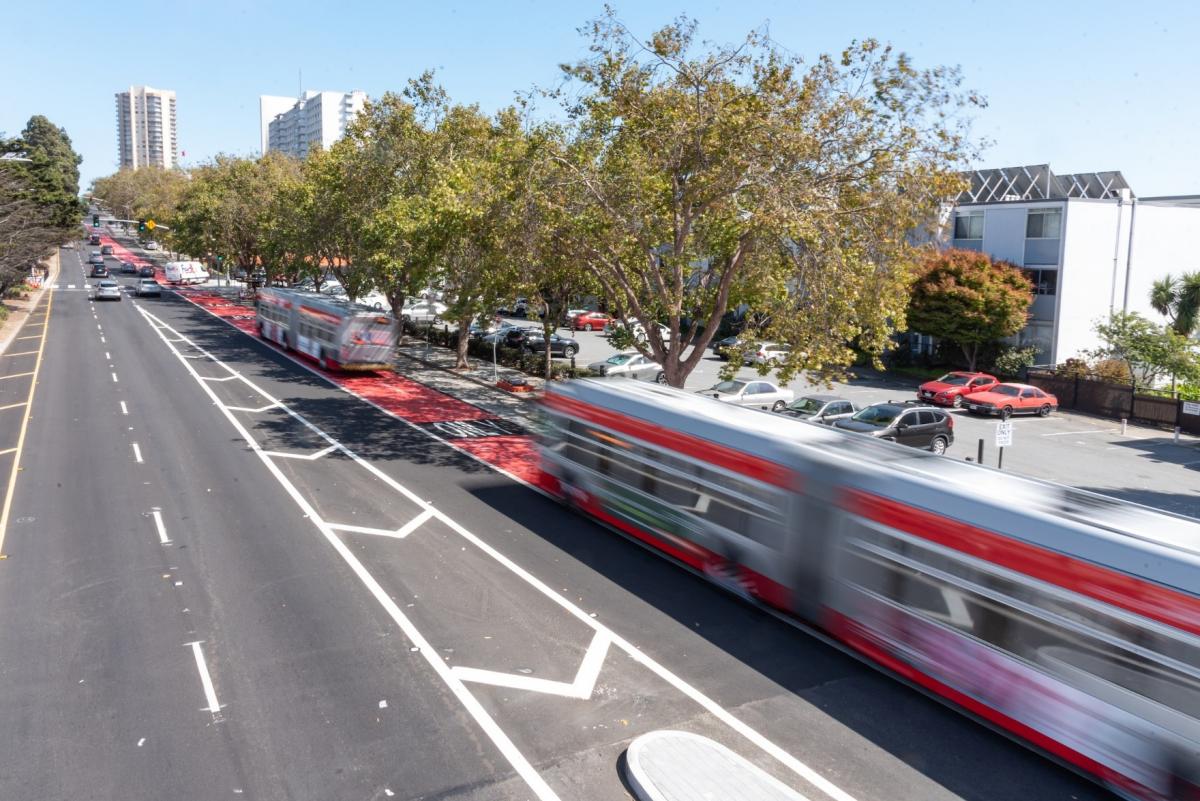
 Muni buses zooming along Geary Boulevard in red transit lanes

Every day, we are confronted with the impacts of climate change: Fires, flooding, heat waves, poor air quality; threats to the health of human beings and the planet. It all can feel so overwhelming when considering what actions you can take that will actually make a big difference for Earth Day. But one of the easiest and most convenient ways that you can make Earth Day every day is to make more of your trips by Muni, walking or bicycling.  

Making these efforts now truly will make a difference: Transportation is the largest source of greenhouse gas (GHG) emissions in San Francisco—almost half of all GHG emissions. A whopping three-quarters of those emissions come from driving personal vehicles. While climate emissions from other sectors have declined significantly over the last 30 years (commercial building emissions declined 67% and residential building emissions by 57%), transportation emissions have been stubbornly hard to bring down. They’ve dropped only 16% since 1990. By taking on transportation emissions, we can make a meaningful difference and meet the challenge of the climate emergency. A shift in how you get around San Francisco makes an impact.  

And, there’s never been a better time to try a “low-carbon” way of getting around our beautiful city nor a more rewarding way to fight the climate crisis. If you haven’t taken Muni in a while, you are in for a treat. The service has never been more dependable. Despite the setbacks Muni has faced during the pandemic—and there have been a lot—our main lines have never been faster, more reliable or more frequent. Traffic is back, but the buses aren’t stuck in it, thanks to the nearly 10 miles of new or upgraded transit lanes across the city. How about a ride down the new Van Ness Bus Rapid Transit corridor? You can get from Market Street to Fort Mason in less than 20 minutes while gazing out the window as you whiz past traffic.  

Fighting climate change is a priority for the SFMTA. Our city and agency are climate action pioneers, and the Muni fleet is one of the greenest in North America. Our city needs to be bold and courageous to meet its goal of net zero emissions city by 2040.  By the year 2030, at least 80% of all San Francisco trips should be low-carbon trips—trips by transit, walking or biking. When anyone decides to take a trip by walking, biking, or transit rather than by car, it benefits everyone. So, what are you waiting for? Doing something small can have a big impact: Hop on Muni with us and make Earth Day every day so that together we can meet San Francisco’s climate action goals. 


Published April 21, 2022 at 11:00PM
https://ift.tt/VFO0U1C

Tuesday, April 19, 2022

How People Traveled Through San Francisco in 2021

How People Traveled Through San Francisco in 2021
By Maia Moran

Earth Day is April 22 and a great time to think about changes we can make in our own lives to support the health of our planet. When it comes to climate change, one of the most meaningful actions we can take is to drive less and get around more by biking, walking and taking forms of public transportation like Muni. Transportation is the largest source of greenhouse gas emissions (GHG) in San Francisco, with personal driving accounting for 72% of the sector’s emissions. By comparison, Muni accounts for about 1% of GHG emissions in and out of the city. 

But when it comes to driving less, the San Francisco Bay Area is going in the wrong direction. Public transit use fell by 11% between 2019 and 2021 and private automobile use increased by 13%, according to the results of the 2021 Travel Decision Survey. That’s why we’ve been working so hard to make transit, walking and biking more appealing and convenient with new transit lanes, better ventilation on Muni, protected bike lanes and more. 

Travel Decision Survey 

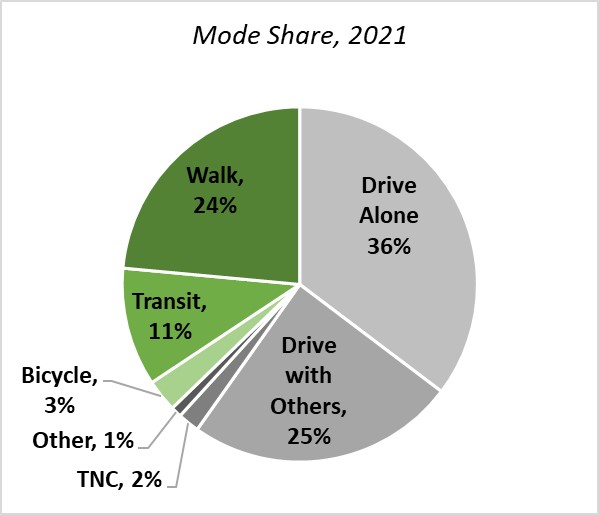
Once every two years, the SFMTA conducts a telephone survey of over 750 Bay Area residents to ask them questions about their daily travel patterns and how they get to destinations in and around San Francisco. Results from the 2021 Travel Decision Survey (TDS) indicate that the COVID-19 pandemic has driven a shift away from our vision for a transit-first city. The survey allows us to understand whether people in San Francisco are traveling by “priority” modes (walking, biking and public transit). Priority modes are those encouraged by San Francisco’s long-standing transit-first policy, which seeks to improve the city’s economy, environment and quality of life. Trips by transportation network companies (TNCs) such as Uber and Lyft, driving with others and driving alone are all categorized as “privately owned vehicle” modes and grouped into one category.  

2021 Mode Share pie chart with 7 categories, split into green and grey color shades representing the two mode-type groups. Green represents priority modes; priority mode share percentages are 24 percent walk, 11 percent transit, and 3 percent bicycle. Grey represents privately-owned vehicle modes; privately-owned vehicle mode share percentages are 36 percent drive alone, 25 percent drive with others, 2 percent Transportation Network Company, and 1 percent other.

Key Findings 

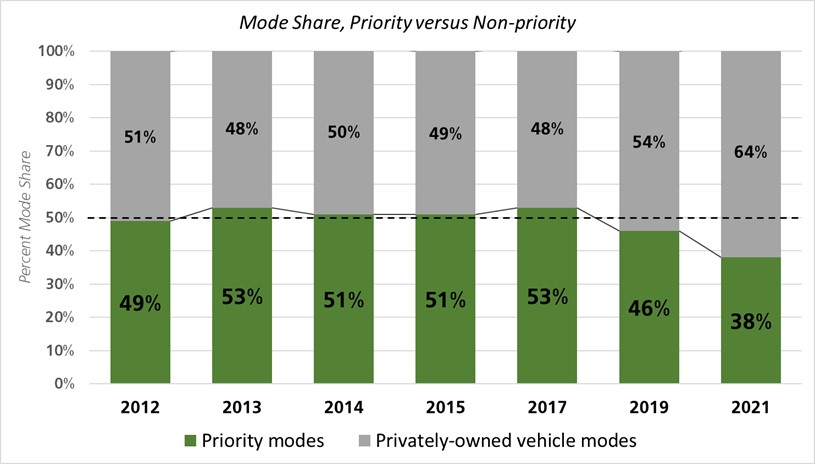
Using San Francisco County Transportation Agency data, the total number of anticipated daily trips decreased from 4.5 million in 2019 to 4.4 million in 2021, consistent with daily travel pattern shifts prompted by the pandemic such as more people working at home and fewer commuting to offices. Despite an agency goal of increasing travel by priority modes, the share for these trips fell from just under half (46%) in 2019 to just under two-fifths (38%) in 2021.  

Mode share over time bar chart grouped into priority modes and non-priority modes. Priority modes are green, non-priority modes are grey. Percent mode share in 2012 was 49 percent priority, 51 percent non-priority. Percent mode share in 2013 was 53 percent priority, 48 percent non-priority. Percent mode share in 2014 was 51 percent priority, 50 percent non-priority. Percent mode share in 2015 was 51 percent priority, 49 percent non-priority. Percent mode share in 2017 was 53 percent priority, 48 percent non-priority. Percent mode share in 2019 was 46 percent priority, 54 percent non-priority. Percent mode share in 2021 was 38 percent priority, 64 percent non-priority.

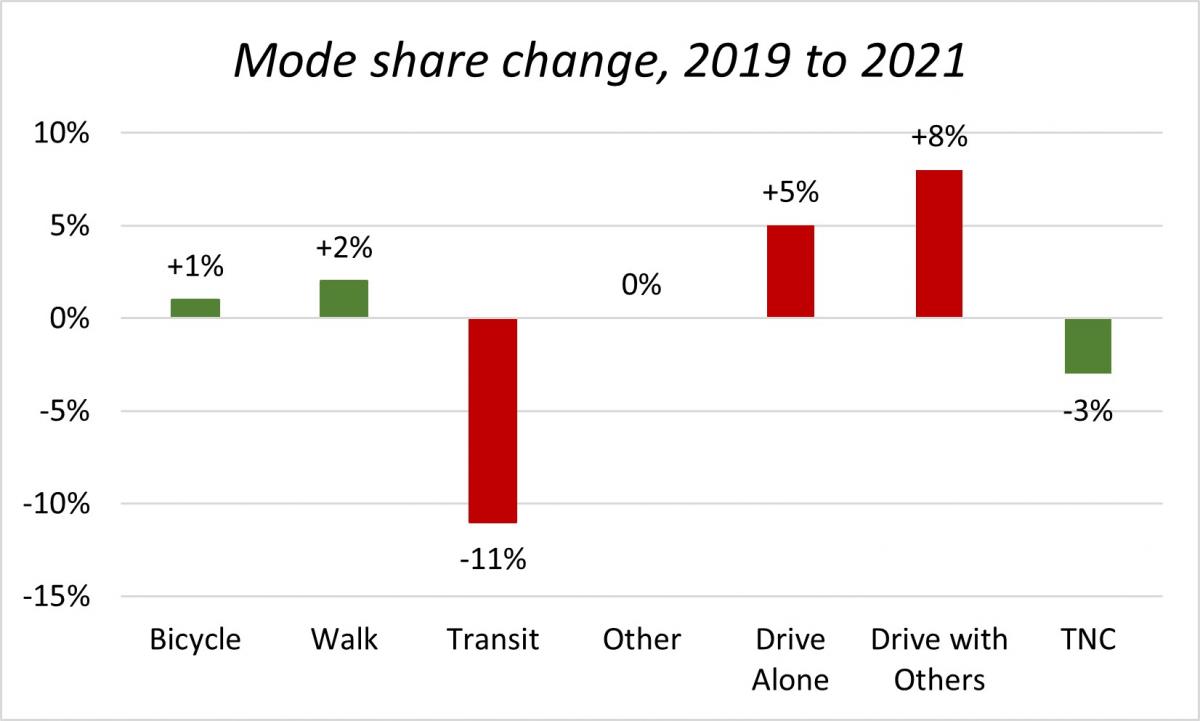
The most significant decrease in travel mode was by public transit, which fell 11% between 2019 and 2021. The most significant increase in travel mode was by private automobile use, including both driving with others (up 8%) and driving alone (up 5%). Walking and biking both had minor increases. 

Mode share change from 2019 to 2021 bar chart. Between 2019 and 2021 surveys, mode share change was 1 percent increase for bicycle, 2 percent increase for walk, 11 percent decrease for transit, 0 percent change for other, 5 percent increase for drive alone, 8 percent increase for drive with others, and 3 percent decrease for TNC.

San Francisco residents still used priority modes twice as often as non-residents for trips within San Francisco. Respondents with a household income of $75,000 or less had the highest transit ridership, while a majority of those with incomes over $75,000 chose non-priority modes. Individuals identifying as women or non-binary were more likely to travel by privately owned vehicles than those identifying as men. 

The Future of Travel 

Many of the travel pattern changes revealed by the survey were likely a result of the COVID-19 pandemic, during which many people limited their non-essential travel and worked from home instead of commuting to an office.  

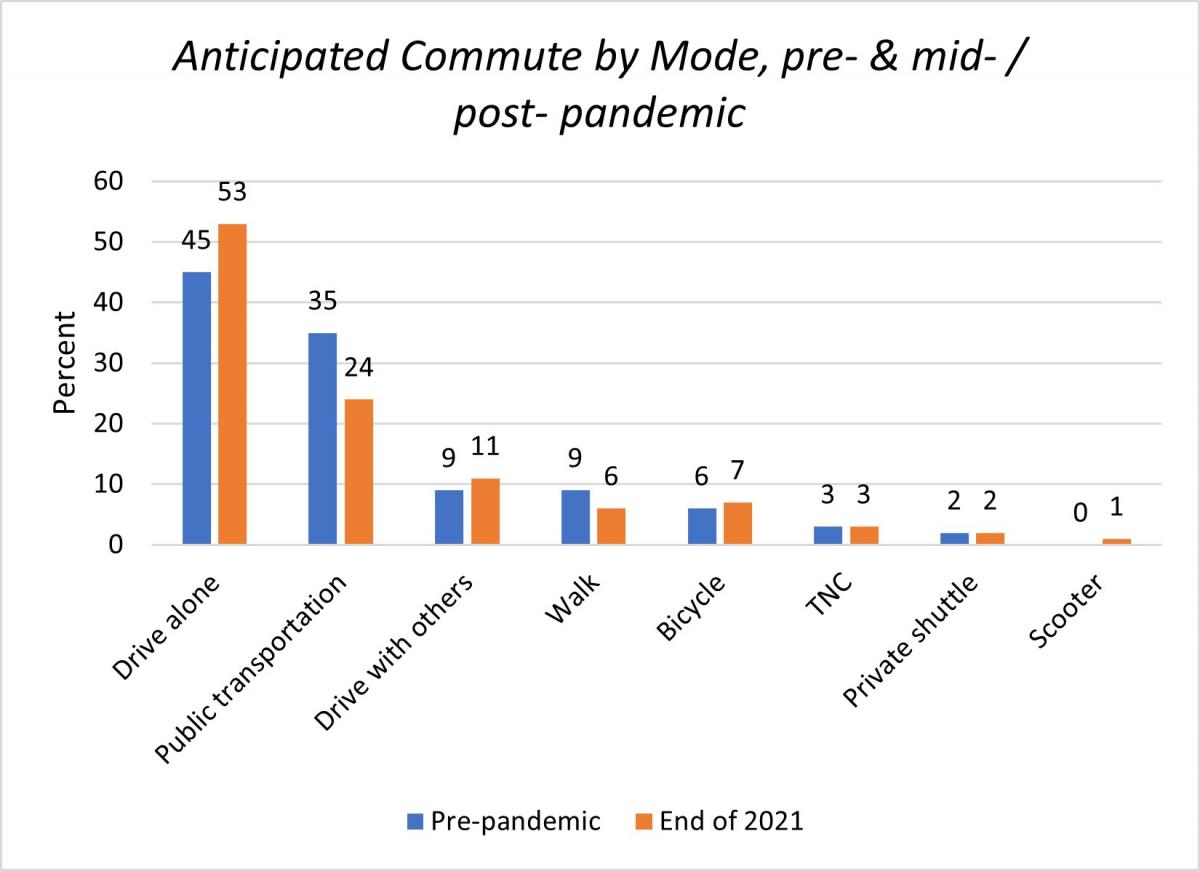
Anticipated commute by mode, for pre- & mid- pandemic. Pre-pandemic, 45 percent of commuters drove alone; end of 2021, 53 percent of commuters anticipated driving alone. Pre-pandemic, 35 percent of commuters used public transit; end of 2021, 24 percent of commuters anticipated using public transit. Pre-pandemic, 9 percent of commuters drove with others; end of 2021, 11 percent of commuters anticipated driving with others. Pre-pandemic, 9 percent of commuters walked; end of 2021, 6 percent of commuters anticipated walking. Pre-pandemic,6 percent of commuters biked; end of 2021, 7 percent of commuters anticipated biking. Pre-pandemic, 3 percent of commuters used a TNC; end of 2021, 3 percent of commuters anticipated using a TNC. Pre-pandemic, 2 percent of commuters used a private shuttle; end of 2021, 2 percent of commuters anticipated using a private shuttle. Pre-pandemic, 0 percent of commuters used a scooter; end of 2021, 1 percent of commuters anticipated using a scooter.

But as the city recovers from the effects of the pandemic and travel begins to increase, we urgently need to educate Bay Area residents about how their travel decisions impact our environment. To meet San Francisco’s climate goals, including net zero emissions by the year 2040, it is critical that many of us shift from driving personal vehicles to taking public transit, walking, bicycling and using other “non-carbon” travel modes. 

To encourage that shift, the SFMTA has improved the speed and reliability of our most popular bus lines by creating an unprecedented number of transit lanes. We introduced changes to make Muni more equitable. We recently increased the staff presence on Muni vehicles to deter crime and increase safety. We also upgraded our transit fleet HVAC systems, which now turn the air over once every minute. Earlier this month, we launched the Van Ness Bus Rapid Transit Corridor, and later this year the Central Subway extension to Chinatown will be open to one and all.  

To complement transit use, we have created safe bicycling and walking routes throughout San Francisco. The city now boasts 42 miles of protected bike lanes and approximately 43 miles of Slow Streets where through traffic is limited. By lowering speed limits and completing Quick Build street improvements, we’ve made walking and bicycling safer and more comfortable.  

Now, we need to make sure people in the San Francisco Bay Area know about and take advantage of these improvements. 

The 2021 Travel Decision Survey report and results are available to download here.


Published April 19, 2022 at 08:02PM
https://ift.tt/v9gLHZ8

Thursday, April 14, 2022

Celebrate Earth Day on San Francisco Streets!

Celebrate Earth Day on San Francisco Streets!
By

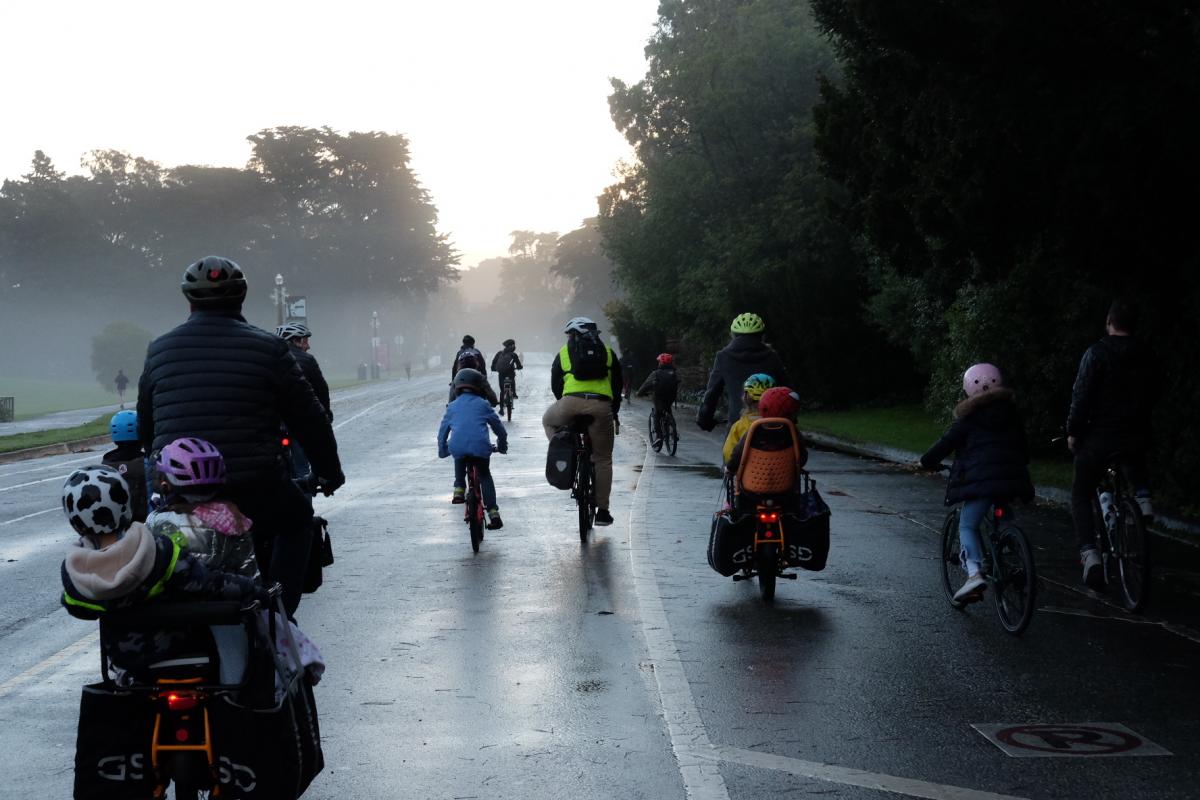
Families and kids biking down car-free JFK Drive in Golden Gate Park

If you want a glimpse into how our city can become more resilient, sustainable, and connected, head out to San Francisco streets on Earth Day 2022! Across the city, San Francisco city leaders and residents are taking to the streets to chart a new future for the city—one that’s lighter on cars, and more invested in transit, active transportation, and community connections. All are welcome to join—here are a few ways to get involved: 

Plan to bike, walk, or roll to school: The week leading up to Earth Day—April 18-21st—is Bike & Roll to School week! SF Bicycle Coalition has created a range of opportunities for schools that serve anyone from Kindergarten through 12th grade to get involved. Visit their website to learn more about becoming a Bike & Roll Champion and to pledge to participate in any of the events happening this week across San Francisco. It’s a great way to highlight safe, low-carbon, and fun ways to get to school each day!  

Come out for a family-friendly Climate Ride: The SF Department of Environment and SF Bicycle Coalition will be hosting an educational bike ride on April 23 to showcase what San Francisco and its residents are doing to create a sustainable, low-carbon city. The route will highlight a few key safety projects that the SFMTA has helped initiate over the past few years, including car-free JFK Drive, the Sunset Neighborways and Slow Streets projects. The ride will meet near McLaren Lodge in Golden Gate Park and 10:00 am—hot chocolate will be served!—and will end at Ocean Beach around 12:30pm. City leaders will be present, and project representatives from across the city will offer insights and details about various projects along the route.  

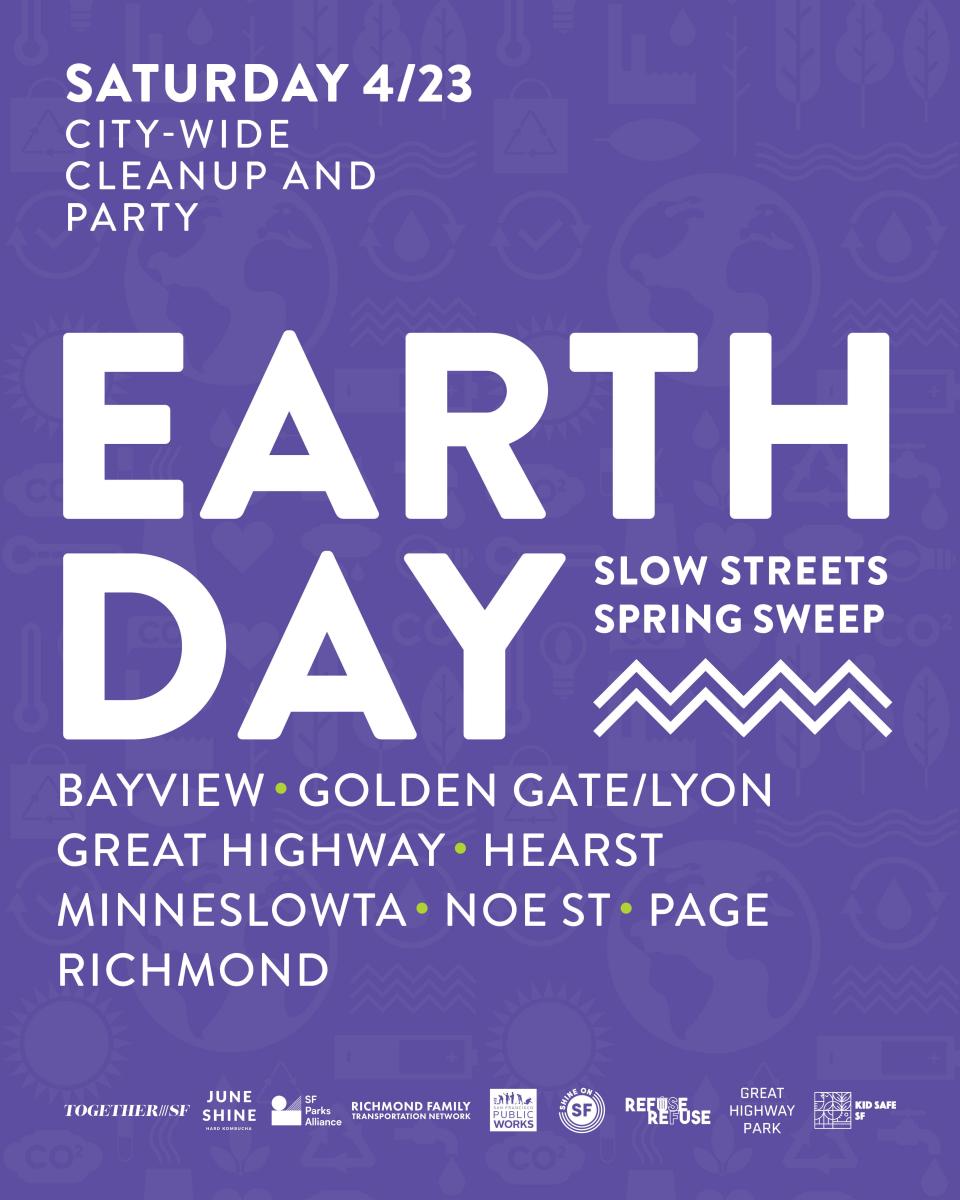
Clean up a Slow Street: Across the city, Refuse Refuse—a nonprofit dedicated to cleaning up SF Streets—is hosting cleanup events in partnership with KidSafe SF, SF Parks Alliance, and more on Slow Streets and neighborhood corridors! Visit the event webpage to find the nearest cleanup near you, and head out on April 23 to pick up supplies and beautify your neighborhood. Afterward, join neighbors from across the city for an afterparty on the Great Highway Park!  

Flyer announcing Earth Day City Wide Clean Up and Party listing details, communities of focus and partnered agencies involved.

Find freedom from training wheels: On April 23, the SF Bicycle Coalition is hosting a Freedom from Training Wheels event on Minnesota Slow Street from 11 am to 2 pm. For parents of kids aged 2-5 who are ready to ditch the training wheels and try out a balance bike or even a pedal bike, this event is for you! SF Bicycle Coalition will provide the bikes and helmets (they’ll be sanitized in between uses) and patient instruction for your little one. 


Published April 14, 2022 at 10:03PM
https://ift.tt/emvzMZh

Wednesday, April 13, 2022

Fix It! Week Closes Muni Metro Early Starting Thursday, April 14  

Fix It! Week Closes Muni Metro Early Starting Thursday, April 14  
By Jessie Liang

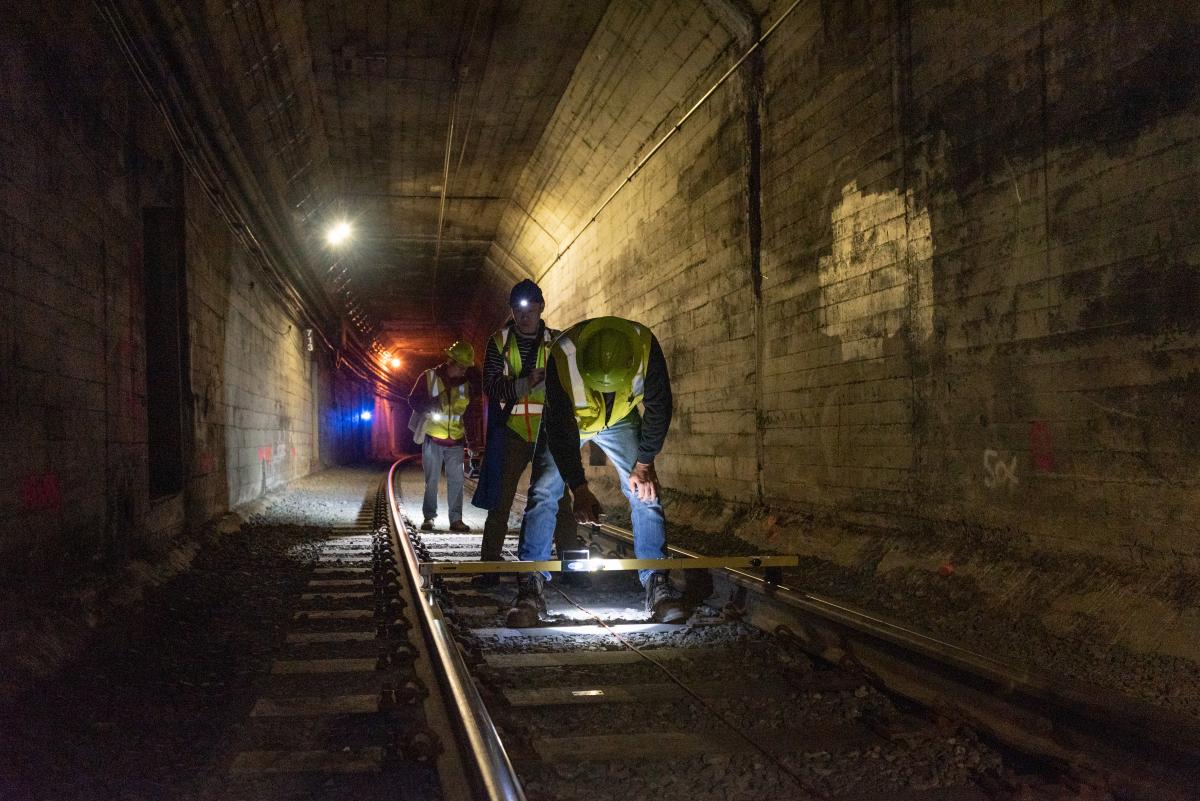
Maintenance of Way Engineering conducting track and ballast inspections during early subway shutdowns.

Every night after Muni Metro subway service hours, SFMTA maintenance crews work to maintain the tracks and equipment underground. On most nights, this gives them only about two hours to get work done. To complete critical maintenance tasks that cannot be completed during normal windows, we are planning Fix It! Week from Thursday, April 14, through Sunday, April 24, so the crews have more hours each night to do this vital work. 

During Fix It! Week, the subway between Embarcadero and West Portal will close early at 9:30 p.m. Buses will run above ground to connect all stops, beginning at 9:30 p.m. through the normal end of train service at 12 a.m. while the subway is closed for maintenance. Owl service will remain unchanged.  Trains will start regular morning service each day. To accommodate those attending NBA playoffs at Chase Center, subway service will remain in place on evenings with games at Chase Center. 

Transit Service Plan - 9:30 p.m. to 12 a.m. 

  • KLM Bus Shuttle – Bus shuttles will serve all Muni Metro stops between Third/Mission Rock and St. Francis Circle. 

  • K – Train service between Balboa Park and St. Francis Circle 

  • M – Train service between Balboa Park and West Portal 

  • N – Train service between Ocean Beach and Church/Duboce  

  • J – Train service between Balboa Park and Church/Duboce  

  • T – Train service between Sunnydale and Third/Mission Rock 

Accessible Transfers at Church/Market and Duboce - 9:30 p.m. to 12 a.m. 

  • KLM Shuttle Bus to N Judah Westbound or J Church Eastbound, board at the accessible boarding island on Church Street nearside of Duboce Avenue.  

  • KLM Shuttle Bus to N Judah Eastbound or J Church Westbound, board at the accessible boarding island on Church Street farside Market Street. 

  • To transfer from J Church to N Judah at Church and Duboce stay onboard. N Judah Eastbound trains will become J Church Westbound trains at Duboce and Church. J Church Eastbound Trains will become N Judah Westbound trains at Church and Duboce.  

For service on Market Street, Muni customers can board KLM bus shuttles at bus stops marked with the half-moon sign.   

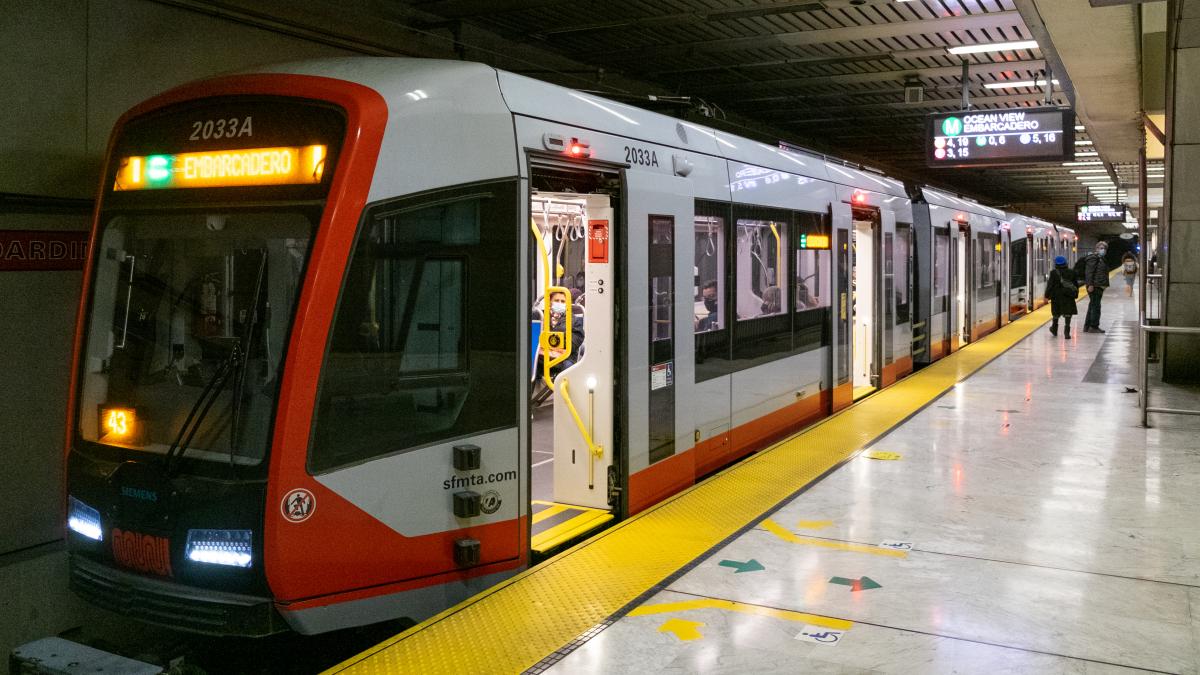
LRV4 Train on M Oceanview in Subway at Civic Center Station

The extended Fix It! Week work window will give us an opportunity to do complex work aimed at making subway operations more reliable and preventing future breakdowns. The maintenance will cover overhead lines, tracks, signals and the Automated Train Control System, a signal system that tracks the location and speed of any trains in the subway.  

The next Fix It! Week is planned for August 2022. 

During Fix It! Week, Muni customers are encouraged to leave extra travel time when riding Muni during subway closure. Regular bus fares will apply on bus shuttles and valid transfers will be accepted. Thank you for your patience and understanding while we improve the safety, reliability and on-time performance of the Muni Metro system. 

For more information, visit SFMTA.com/SubwayMaintenance


Published April 13, 2022 at 10:42PM
https://ift.tt/ZajXgvz

Photo Exhibit Event: Vintage Bus Display and Tour

Photo Exhibit Event: Vintage Bus Display and Tour By Jeremy Menzies Join us Saturday, Jan. 27 at a special event for our exhibit, " 1...