Thursday, January 13, 2022

Get a Text, Not a Tow

Get a Text, Not a Tow
By Erica Kato

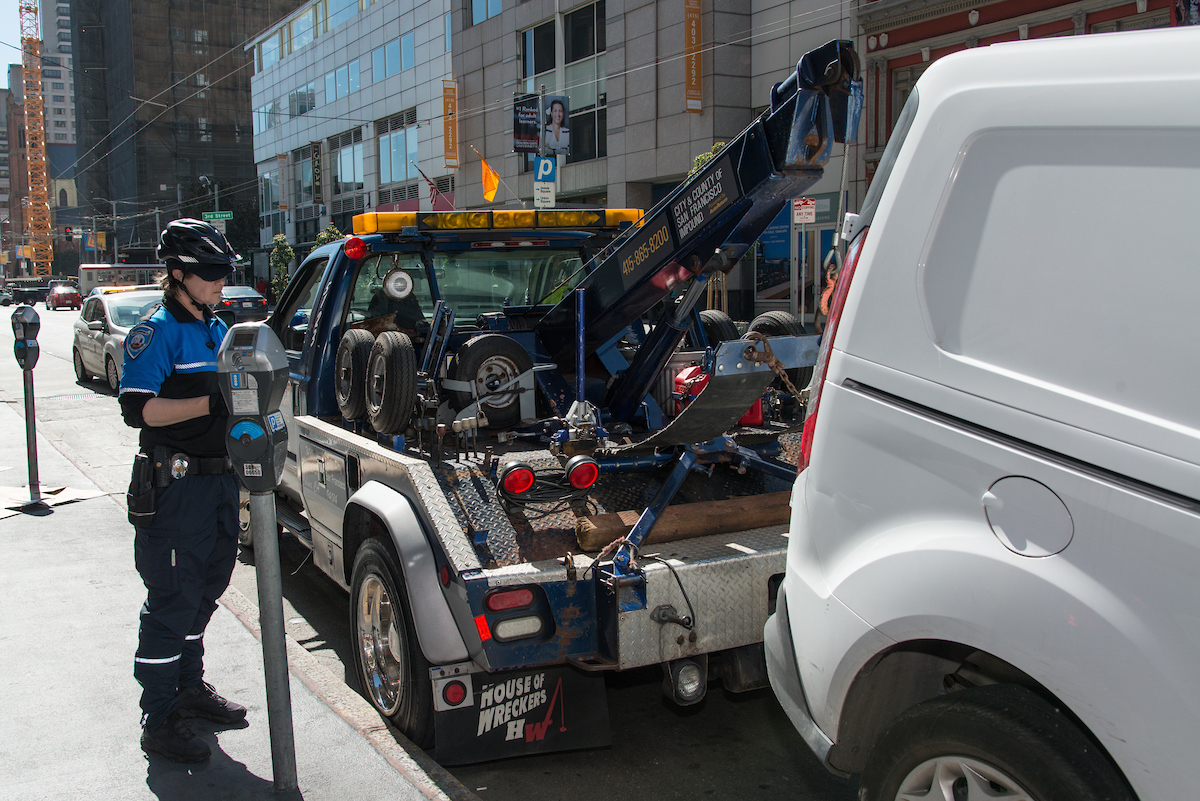
Photo of parking control officer issuing a citation while a tow truck prepares to tow away a van

Today we are pleased to announce “Text Before Tow,” a first-of-its-kind program where customers can sign up to receive a text message notification prior to having their vehicle towed.

This pilot program applies to four categories of tows: (1) parking more than 72-hours (2) blocked driveways (3) construction zones and (4) temporary no-parking zones such as special event or moving trucks. These categories represent 27% of all vehicles towed in 2020, approximately 12,500. It is important to note that peak-hour tow-away lanes, hazards, yellow or white zones and all other violations are not included.  

To enroll a vehicle, customers need to complete a short online form to register their license plate and phone number. When a customer’s vehicle is about to be towed, they will receive a text notifying them that a tow truck has been dispatched. Note: Vehicles will still receive a citation for the violation from Parking Control Officers (PCO).

This service does not provide the drivers with a “countdown” as it is dependent on the travel time of the tow truck, which could be as few as five minutes. Once a vehicle is hooked up to a tow truck, the tow cannot be stopped. Should the driver return before the tow truck arrives, the vehicle will not be towed, however a parking violation ticket will still be issued.

 Please note that this program is provided as a courtesy only. The SFMTA cannot guarantee the delivery or receipt of text messages. Failure to receive a text message cannot be used as a basis for a refund claim or for the release of a towed vehicle.

For more information or to sign up for this program, we invite you to visit our website: https://www.sfmta.com/text-tow-program-application.


Published January 14, 2022 at 01:53AM
https://ift.tt/3tFMJCr

Tuesday, January 11, 2022

San Francisco Beautiful and the SFMTA Launch the 2022 Muni Art Project

San Francisco Beautiful and the SFMTA Launch the 2022 Muni Art Project
By Sophia Scherr

We’re partnering with San Francisco Beautiful (SFB) to announce the kick-off of the 2022 Muni Art Project. The annual collaboration features the original work of five new local artists who visually interpret poems and a new theme each year.

For the first time, instead of featuring the work of five different local poets, only one local poet was chosen: the late Lawrence Ferlinghetti. The 2022 theme, “Streets of San Francisco” is the seventh year that the SFMTA, San Francisco Beautiful and The Poetry Society of America (sponsors of Poetry in Motion®) have collaborated to bring art and poetry to Muni commuters. The Muni Art Project is the only public art project that exclusively features local, San Francisco artists and poets.

The inspiring biographies of the Muni Art 2022 artists, Richard Louis Perri, Sebastian Rafael, Steffan Sanguinetti, Krithika Sengo and Tan Sirinumas are available at: sfbeautiful.org/muni-art.

You can see one of these works of art and read the accompanying poetry on your next Muni ride through April.

Poems

The Changing Light

Recipe for Happiness in Khabarovsk or Anyplace

Populist Manfesto

 What is Poetry?

At the Golden Gate

Artists

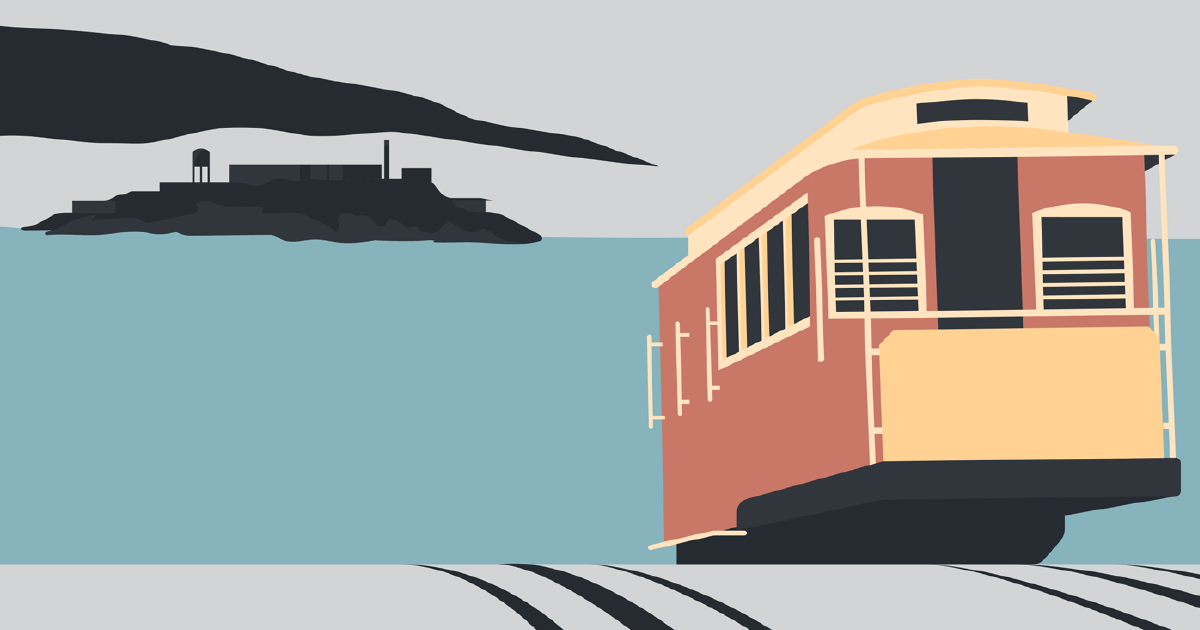
painting of cable car with alcatraz in background by SanguinettiLearn more about artist Steffan Sanguinetti


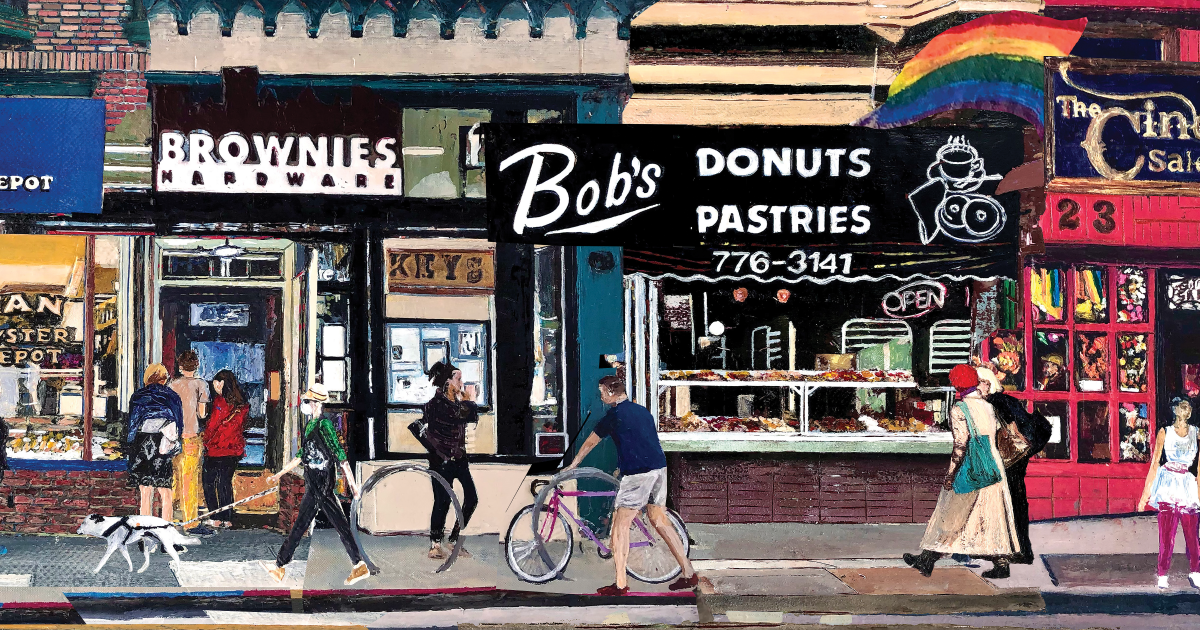
Painting of Bob's Donuts by Tan SirinumasLearn more about artist Tan Sirinumas


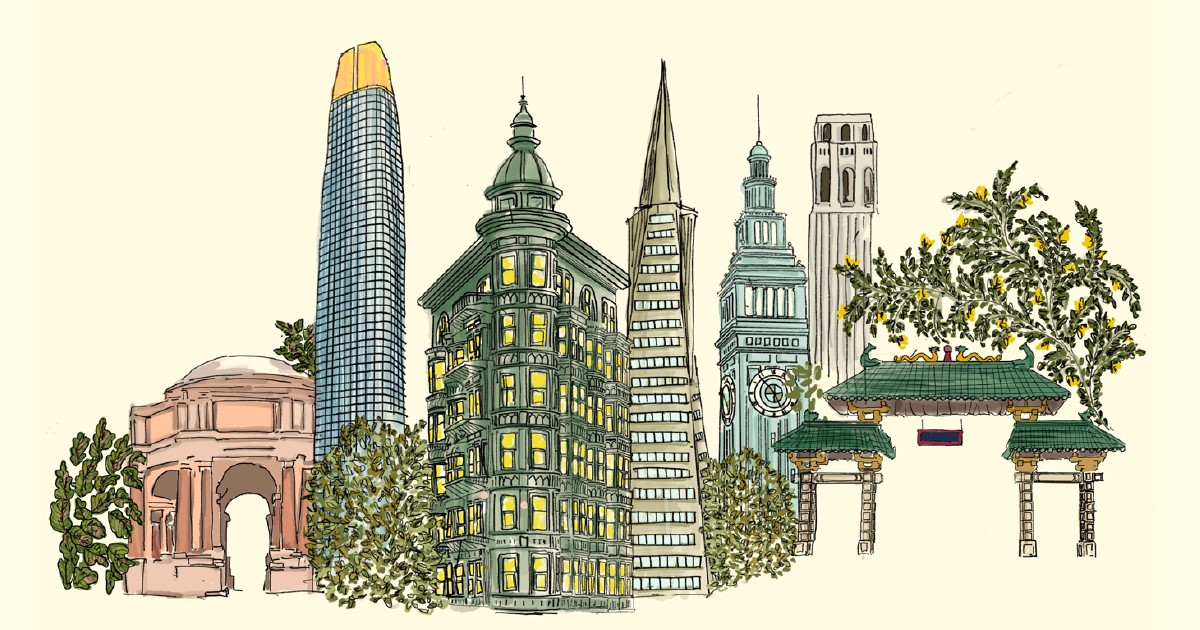
Painting of San Francisco skyline by Krithika Sentottaiyan

Learn more about artist Krithika Sengottaiyan 


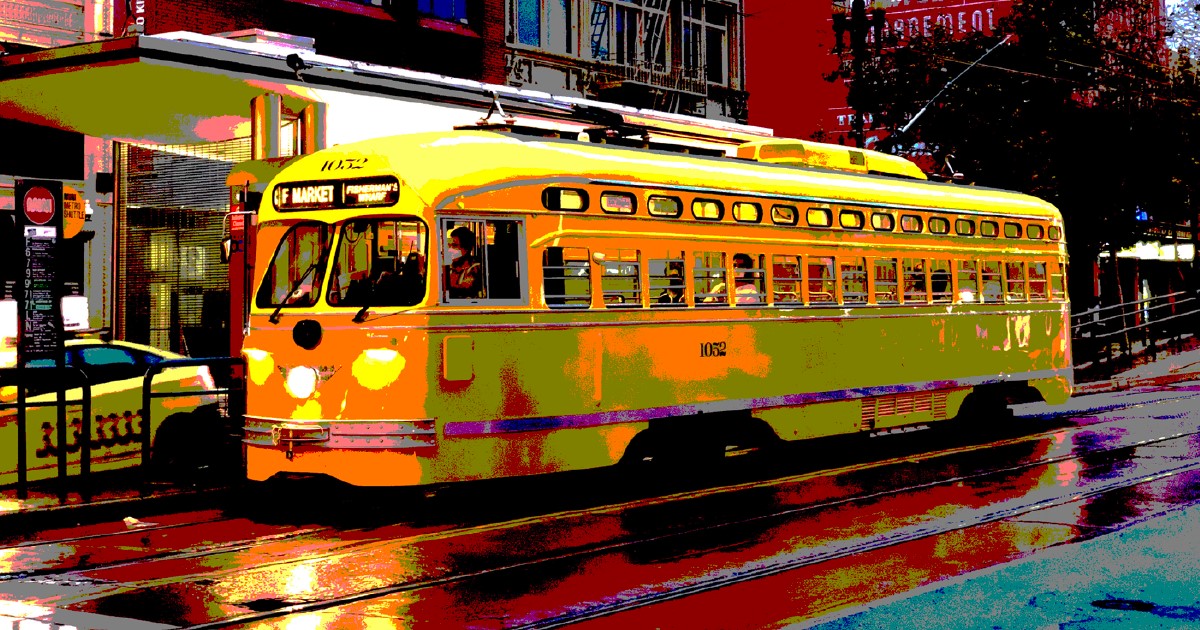
Painting of PCC streetcar by Richard Louis Perri

Learn more about artist Richard Louis Perri


Painting of cable car by Sebastian RaphaelLearn more about artist Sebastian Raphael


Published January 12, 2022 at 12:21AM
https://ift.tt/3zPXwuP

Monday, January 10, 2022

Are Ride-hail Companies Serving Wheelchair Users in San Francisco?

Are Ride-hail Companies Serving Wheelchair Users in San Francisco?
By Maddy Ruvolo

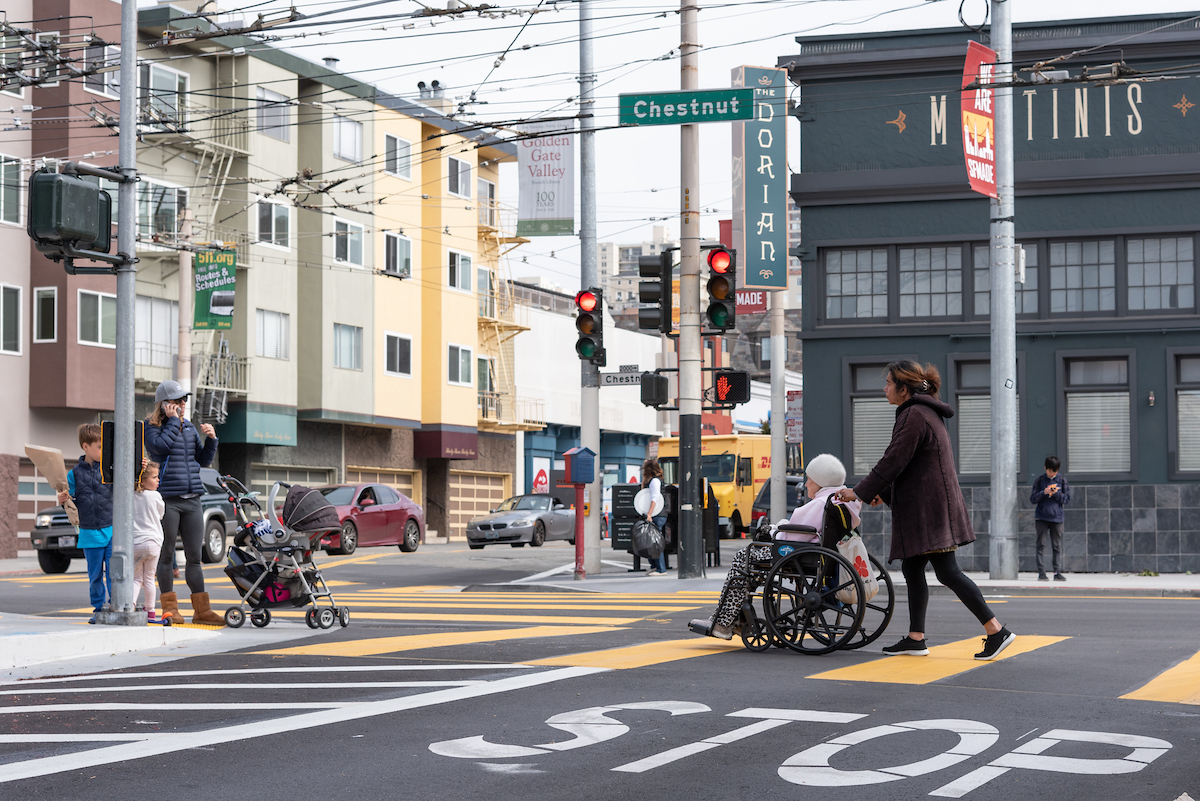
woman pushing a woman in a wheelchair on Chestnut Street

Since 2013, ride-hail companies, also known as Transportation Network Companies or TNCs, have become increasingly visible on San Francisco’s streets. In the area of disability access and TNCs, while some individuals have reported increased mobility and independence because of TNCs, wheelchair users have largely been unable to use the service. Ride hailing apps generally did not offer wheelchair accessible vehicles—nor were they required to do so by the CPUC.

While the SFMTA and our sister agency, the San Francisco County Transportation Authority (SFCTA) do not have the authority to regulate these services—a job entrusted statewide to the California Public Utilities Commission (CPUC)—we have worked together to pay close attention to the impact they have on our transportation network and shaped our areas of studies, policies, and programs accordingly. For example, over the years, the City has documented how well these services do or do not meet San Francisco’s Guiding Principles for Emerging Mobility Services, helping to shape policy and recommendations around our congestion and disability access goals.

A move in the right direction: the TNC Access for All Act

For this reason, San Francisco was proud to support the TNC Access for All Act, signed into law by then-Governor Jerry Brown in 2018. The bill requires the CPUC to develop regulations relating to accessibility for persons with disabilities, including wheelchair users who need a wheelchair accessible vehicle (WAV). The bill also created a financial incentive for TNCs to increase accessibility by imposing a per-trip fee on all TNC rides in the state. The funds from this fee are then used to reimburse ride hailing companies for their expenses if they demonstrate they are improving access to WAVs on their platforms. If a company does not meet the requirements established for reimbursement, or if they do not provide WAV services in a county at all, the collected fees are deposited into an “Access Fund” for other eligible providers to help provide on-demand WAV services in that area instead.

Since July 2019, TNCs have collected a 10-cent fee for every non-WAV trip in California. While the CPUC has not yet distributed funds to non-TNC providers as part of the Access Fund, we have started to receive data on how TNCs like Uber and Lyft are trying to improve WAV services in the few counties for which information has been reported.

So, how do we know if wheelchair accessible TNC services are improving in San Francisco and throughout the state?

For TNCs to keep the fees they are collecting to pay for WAV services, companies like Uber and Lyft must demonstrate to the CPUC that their WAV services are meeting certain quarterly performance requirements. The CPUC requires TNCs seeking reimbursement to submit reports, called “Advice Letters,” to the CPUC and anyone registered on the CPUC’s official “service list.” These reports are a series of PDF and Excel files that include aggregated data by county on service aspects like number of trip requests and rate of fulfillment, hours of service provided, response times (the time between requesting a trip and receiving a ride), expenses incurred, complaints received, and outreach performed.

All of the information provided in these Advice Letters is incredibly valuable for understanding the state of wheelchair accessible TNC service throughout California. However, the way CPUC requires the TNCs to file the information to a small group and in a difficult-to-read format has limited the utility of the data. Until now! In 2021, the SFMTA and SFCTA were chosen to participate in the San Francisco Office of Civic Innovation’s Civic Bridge Program. Through this program, we were matched with pro-bono partner ZS Associates to develop publicly available data dashboards to display key pieces of the data submitted by TNCs.

The dashboards, which are now hosted on our website, feature the following tabs: Total Trips Requested and Completed, Trips Requested and Completed by Operator, Average Number of WAVs Available Each Hour, Trips Requested – Completed and Cancelled, Response Time, TNC Expenses, and TNC Complaints.

The Trips tabs show requested and completed WAV trips, as well as cancellations. The Response Time tab includes a breakdown of the average time between passenger request and driver arrival. The Expenses tab includes program expenditures by spending category (and note that “Partnership Costs” include most of the direct costs of providing WAV service—usually the amount paid to a contractor who is providing WAV trips for the TNC. “Operational Costs” are primarily overhead). Finally, the Complaints tab categorizes the complaints reported about the TNCs’ WAV service. Each tab can be viewed by vendor (currently Lyft, Uber, or Nomad), county, year, and quarter.

We are pleased to make this important reporting data more publicly accessible, and encourage you to explore the dashboards.


Published January 11, 2022 at 02:51AM
https://ift.tt/3K93zzk

Friday, January 7, 2022

Omicron Surge Impact on Muni Routes and Schedules

Omicron Surge Impact on Muni Routes and Schedules
By Julie Kirschbaum

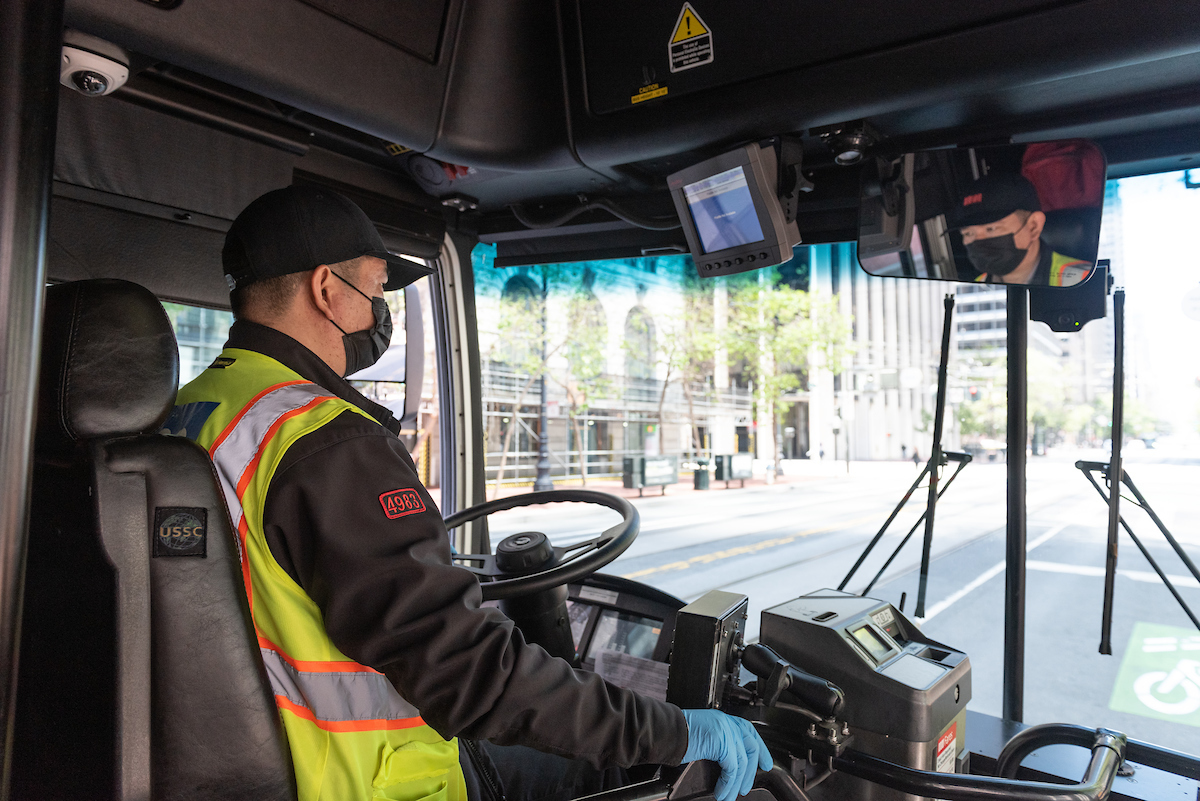
Photo of a bus operator wearing a mask

As has been reported widely in the media, the highly contagious Omicron variant has led to rapid and unprecedented spread of the COVID-19 virus in San Francisco. More than 100 SFMTA staff have contracted COVID since late last month. Combined with pre-existing staffing shortages, this has led to an increase in missed Muni service. We’re also experiencing staffing impacts in other job classifications, including mechanics, car cleaners and transit supervisors. 

Currently, we are missing up to 15% of scheduled Muni service, which means that riders may need to wait longer than usual for their bus or train. Our hope is that this will be the extent of our impacts. However, the situation is fluid, and we are monitoring staffing levels on a daily basis.

As part of our contingency planning, we are preparing for what might happen if our overall staffing levels drop significantly or if a small, but vital group—such as our Transit Management Center or Power Control Center is significantly impacted. Either of these situations could leave us with no choice but to make additional Muni service reductions such as cancelling routes or introducing bus substitutions for rail service.

We are doing our best to avoid this situation by communicating proactively with staff about masking and staying home if they have any symptoms and keeping some staff working vital functions at remote locations to limit exposure. We are grateful that nearly 100% of the SFMTA workforce is vaccinated, and we are encouraging boosters as an effective precaution. We are also doing hard work behind the scenes to prepare signage, operator instructions, and all the other materials we would need to implement changes as smoothly as possible — in the case these become necessary.

For the latest information on service changes, please visit our Core Service webpage. You can also find our latest updates by subscribing to Muni alerts or visiting our Twitter feed.


Published January 08, 2022 at 03:40AM
https://ift.tt/3G9cRbZ

Grab a Cab and Support a Small Business

Grab a Cab and Support a Small Business
By Pamela Johnson
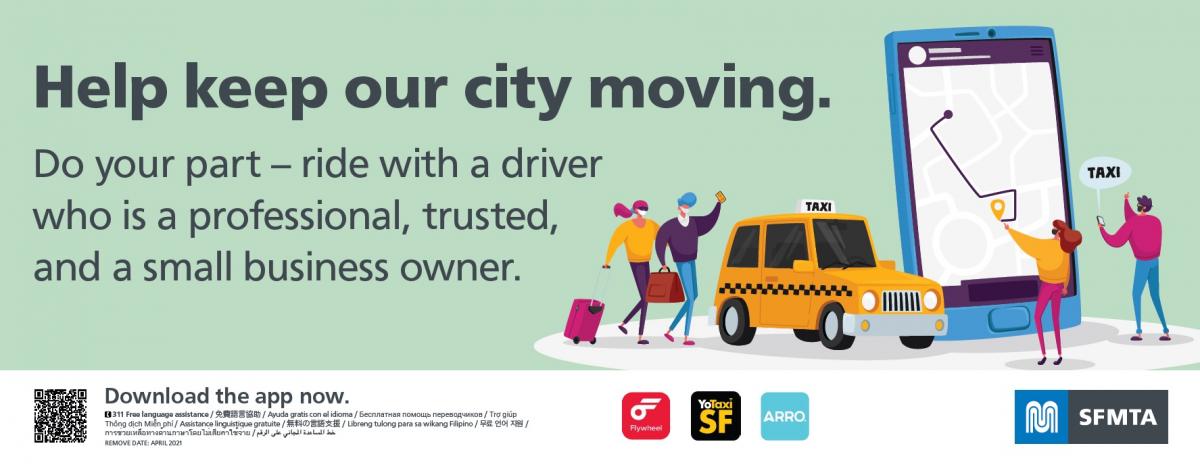
Poster says: help keep our city moving. do your part-- ride with a driver who is a professional, trusted and a small business owner. Image shows figures of a man and woman with suitcases hailing a cab and another man and woman hailing a cab with a smartphone appTaxi drivers are an integral part of what makes San Francisco unique and contribute to the city's economic vitality.  They are essential workers playing a vital role in our transportation network. Each driver works to move people safely and efficiently from one destination to another on their daily journey. 

And, importantly, taxis are small businesses. Taxi drivers are trained and experienced professional drivers who obtain a permit to operate and pay taxes.  

To promote taxi ridership in San Francisco, the SFMTA launched our Taxi Marketing Campaign on January 3, 2022. The campaign is based on input taxi drivers provided in discussions with the SFMTA and an initial campaign to test key marketing messages. The drivers talked and we listened --doing all we could to increase taxi ridership.  

During the Covid-19 Pandemic, taxis got people to their health appointments, the pharmacist, the grocery store to buy food, restaurants to pick up a meal, or helped them meet other essential transport needs. They are also vital to San Francisco’s hospitality and tourism industry and are often the first contact with people entering our beautiful city.  

Over the past decade, taxis in San Francisco have experienced a significant decline in ridership. Customers have been incentivized to instead summon rides through rideshare companies like Uber and Lyft which offer venture capital subsidized pricing, unlimited supply, and minimal regulations and enforcement from the California Public Utilities Commission. Taxi drivers took a brutal financial hit, with many barely hanging on financially. Recently, these ride-sharing hailing companies have raised their prices, and more customers are finding that taxis are a viable and less expensive option and have once again returned to requesting taxis. This offers hope to drivers and the economy as the city reopens from restrictions associated with the Covid-19 pandemic.   

Taxis are a logical choice for transportation since drivers are reliable and experienced professionals who are familiar with the city. Our drivers have also gone through fingerprint background checks so you can rest assured of a safe ride. In addition, we have established regular cleaning protocols for a clean, healthy ride during the pandemic.  

The Ease and Convenience of Taking a Taxi  

Taxis are the only passenger vehicles authorized to use transit lanes, sharing them with buses and other efficient transportation modes. And the industry's low-emissions vehicles create a green fleet that offers a better choice for the environment.  

Finding a ride and paying for it have never been easier, with the ease and convenience of smartphone-based apps.  

To become a taxi driver in San Francisco, an individual must be trained in local traffic laws, driver, safety, the local street layout, communications equipment, and customer service. 

Use an App 

You can request a taxi through Smartphone-based apps, Flywheel, Yo Taxi, and ARRO that allow for ease and convenience of payment.  

The SF taxi booking apps connect you to taxis in San Francisco with the tap of a button.  

Download the app of your choice to request your ride, and make your contactless payment, or if you prefer, you may pay the taxi driver directly.  

The SFMTA’s Taxis, Access & Mobility Services Division regulates the city’s taxi operations. To operate a taxi in the city, the driver must have a permit and operate a vehicle that has a taxi medallion. The medallion is a permit to provide service in San Francisco. The drivers who purchased a medallion have invested a lot of time and money for the right to operate a taxi on city streets. These drivers often take out bank loans to start their businesses.  

As you travel to your next destination, remember to Support a small business and take a taxi!  

Please visit the SFMTA on the web to learn more about the city’s taxis and services.  


Published January 07, 2022 at 10:35PM
https://ift.tt/3qWrDg3
Thursday, January 6, 2022

Making the JFK Drive Promenade a Space for All

Making the JFK Drive Promenade a Space for All
By Eillie Anzilotti

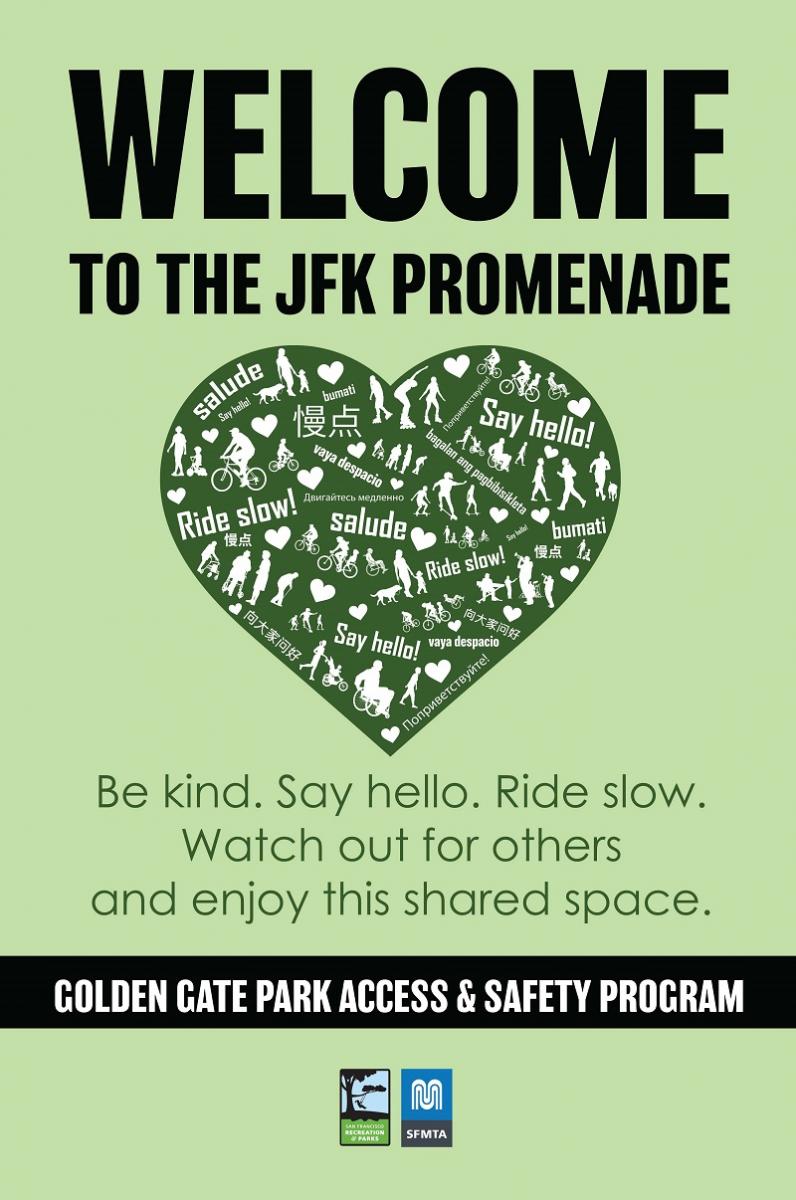
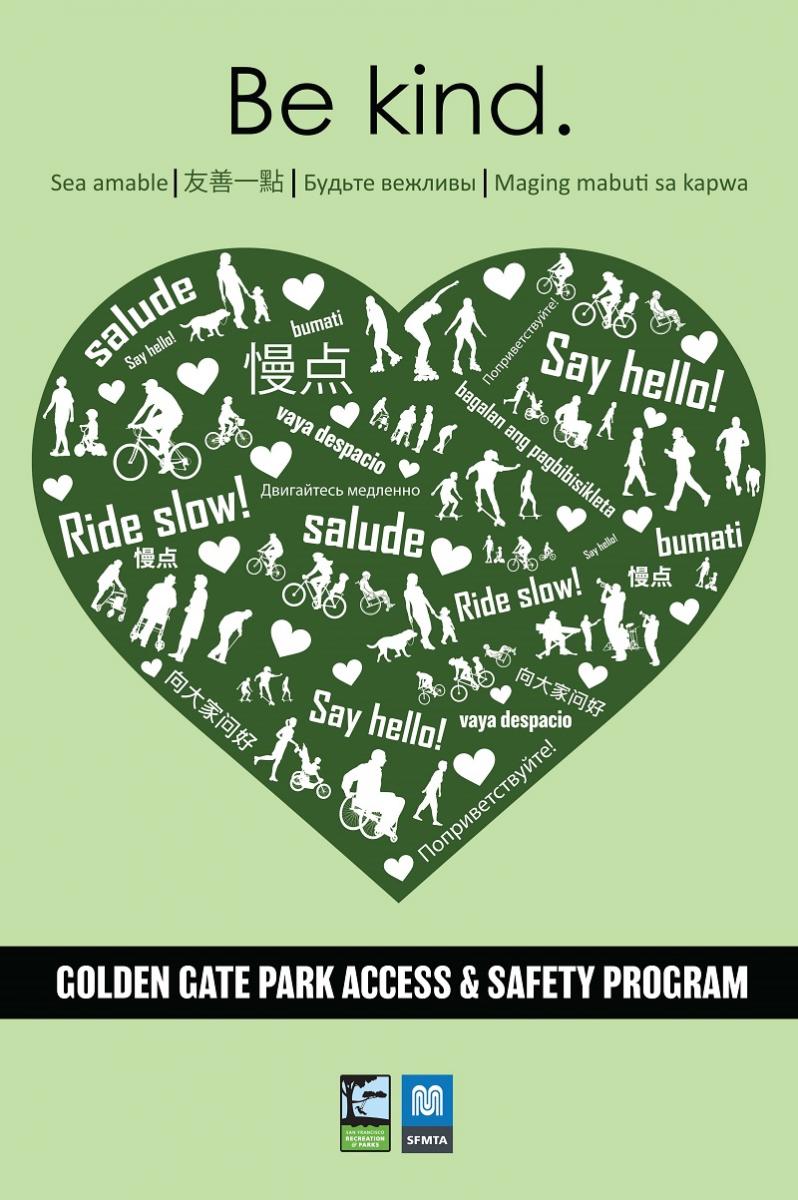
The JFK Drive Promenade is a place for all—and its new signage reflects that!  

A pale green sign with a dark green heart in the middle. The sign reads Welcome to the JFK Promenade. Inside of the heart, the phrases “ride slow!” and “say hello!” are printed and translated into English, Russian, Tagalog, Spanish, and Chinese. Also inside the heart are silhouettes of park users, including people in wheelchairs, people pushing strollers, people walking, rollerskaters, kids, and cyclists. Underneath the heart, green text reads: “Be kind. Say hello. Ride slow. Watch out for others and enjoy this shared space. At the bottom of the sign, there’s a black bar with white text that says: Golden Gate Park Access & Safety Program, and underneath are the SFMTA and Rec & Park logos.

Starting January 5, 2022 you’ll find new signage all along the promenade route reminding users to be kind, share the space, move slowly, and say hello to each other.  

Through over 50 outreach events held by the Golden Gate Park Access & Safety Program team throughout the fall and over 10,000 survey responses we received, San Franciscans have overwhelmingly said they appreciate the space for walking and rolling along JFK Drive—but also want to see more guidance on how to use the space. 

In response, the SF Recreation & Park Department and SFMTA co-designed this courtesy campaign to encourage park users to put safety and kindness first when navigating the promenade. 

A pale green sign with a dark green heart in the middle. The top of the sign reads Be Kind, translated into English, Spanish, Tagalog, Russian and Chinese. Inside of the heart, the phrases “ride slow!” and “say hello!” are printed and translated into English, Russian, Tagalog, Spanish, and Chinese. Also inside the heart are silhouettes of park users, including people in wheelchairs, people pushing strollers, people walking, rollerskaters, kids, and cyclists. At the bottom of the sign, there’s a black bar with white text that says: Golden Gate Park Access & Safety Program, and underneath are the SFMTA and Rec & Park logos.

A simple reminder to go slow and say hello can go a long way! 


Published January 07, 2022 at 12:07AM
https://ift.tt/3pZsqxb

Monday, January 3, 2022

Muni Drivers Prove the Perfect Muse for this San Francisco Artist

Muni Drivers Prove the Perfect Muse for this San Francisco Artist
By Jonathan Streeter

Muni has long been an enjoyable part of artist Kurt Schwartzmann's life, riding the bus to work, to school and as a sightseer.  Kurt — utilizing his monthly pass  — has ridden countless trains and buses and befriended several operators. Taking the time to learn their names and stories, Kurt envisions both the reality and the dream of navigating a bus through San Francisco streets. Pointing to an image he created (see above photo far right), Kurt noted, "I drew an escape hatch for this driver, so he could get away when he needed a break." 

In fact, Kurt’s website "Yellow Line Art," is named in honor of the demarcation at vehicle entrances behind which passengers are asked to stand.  "Conversation welcome but cannot interfere with safe operation of the bus," has real meaning for Kurt, who sees the yellow line not as a restriction, but an invitation. In his art, Kurt wants to share the feelings that Muni inspires in him — the sights, the sounds and the sensations that are all a part of the travelling experience. His first exhibition, in 2018, “was created to honor the hard-working SF Muni Operators that keep our city running.”   

He has a lot he feels grateful to Muni operators, one of whom he credits with giving his life a new trajectory. On a cold winter's night in 2008, Kurt Schwartzman was literally given the ride of his life.  Alone and unhoused, seeking refuge at a bus shelter in the Excelsior district, Kurt was surprised when one of Muni’s all-nighter "Owl" buses pulled up and the doors opened. "Come on in and keep me company," said the operator, reassuring him that he could ride even when he confessed that he didn't have the full fare.  

That night, Kurt found not just the warmth and safety of a seat on the bus, but the reassurance that he was a person worthy of welcome. Living with HIV, suffering from a meth addiction, and working at a string of jobs that he couldn't seem to hold down, Kurt says what he lacked most was, "the need for humanity."  Now Kurt has a dream — that one day he will be able to find and thank the operator who welcomed him on board the Owl and to a new destination (at press time, the identity of the operator remains a mystery). 

Kurt’s long rise out of homelessness came through his ability to connect with people and keep faith in himself and in others. With assistance from city and AIDS-related social services, as well as from kind strangers, Kurt eventually found a path forward that enabled him to establish a new life for himself in the city he loves. 

When he first moved to San Francisco, "I had no idea there was a subway," said Kurt "and so one day I got on a streetcar and was astonished when it disappeared into a tunnel under Market Street."  Since then the N Judah has been a particular favorite of his, especially when the long ride from Embarcadero out to the ocean offered Kurt a respite from the streets and a chance to meet people and listen to conversations. 

To see Kurt Schwartzmann’s online exhibit honoring Muni operators, go to Yellow Line Art Gallery


Published January 04, 2022 at 02:58AM
https://ift.tt/3EQhvu0

Photo Exhibit Event: Vintage Bus Display and Tour

Photo Exhibit Event: Vintage Bus Display and Tour By Jeremy Menzies Join us Saturday, Jan. 27 at a special event for our exhibit, " 1...