Tuesday, March 16, 2021

Muni and SamTrans Partner on Lake Merced Bus Service

Muni and SamTrans Partner on Lake Merced Bus Service
By Enrique Aguilar

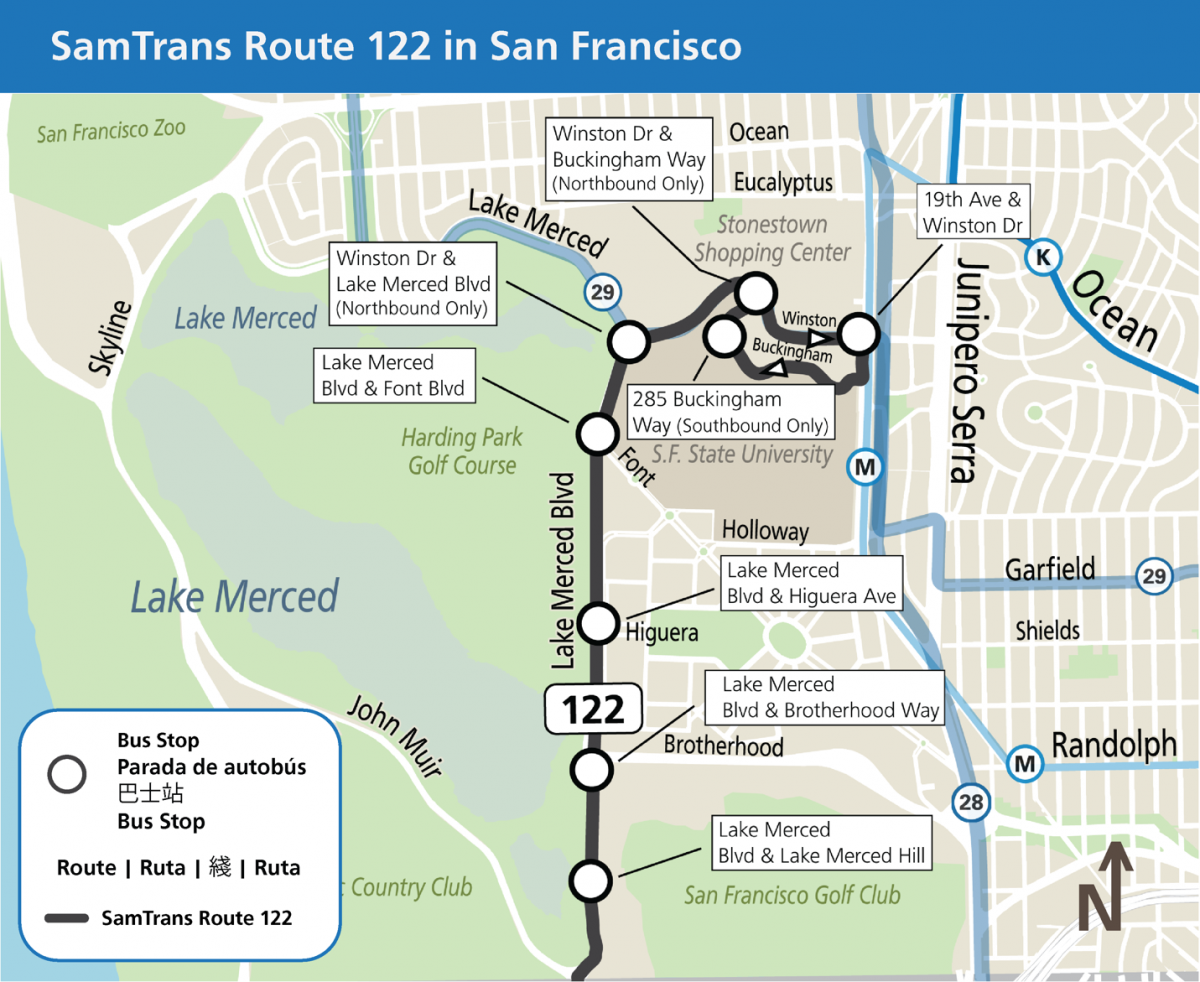
Starting March 22, a new program will provide free access to SamTrans Route 122 within San Francisco between Lake Merced Boulevard and Lake Merced Hill. The SFMTA has teamed up with SamTrans to launch this pilot program, which allows residents to sign up to use the 122 while Muni service is limited due to COVID-19.

After applying to the program, customers will be sent an email with a MuniMobile pass link that will be valid for six months. There will be an opportunity to extend the pass if the program is still needed after that, pending the return of Muni’s 57 Parkmerced.

Map entitled SamTrans Route 122 in San Francisco. Eight bus stops are identified: Lake Merced & Lake Merced Hill, Lake Merced Boulevard and Brotherhood Way, Lake Merced Boulevard and Higuera Avenue, Lake Merced Boulevard and Font Boulevard, Winston Drive and Lake Merced Boulevard (northbound only), Winston Drive and Buckingham Way (Northbound only), 19th Avenue and Winston Drive, 285 Buckingham Way (southbound only)

Map of new SamTrans stops in the Lake Merced neighborhood

The SFMTA will post signs at the new bus stop locations and at essential destinations including grocery stores near Stonestown Galleria Shopping Center in order to inform community members about this free pilot program. For more information and to apply, visit the Samtrans Route 122 application page.


Published March 17, 2021 at 04:53AM
https://ift.tt/3cAsfAG

By The Numbers: The SFMTA’s COVID-19 Response

By The Numbers: The SFMTA’s COVID-19 Response
By Erica Kato

The COVID-19 pandemic has brought about unforeseen changes to San Francisco’s transportation network. And the impact of the crisis will continue to be felt city-wide long beyond the end of the public health emergency. On March 13, 2020, when it became clear that San Francisco needed immediate adjustments to the transportation system, Director of Transportation Jeff Tumlin launched SFMTA’s Department Operations Center (DOC) team. Since then, the DOC has served as a centralized hub to ensure that we are minimizing health risks to employees and the public as we keep transportation running, both by coordinating internally within the agency and by collaborating closely with our city, state, and federal partners to deploy resources and information in the most effective way possible.

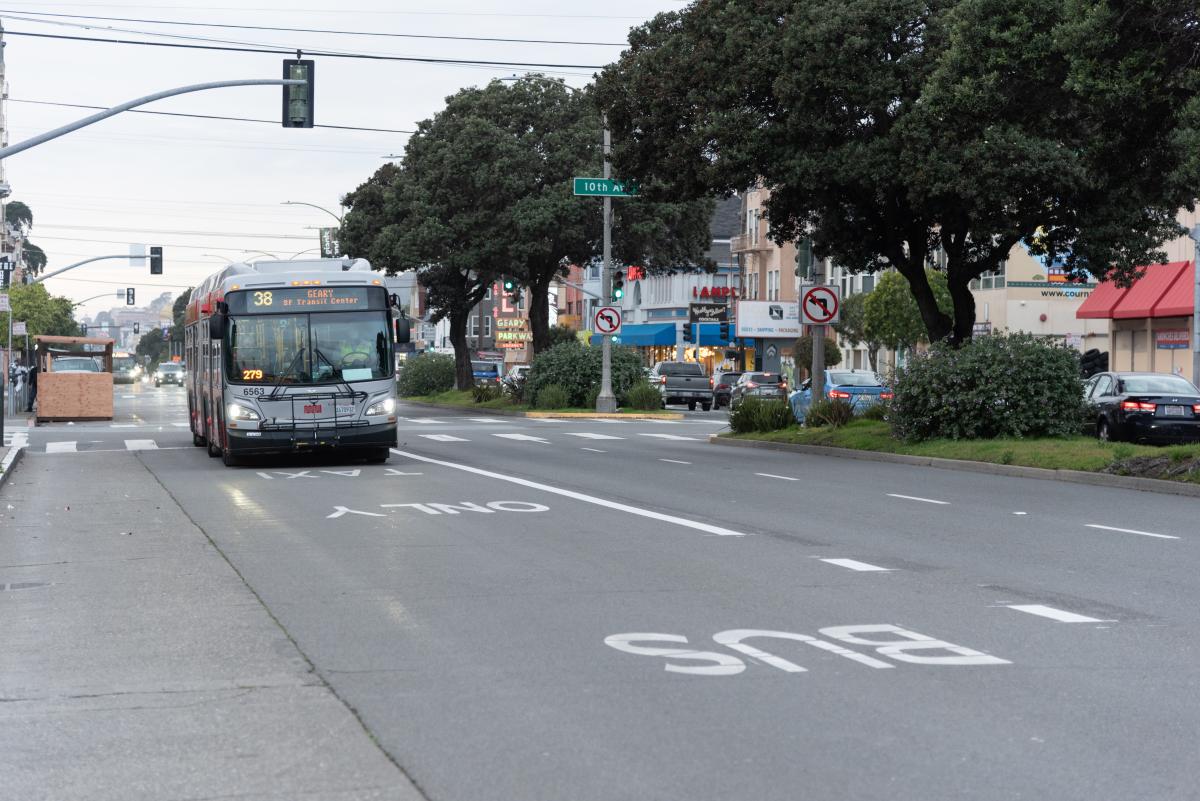
Photo of the 38 Geary bus on a transit lane passing a shared space

San Francisco's response to the COVID-19 pandemic included implementing temporary emergency transit lanes 

Our COVID-19 response has challenged us to break down silos, think creatively, and expedite processes and practices that have traditionally required long lead times. We designed and implemented creative uses of public space that opened new avenues for enjoying San Francisco even in a time of physical distancing. In the midst of a once-in-a-lifetime public health crisis, our staff has risen to the occasion and has delivered projects keen on keeping San Franciscans moving. Now, a walk across any San Francisco neighborhood is characterized by its Slow Streets, outdoor dining configurations, and new opportunities to rediscover the type of outdoor recreation synonymous with San Francisco. Iconic areas like the Great Highway, Golden Gate Park, and the top of Twin Peaks are now more accessible to more people than ever before.

Here's a snapshot of some of SFMTA’s accomplishments over the past year, by the numbers:

  • Slow Streets
    • Implemented 25 temporary corridors, comprising 44 lane miles.
    • Making first three permanent; comprising 8 miles on Page, Sanchez, and Shotwell streets.
    • Surveying residents along all 25 Slow Streets corridors; with plans to present results to the SFMTA Board in July 2021
  • Vision Zero
    • Installed 80 miles of street safety improvements in 2020 (more than 30 of which are on the High Injury Network)
    • Implemented
      • 6.5 new miles protected bikeways
      • 11 miles with slower speed limits
      • >300 continental crosswalk upgrades
      • >150 signals upgraded additional crossing time for people walking
      • >60 signals upgraded with leading pedestrian intervals
  • Taxi industry support - distributed:
    • 14,504 gloves
    • 3,469 masks
    • 830 hand sanitizers
    • 87 gallons of disinfectant refills
    • 259 rolls of paper towels
    • 822 plastic shields installed between front and rear seat
  • Streetscape Improvements:
    • 16,171 COVID-related signs installed by the Sign Shop
    • Jammed parking meters reduced to < 2% citywide, before pandemic >30%
    • Installed 1,069 bike racks
    • Daylighted almost 1,500 corners
    • Permits for over 8,000 shared bikes/scooters/mopeds
      • 174,000 trips in January

71% of San Francisco residents were within 1/4 mile of a shared mobility option such as a bike (classic and e-bike), power scooter, or e-moped by January of 2021.

Muni:

  • Sanitized 800+ transit vehicles twice per day; hired 43 additional car cleaners along with three assistant supervisors and one manager
  • Distributed 627,074 masks between July 2020 and March 2021
    • To SFMTA employees – 434,349
    • To members of the public – 192,725

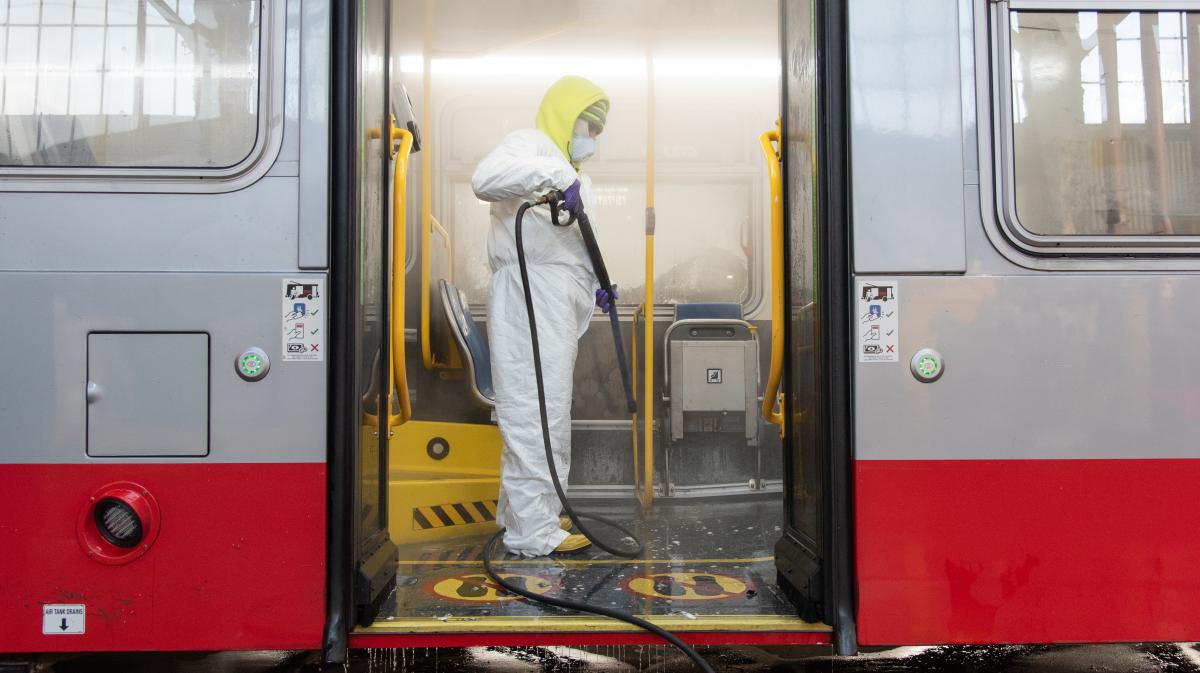
Photo of a car cleaner sanitizing a Muni bus

A car cleaner sanitizes a Muni bus before it's returned to service

COVID-19 has led to personal impacts to so many of us.  Over the course of this last year, 246 SFMTA employees have tested positive for COVID-19, and sadly we lost two colleagues to the virus.  Many more colleagues have been affected by illness or loss of their family members or friends. 

Through proactive safety measures, the SFMTA has been able to minimize transmission of COVID in the workplace.  With the widescale spread of COVID in society, 4.1% of staff have tested positive for COVID, which is consistent with regional rates and is less than half of statewide infection rate of 8.9%. 

With the release of a vaccine, we look forward to supporting the city and its economic recovery. Our Transportation Recovery Plan is our framework for expanding our transportation services and operations as the Public Health Orders are modified and demand for travel increases. Our staff has answered the call to serve, and we will continue to step up and keep San Francisco moving. We look forward to seeing you aboard Muni and taking a bike ride or stroll. Be sure to check out our website and our COVID-19 page for any updates on our service and programs.


Published March 16, 2021 at 10:42PM
https://ift.tt/3rTF8fr

Monday, March 15, 2021

Muni Experts Troubleshoot Obsolete Control System to Keep Trains Running

Muni Experts Troubleshoot Obsolete Control System to Keep Trains Running
By Dan Howard

Two weeks ago, we experienced yet another subway train control system failure caused by aging equipment. A failure like this is certain to impact everyone working on or riding Muni. What’s not widely known is that the ingenuity and skill of Muni’s technical staff makes the difference between these failures crippling the system for weeks or for just a few hours.

On March 3, a control computer failed that governs part of the underground network of tracks and switches between Embarcadero Station and the surface, where most Muni Metro trains turn around. When our Signal Maintenance team is called to address a problem like this, all they start out knowing is that there are a bunch of “disturbed” switches and track segments.

The Automatic Train Control System, or ATCS, constantly watches over the system’s track and switches, and reports them as “disturbed” when it gets a peculiar reading, or when a system error prevents it from knowing whether the area is safe or dangerous. When this happens, the technicians methodically go through troubleshooting procedures, step by step, ruling out different components and subsystems as the cause.
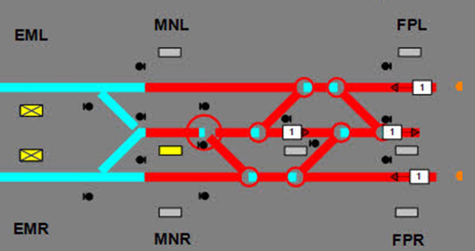
Image of the failure that occurred March 3, 2020, from the TMC control center. Disturbed track switches are circled and disturbed track segments shown in red.

View of the failure that occurred March 3, 2020, from the TMC control center. Disturbed track switches are circled and disturbed track segments shown in red.

To do this successfully, Muni’s technicians need to have a solid familiarity for what behaviors and indications are “normal”—not an easy task in a system that has some of its original equipment dating back to the 1990s, mixed with other parts that have been swapped and re-swapped as the years go on. Last week, it was night-shift technician’s sharp eye that caught a split-second oddity on the Axle Counter Evaluator, or ACE, a computer that monitors those train detectors in the trackway.

The Signal Maintenance crew found that the ACE was in an unusual low-power mode. After swapping out the power supply and bringing the computer to full power, it still wouldn’t boot. After changing some components it started up, but now one of two redundant control computers, called Intersigs, failed whenever both were switched on together, but each worked fine individually.

On Thursday morning they thought they found the culprit—a faulty connector that had been working faithfully since the 90s, allowing only one of the two Intersig computers to run at a time. But just as the crew was packing up their tools after replacing the faulty connector, both of the Intersigs failed again.
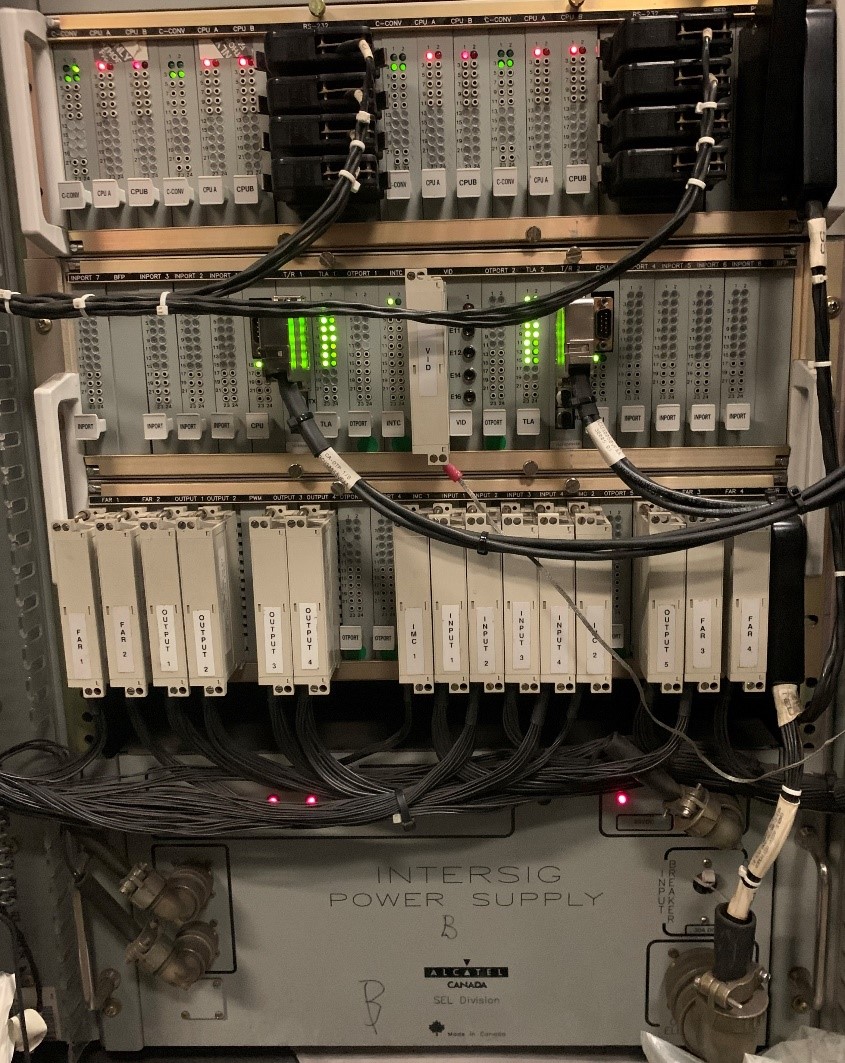
Photo of the local control center rack at the MMT, containing the Intersig computers

The local control center rack at the MMT, containing the Intersig computers

They restarted troubleshooting when a member of the crew noticed something unusual for a split-second while watching the flashing lights of the equipment. Although the two Intersigs failed, the ACE, the original piece of equipment that was having problems, had also failed very briefly, but recovered itself without declaring an error. Because it recovered so quickly and showed no indications or logs that it had failed, it had gone unnoticed.

To address the new ACE failure, the team increased the power supply and there were no more failures. The night shift team had finally found the root cause of the problem: The faulty power supply had damaged multiple pieces of equipment in the area, causing them to fail in different ways.

Without so many things going right—the sharp eye of the night crew, the dedicated systems knowledge of the technicians, the collaboration and turnover of information between work shifts and the willingness to stick to the methodology, it’s likely that this problem wouldn’t have been discovered so quickly.
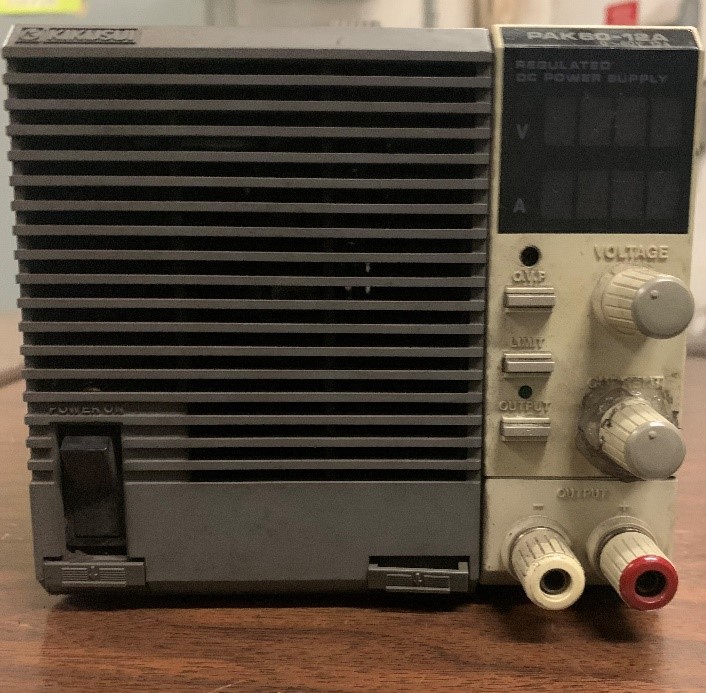
Photo of the culprit of the March 3 subway train control system failure, an old power supply

The culprit of the March 3 subway train control system failure, an old power supply

Our train control system is a challenge to manage because it is both a technology system and a piece of critical infrastructure. In the United States, this sort of infrastructure is updated once or twice a century, but technology systems become obsolete at a much faster pace.

Like every other transit system in the country, Muni has been managing the train control system on the same timescale as infrastructure. That has left us with situations like this when components become outdated and ultimately fail.

Today, with a subway train control system approaching 30 years old, our success depends entirely on the prowess and dedication of our maintenance team, who are holding the system together. While we celebrate their capabilities to get us through events like this, we must rely on more than just the heroics of our staff to provide more reliable train service for San Francisco.

We must change the paradigm of how we procure, manage and maintain our train control systems. Muni’s rail network demands a modern train control system which is always kept up to date with the latest service-proven technology, and our customers deserve it.


Published March 16, 2021 at 02:26AM
https://ift.tt/3qRCzcu
Thursday, March 11, 2021

New Routes to School for In-person Instruction

New Routes to School for In-person Instruction
By Kate McCarthy

As SFUSD considers a return to in-person instruction, many families are adapting how they will travel to school and work and SFMTA is proud to provide a strong set of mobility options to help facilitate school trips. Bicycling, scooting, skateboarding and walking to school have never been more accessible in San Francisco.

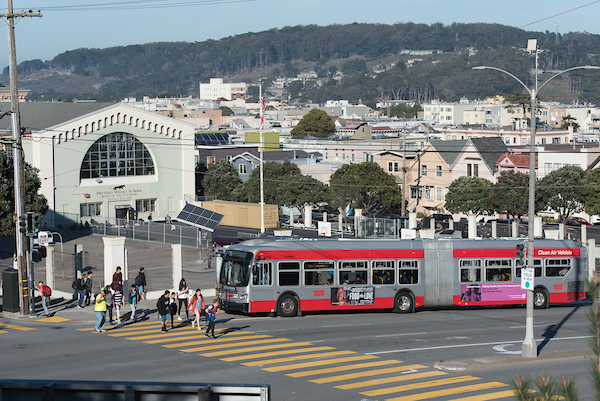
Photo of Presidio Middle school students in crosswalk while bus is stopped nearby

Presidio Middle School

Nearly 30 Slow Streets introduced during the shelter-in-place limit through traffic on certain residential streets with signage and barricades. Slow Streets has significantly expanded the network of low-stress routes families can more safely use to get to schools by walking or bicycling. The SFMTA’s Safe Routes to School team is here to help students get to school safely and sustainably, with resources and trainings on how to walk or bike to school and use the city’s new Slow Streets.

As San Francisco emerges from the pandemic, planning for schools to reopen has been at the forefront of the SFMTA’s Transportation Recovery Plan, our framework for expanding our services and operations as public health orders are modified and demand for travel increases. In 2020, a team led by SFMTA traffic operations engineer Andre Wright evaluated drop-off and pick-up needs at 114 San Francisco Unified School District schools. SFMTA staff are available to assist schools in expanding access to transportation options and safe drop-off planning with our smallest San Francisco residents in mind. 

While we’ve had to make tough choices about Muni service during the pandemic, we have strategically invested in key school routes like the 29 Sunset and 44 O’Shaughnessy and have developed a core network of very frequent service along our major corridors. As school demand kicks-in, the SFMTA  may also reintroduce “school trippers,” the supplemental Muni routes that begin after school hours to serve middle and high schools throughout the city, if needed.

This higher frequency along our core network and extra service on major school routes is complemented by the fact that over 90% of San Franciscans are within a quarter mile of Muni, with even more coverage expected by the time school starts in fall.

To help families take the guesswork out of planning trips, the SFMTA is developing a new Multimodal Transportation map of San Francisco that will launch later this spring. The map combines walking, bicycling and Muni options for getting around. For example, if the Muni route the family used before the pandemic is not in service, they may see an alternate route, or that there’s a slow street or a bike lane in their neighborhood that they may feel comfortable using to get to school.  The Multimodal Transportation map aims to help families navigate travel options and choose the modes that work best for them.

In addition to our work to make sure Muni is ready for back to school, we are proud to be offering our Free Muni for Youth program that provides free Muni to low-income youth ages 5 to 18 living in households making less than the Bay Area Median Income. To help cover Muni fare for students, SFMTA recently partnered with SFUSD to identify 25,000 additional students who would qualify for the Free Muni for Youth program based on their Free/Reduced lunch registration. Letters are being sent to these families that will act as applications that can be signed and returned to sign-up, and an online application will also be available. Anyone who has qualified for the program and received their card is enrolled until they are 19 years old and does not need to reapply.

While taking Muni continues to be a low-risk activity for COVID-19 transmission, the health of Muni customers is a top priority and we are taking extra precautions to limit exposure. Muni car cleaners and station custodians are cleaning and sanitizing vehicles and high-touch surfaces daily with safe, strong disinfectants. We are seeing over 95% mask compliance and families riding Muni to school as the pandemic persists can help by wearing a mask on board and when waiting for Muni.

Whether your family finds a new route to school on two wheels, six wheels, by walking or by rail, we think you’ll find transportation has recovered from the pandemic healthier than it was before. No matter how your family chooses to get to school as in-person instruction reopens, SFMTA is committed to helping you get there.

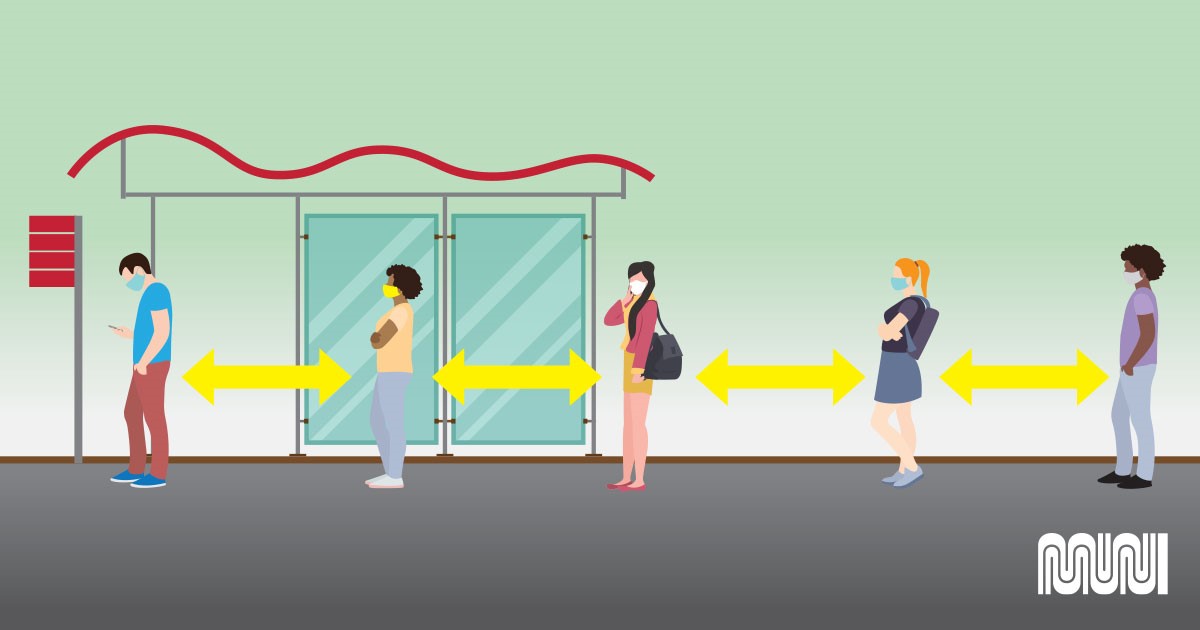
Image of muni patrons standing 6 feet apart while waiting for a bus

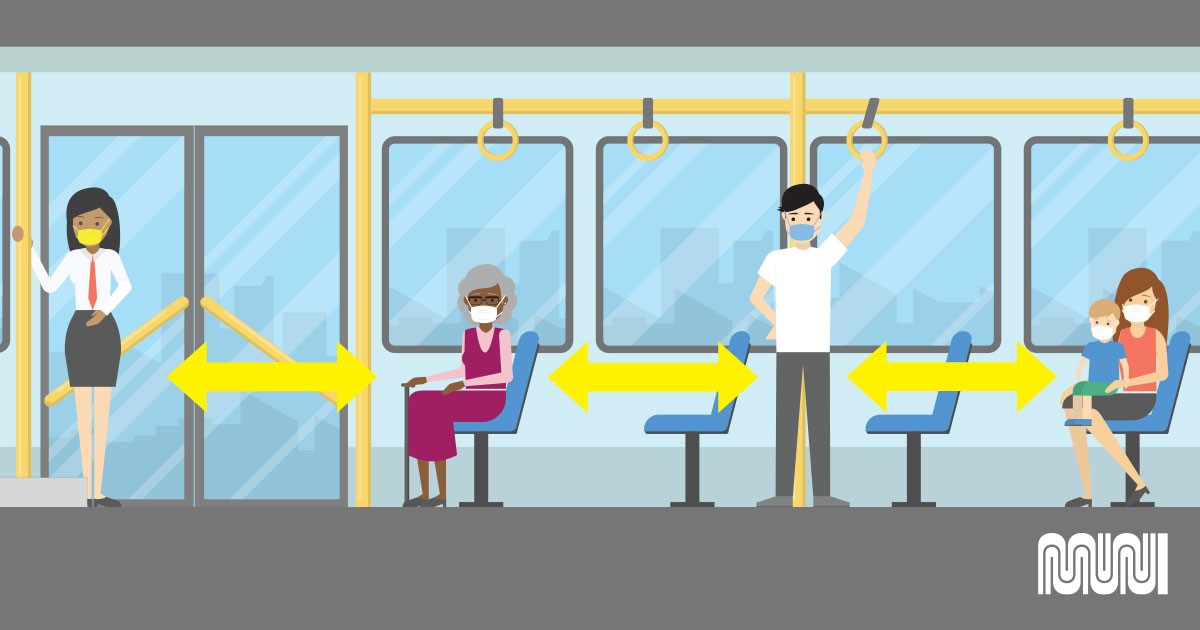
Graphic showing physical distancing at Muni stops

Image of Muni customers riding bus standing 6 feet apart

Example of physical distancing on Muni buses: Wear a mask or face covering and give space for fellow riders.


Published March 12, 2021 at 06:05AM
https://ift.tt/3ezXwGv

Thursday, March 4, 2021

Applications are now open for SFMTA's 2021 Powered Scooter Share Program

Applications are now open for SFMTA's 2021 Powered Scooter Share Program
By Richard Aicardi

Today the SFMTA opens applications for the next round of Powered Scooter Share permits. The current permits for operators expire in June 2021 and the next round will go into effect as soon as the current permits expire.

Powered scooters are an increasingly popular way for San Franciscans to move around the city.

Powered scooters are an increasingly popular way for San Franciscans to move around the city.

SFMTA’s Powered Share Scooter program is aligned with San Francisco’s goal to provide numerous, reliable transportation choices for people moving in and around San Francisco. This is particularly important given the significant reduction in Muni service as a result of the COVID-19 pandemic.

The 2021 Powered Scooter Share Permit program builds on the lessons learned from the current permit program and feedback from our community stakeholders to create a more useful, safe, and equitable citywide program. As part of the development of the updated application process, staff conducted community outreach and solicited input via a public survey on aspects of the program that staff considered in need of refinement. Full details on the survey can be found in the Report for 2021 Scooter Share Permit Issuance.

The application is accompanied by a series of supporting documents to establish additional guidance and clear requirements around three key issues:

  • Community engagement requirements: adding a mobility justice training requirement and additional outreach requirements
  • Distribution requirements: emphasizing the importance of ensuring that all neighborhoods in San Francisco are served by scooters
  • Adaptive scooter program requirements: transitioning from an adaptive scooter pilot program to a permanent program.

The SFMTA expects to issue approximately three new scooter permits to applicants that meet San Francisco’s high standards for safety, equity and accountability. We anticipate announcing successful applicants in spring 2021, and the new permits will take effect on July 1, 2021.

New permits will be effective for an approximately one-year term, with the option to extend for another year at the discretion of the SFMTA. We will establish a cap on the number of authorized scooters – anticipated to initially be between 1,000 and 2,500 scooters per permittee. As of February 2021, the three current permitees are allowed to operate the following numbers of scooters

  • Lime up to 2,000
  • Spin up to 2,000
  • Scoot up to 1,000

About the Application

All interested operators are encouraged to apply by the final deadline on March 29th, 2021. Candidates are encouraged to submit clarifying questions in writing to ScooterShare@SFMTA.com by 5 p.m. on March 9th, which will be addressed in a Question and Answer Session on March 11th.   Applications will be evaluated against a standardized evaluation scorecard to determine the strongest proposals.

The Permit Application and accompanying guidance documents can be found on the SFMTA Powered Scooter Share Permit Application website.


Published March 05, 2021 at 02:22AM
https://ift.tt/2OoSNMI

Wednesday, March 3, 2021

An Update on Cable Cars and Muni's Historic Fleet

An Update on Cable Cars and Muni's Historic Fleet
By Erica Kato

Unbeatable views. Unforgettable trips. No experience is more uniquely San Francisco than a ride on a cable car. Cable cars have come to symbolize our great city.  

Phot of the Powell/Hyde Cable Car above Fishermans Wharf

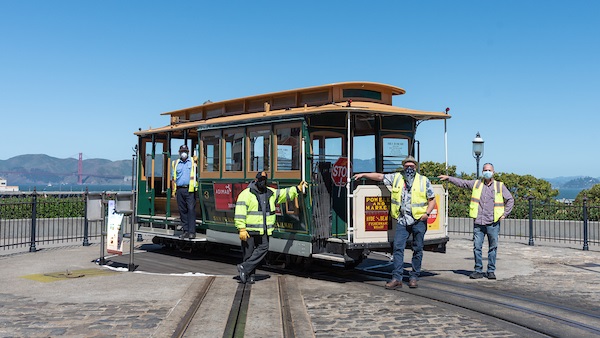
The Powell/Hyde Cable Car turnaround at Fisherman's Wharf

Last March, in response to the COVID-19 pandemic, we temporarily halted cable car service as part of the city’s emergency response. This decision was made to best protect our operators and the public. Muni resources were then shifted to a core network to serve our essential workers and accommodate physical distancing on our most utilized lines and to retain access for transit dependent neighborhoods.  

We’re excited to announce that we have a timeline to phase in cable car service, as well as bring back service on our historic F Line fleet. Thanks to the acceleration of the COVID-19 vaccine and a more optimistic outlook for federal funding for public transit, we can craft a path forward. Our plan is to resume F Line service this May, seven days a week. Cable car service will return on the Powell-Hyde line, between Market Street and Fisherman’s Wharf, first this fall — ahead of the holiday season. The cable cars run through the heart of the city and will play a fundamental role in helping the city’s economy recover. What we know is tourism is the main driver of city business, and cable cars are a huge draw to San Francisco. 

In the meantime, we have a lot of work ahead of us before service returns: retraining operators, hiring line inspectors, and preparing our infrastructure to accommodate daily ridership again.   

We are committed to restarting cable car service and are well aware of the tremendous value they have for San Francisco’s history and economy. Please subscribe to our text or e-mail updates for more information on their triumphant return to San Francisco’s hilly streets and most iconic backdrops.  


Published March 03, 2021 at 08:48PM
https://ift.tt/3sRp1iV

Tuesday, March 2, 2021

Temporary Ramps Provide a Platform for Local Artists

Temporary Ramps Provide a Platform for Local Artists
By Jonathan Streeter

San Francisco’s arts community has been hit particularly hard by the shelter-in-place guidelines that have been in place since March 2020.  Inspired by the challenges faced by the arts community during the pandemic, SFMTA staff undertook an initiative to fund public art installations on two temporary wooden rail platforms installed last summer. For the project, a partnership between the SFMTA and local arts organization Paint the Void was formed with a mission to keep artists engaged and paid as a response to COVID-19. This effort was spearheaded by SFMTA project manager Liz Brisson, who oversaw the contracting and coordinated the necessary approval from the San Francisco Arts Commission.

In consultation with the local community, two artists were selected to create murals that would be an attractive addition to the streetscape. These works, by Simón Malvaez and Emily Fromm, now greet passengers and passers-by at the temporary platforms at West Portal Station and on the 200 block of Church Street.

“East West Portal”

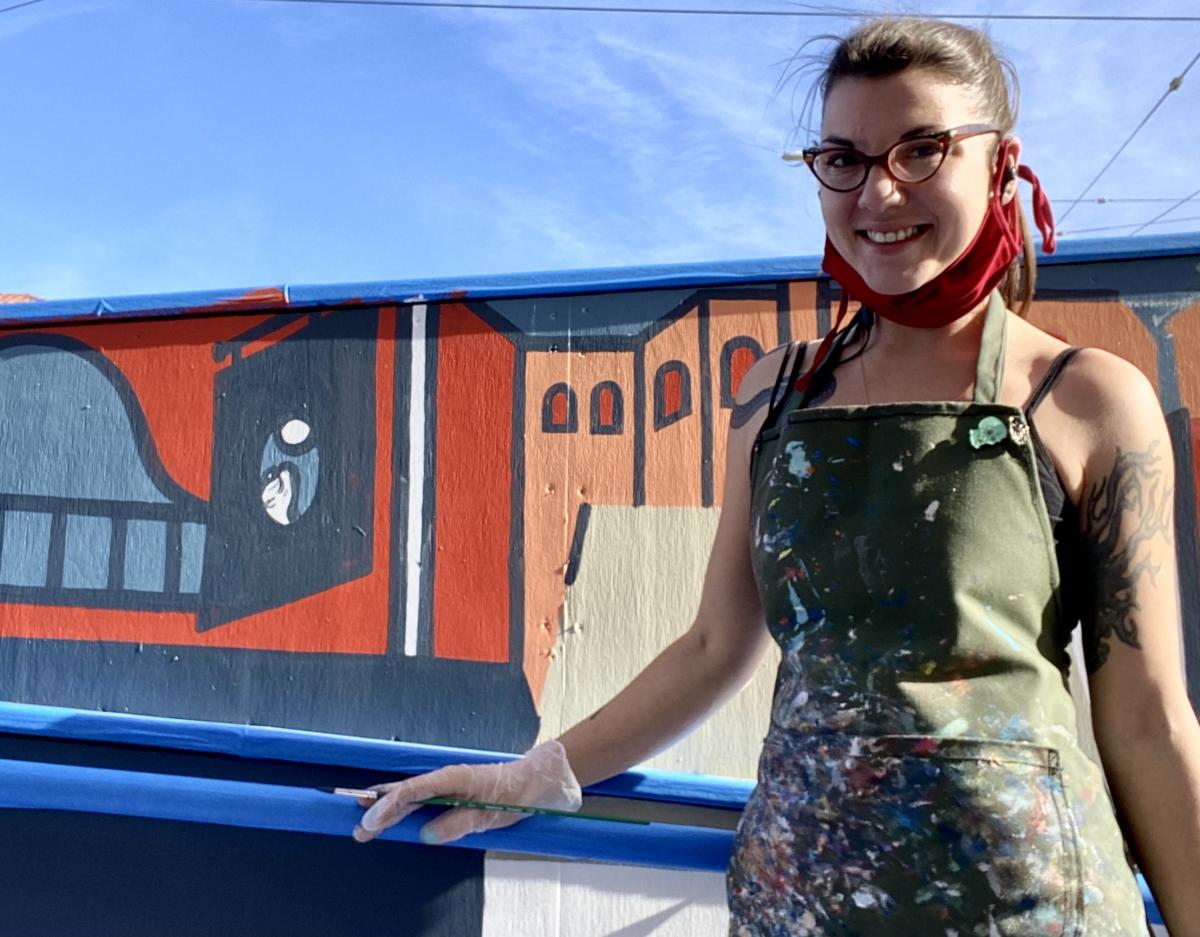
Emily Fromm with her work "East West Portal"

Artist Emily Fromm with her work "East West Portal"

When asked about her mural at West Portal, artist Emily Fromm replied “from a young age I have been attracted to signs, text, bright lights, storefront displays and generally speaking, the way in which the world has been designed to communicate with those in it.” She wanted her piece “to capture the street which surrounds it; a quaint, picturesque little corner of the world that feels almost unchanged by time.  (I) wanted to highlight those businesses that have served the block in these times and those prior.”

As with many artists, the COVID-19 pandemic interrupted Emily’s plans for 2020, including debut exhibitions in New York and London.  She was able to remain active during shelter–in-place with several commissions and is looking forward to developing a solo exhibition in San Francisco when the city re-opens.

 One reason this mural is so important to the artist is that the platform will serve the L Taraval, her favorite Muni line. Aside from memorable trips out to the zoo, Emily met her now-fiancé on the L Taraval “when we both got on at Montgomery Station on our way home from work and struck up a conversation on the ride home. I was carrying a bunch of plywood planks to paint, and once we realized that we were both getting off at the same stop at the end of the line and that we were neighbors, he helped me carry them home and asked me for my phone number. We still ride the L all the time and are grateful for all of the wonderful folks with the SFMTA who help us all get where we need to go.”

To learn more about how Emily’s platform will be put to use, visit the West Portal LK Transfer Project page.

“Them (Ramp)”

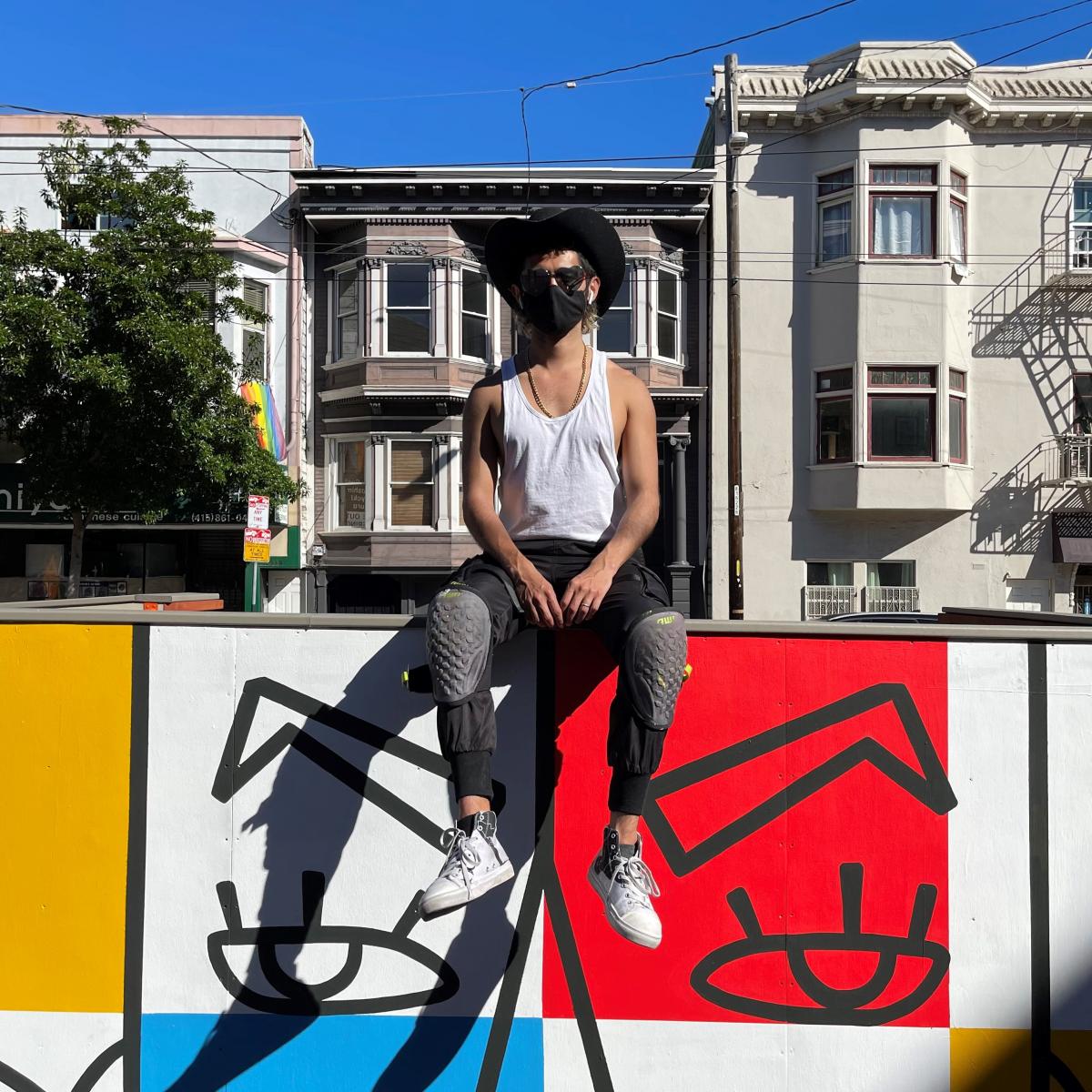
Simón Malvaez with his work "Them (Ramp)"

Simón Malvaez with his work "Them (Ramp)"

Castro resident Simón Malvaez, who painted the Church Street platform, draws his inspiration from the Queer and Latino communities. He said of his design, “I wanted to represent how we should celebrate unity in diversity and honor all the different people that have influenced me through my life.”

When asked about his experience during the pandemic, Simón replied, “I feel like art is one of the most important tools to show the reality that we live in right now, not only in our neighborhood but also in our city, our country, and the whole world. For me it’s very interesting to know about art history in San Francisco, and how through the years a lot of artists have moved out of the city—mostly because of the rent prices going high. I feel like being an artist in the Bay Area could be sometimes very hard and challenging and I think it is important to support local artists now more than ever.”

While unable to fulfill his plan to create his first major art piece at Burning Man 2020, Simón noted that “the pandemic made me slow down on my projects and focus on growing and learning more about my artistic style and the materials that I use. And it was not only the pandemic, but also the Black Lives Matter movement and the politics around immigration that are influencing what I want to show and represent in my art.” Now that his work is completed on the J Church platform, Simón is looking forward to the subway re-opening later this year when he can use the transfer point to connect to his other favorite lines, like the L Taraval at West Portal.

For information about how Simón’s platform is assisting Muni customers, visit the J Church Transfer Improvements page.


Published March 02, 2021 at 11:27PM
https://ift.tt/3baf1Lv

Photo Exhibit Event: Vintage Bus Display and Tour

Photo Exhibit Event: Vintage Bus Display and Tour By Jeremy Menzies Join us Saturday, Jan. 27 at a special event for our exhibit, " 1...