Tuesday, September 15, 2020

Muni Transit Recovery and Measuring the Transportation Recovery Plan’s Progress

Muni Transit Recovery and Measuring the Transportation Recovery Plan’s Progress
By Bradley Dunn

As the economy takes further steps to reopen this month, the SFMTA remains committed to transparency. Today, we are releasing our Muni: Transit Recovery (Recuperación de Muni Transit, 恢復公交服務, and Pagbawi ng Muni Transit) report along with new data dashboards that help us evaluate the SFMTA’s overall response during COVID-19. Taken together, these reports give a window into what we are doing and how we plan to move forward.

Muni: Transit Recovery Report (Recuperación de Muni Transit, 恢復公交服務, and Pagbawi ng Muni Transit)

This report explains how we are adapting to meet San Francisco’s changing transportation needs and what our customers and the public can expect from Muni. It also reminds our customers of both what they need to do to ride Muni and what we’re doing to minimize the risk of transmission while getting essential workers where they need to go. 

Examples include:

  • What we are doing to minimize transmission risk for our staff, especially operators and other frontline workers
  • How we’ve stepped up sanitizing our vehicles
  • How we’re providing service with the agency’s COVID-driven budget crisis
  • How we are delivering service to people who need it the most
  • What we are doing to be transparent, share data and conduct outreach to the public

Our Muni Transit Recovery (Recuperación de Muni Transit, 恢復公交服務, and Pagbawi ng Muni Transit) report represents key customer-facing initiatives associated with our Transportation Recovery Plan (TRP).  The TRP is guided by the following goals: 

  • Protect the health and safety of SFMTA employees and the public.
  • Support a strong economic recovery
  • Promote sustainable alternatives such as walking and bicycling.
  • Advance the SFMTA’s equity, environmental sustainability and customer service goals;
  • Adapt transportation infrastructure and services to best serve San Francisco in the long term.

Transportation Recovery Plan Dashboards: See the Data Driving Recovery

We have designed an evaluation framework for the TRP that is nimble and representative of the recovery goals above. Today we’ve published our TRP Evaluation Dashboards so that you can track our progress.

These dashboards provide a holistic view across the programs within the TRP so anyone can track our progress toward our goals. Our evaluation framework identifies high-level objectives aligned with the goals of the TRP and trackable metrics. These allow us to monitor progress on the TRP’s most prominent strategies including COVID-19 Muni Core Service, Temporary Emergency Transit Lanes, Slow Streets, and the multiagency Shared Spaces program.

SFMTA relies upon pre-pandemic data and along with data made available by the implementation of our recovery solutions and programs to make strategic decisions and address trade-offs. Individual dashboards will be updated either weekly or monthly, based on data availability. Additionally, as our recovery efforts are ongoing, additional data will be made available as we refine and expand our evaluation efforts.

We are working hard to meet San Franciscans' changing transportation needs during this pandemic. New programs and initiatives require that the public trust us as we act quickly to try new approaches and work to refine and improve our efforts. Publishing this data helps members of the public see much of the same data that we use to make our decisions.


Published September 16, 2020 at 02:17AM
https://ift.tt/33tZbq5

Muni Transit Recovery and Measuring the Transportation Recovery Plan’s Progress

Muni Transit Recovery and Measuring the Transportation Recovery Plan’s Progress
By Emily Stefiuk

As the economy takes further steps to reopen this month, the SFMTA remains committed to transparency. Today, we are releasing our Muni: Transit Recovery (Recuperación de Muni Transit, 恢復公交服務, and Pagbawi ng Muni Transit) report along with new data dashboards that help us evaluate the SFMTA’s overall response during COVID-19. Taken together, these reports give a window into what we are doing and how we plan to move forward.

Muni: Transit Recovery Report (Recuperación de Muni Transit, 恢復公交服務, and Pagbawi ng Muni Transit)

This report explains how we are adapting to meet San Francisco’s changing transportation needs and what our customers and the public can expect from Muni. It also reminds our customers of both what they need to do to ride Muni and what we’re doing to minimize the risk of transmission while getting essential workers where they need to go. 

Examples include:

  • What we are doing to minimize transmission risk for our staff, especially operators and other frontline workers
  • How we’ve stepped up sanitizing our vehicles
  • How we’re providing service with the agency’s COVID-driven budget crisis
  • How we are delivering service to people who need it the most
  • What we are doing to be transparent, share data and conduct outreach to the public

Our Muni Transit Recovery (Recuperación de Muni Transit, 恢復公交服務, and Pagbawi ng Muni Transit) report represents key customer-facing initiatives associated with our Transportation Recovery Plan (TRP).  The TRP is guided by the following goals: 

  • Protect the health and safety of SFMTA employees and the public.
  • Support a strong economic recovery
  • Promote sustainable alternatives such as walking and bicycling.
  • Advance the SFMTA’s equity, environmental sustainability and customer service goals;
  • Adapt transportation infrastructure and services to best serve San Francisco in the long term.

Transportation Recovery Plan Dashboards: See the Data Driving Recovery

We have designed an evaluation framework for the TRP that is nimble and representative of the recovery goals above. Today we’ve published our TRP Evaluation Dashboards so that you can track our progress.

These dashboards provide a holistic view across the programs within the TRP so anyone can track our progress toward our goals. Our evaluation framework identifies high-level objectives aligned with the goals of the TRP and trackable metrics. These allow us to monitor progress on the TRP’s most prominent strategies including COVID-19 Muni Core Service, Temporary Emergency Transit Lanes, Slow Streets, and the multiagency Shared Spaces program.

SFMTA relies upon pre-pandemic data and along with data made available by the implementation of our recovery solutions and programs to make strategic decisions and address trade-offs. Individual dashboards will be updated either weekly or monthly, based on data availability. Additionally, as our recovery efforts are ongoing, additional data will be made available as we refine and expand our evaluation efforts.

We are working hard to meet San Franciscans' changing transportation needs during this pandemic. New programs and initiatives require that the public trust us as we act quickly to try new approaches and work to refine and improve our efforts. Publishing this data helps members of the public see much of the same data that we use to make our decisions.


Published September 16, 2020 at 02:17AM
https://ift.tt/33tZbq5
Monday, September 14, 2020

Scooters to Fill Transportation Gaps in More Neighborhoods

Scooters to Fill Transportation Gaps in More Neighborhoods
By Bradley Dunn

Recent SFMTA authorization enables scooter companies to deploy more scooters and expand into new neighborhoods across San Francisco. Scooters can help by offering an efficient travel choice that is environmentally friendly and fills transportation gaps, especially for shorter trips. With reduced Muni service and returning traffic congestion, the city is focused on promoting sustainable efficient modes of transportation, such as scooters, that do not contribute to congestion or pollution. 

More Scooters and Areas Served

To make the scooters more available, the SFMTA recently updated the process and criteria for scooter permittees to request a fleet increase.  To be eligible for expansion, they must meet key service, compliance and equity goals like a low-income access program. The companies must also serve new neighborhoods and show an increase in users and/or trips using the Adaptive Scooter Pilot, an effort to make shared micromobility more accessible to people with disabilities.

Prior to the COVID-19 pandemic, the SFMTA implemented a Powered Scooter Share Program to address the significant issues demonstrated during the pre-regulation period of shared scooters in San Francisco. SFMTA’s program permitted four companies to provide shared scooters. The fleets were phased to increase over time.

Once San Francisco's transportation needs changed during the COVID-19 pandemic, the SFMTA's Transportation Recovery Plan sought to meet those needs with expanded options like scooters as the economy reopens.

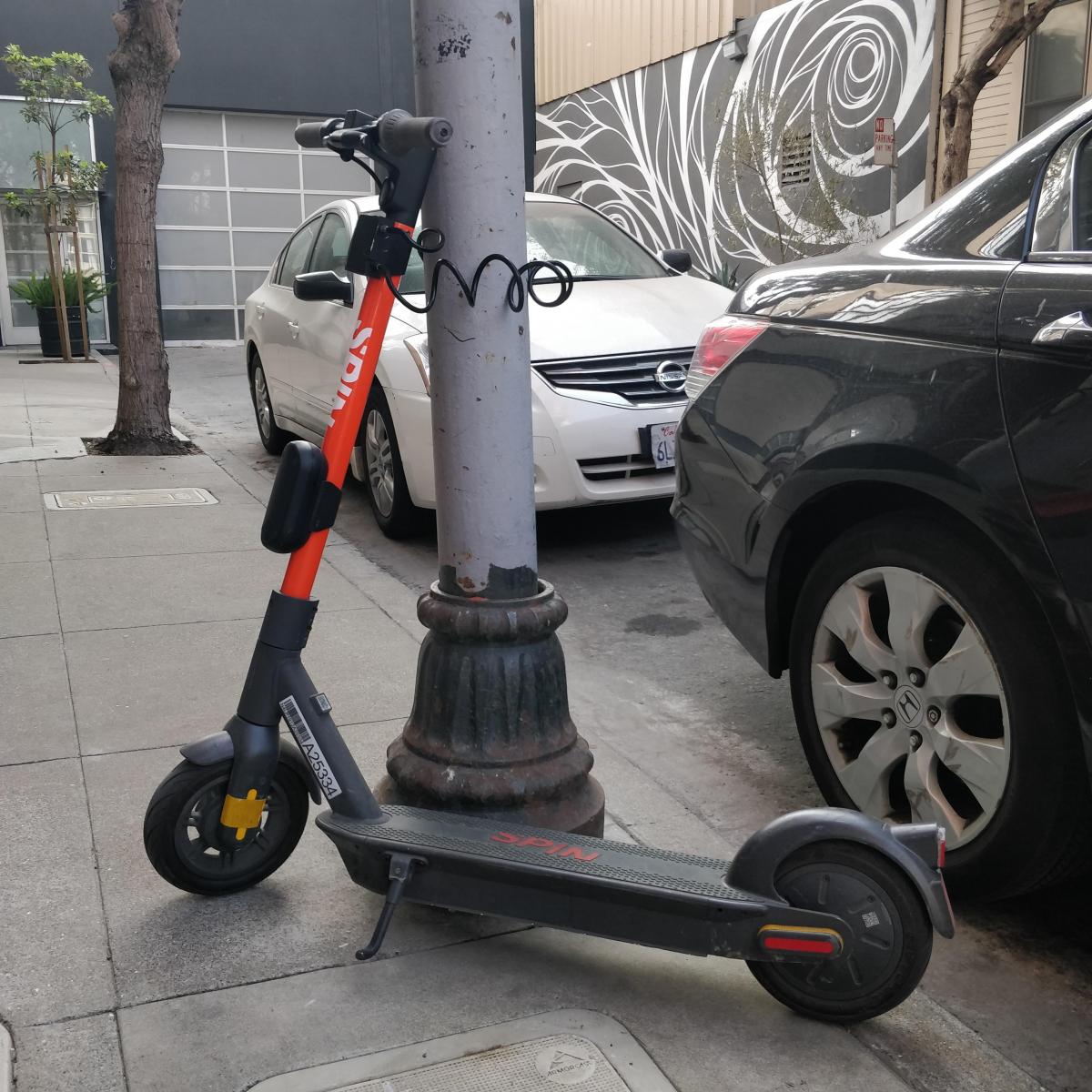
A Spin scooter parked with a lock-to device.

A Spin scooter parked with a lock-to device.

Companies Expanding

Spin will be the first company to expand its fleet and is authorized to add 500 devices scooters to its fleet as of September 3. With this increase, Spin’s fleet will grow to a total of 1,500 scooters and operate in three more neighborhoods as required by the program: Inner/Central Richmond, Inner/Central Sunset and Haight.

Lime recently acquired JUMP, and because both companies hold a permit, we are undertaking a process to review the acquisition and approve the permit transfer. Once the permit transfer is final, Lime would be allowed to operate 2,000  scooters. As part of the requirements for that expanded fleet, the SFMTA will require that the Richmond District and Sunset District also be served.

Increased Enforcement and Transparency

With fleet expansion, the SFMTA has increased our enforcement and monitoring of scooter share to address compliance issues. The SFMTA will increase enforcement sweeps and respond to areas where there have been complaints. Robust enforcement of SFMTA’s oversight functions are critical for public safety. For transparency in this effort, we’ve published a Scooter Share enforcement dashboard.


Published September 15, 2020 at 06:08AM
https://ift.tt/2RtsQKs

Friday, September 11, 2020

Traffic Changes on Van Ness Begin September 14

Traffic Changes on Van Ness Begin September 14
By Nehama Rogozen

If you travel on Van Ness Avenue, get ready for your travel lane to shift starting next week.

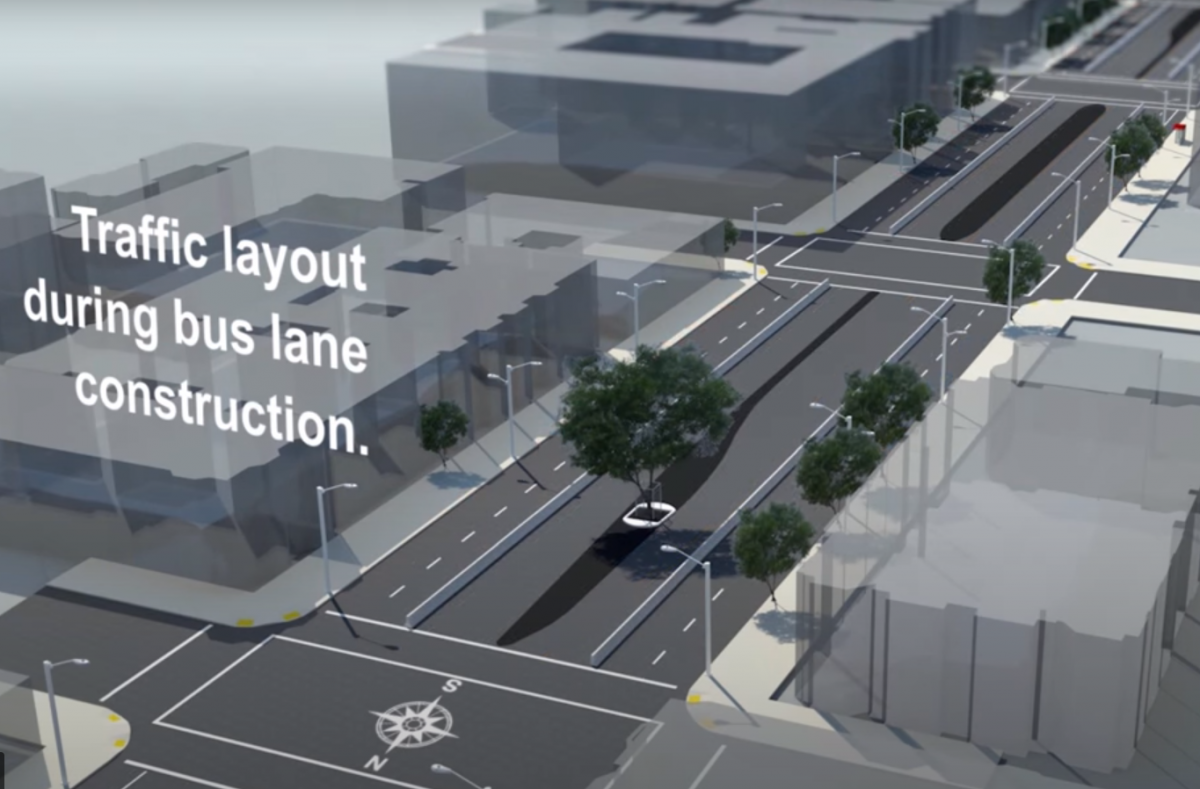
Beginning on the evening of Monday, September 14, the Van Ness Improvement Project will begin shifting lanes on Van Ness Avenue so that work on the Bus Rapid Transit (BRT) system can continue in the middle of the street.

This summer, the project reached a significant milestone by completing the utilities phase and moving into the BRT buildout phase. The utilities phase focused on updating essential services that San Franciscans rely on, such as water and sewer systems, a firefighting system and street lighting. The new BRT buildout phase will include building out red transit lanes, putting in new medians and bus boarding islands, connecting new traffic signal lights,  installing plants and adding an irrigation system.

On the evening of Monday, September 14, southbound lanes between Pacific and Lombard streets will move over one lane, utilizing the lane closest to the curb. On the evening of Tuesday, September 15, the same thing will happen on the northbound lanes between Pacific and Lombard streets. Work will be performed from 9 p.m. to 7 a.m. Two lanes available in each direction after the switch.

A diagram showing traffic layout during construction

Rendering: In order to work on the BRT elements and the new medians along Van Ness Avenue, traffic will shift to the outer two lanes.

To prepare for this traffic and construction switch, we encourage finding an alternate route early and avoiding Van Ness on Monday and Tuesday nights as we make the switch.

With these changes, safety fencing will be maintained as needed. Driveway access will be mostly restored, but there may be short tasks that require temporary driveway closures, in which case advance notice will be provided.

Project Background

The Van Ness Improvement Project is building San Francisco’s first Bus Rapid Transit system. This much-needed and globally-proven solution will improve transit service and address traffic congestion on Van Ness Avenue, a major north-south arterial. The project also includes extensive utility maintenance, civic improvements and safety enhancements that minimize the need for future construction and will revitalize this historic corridor.

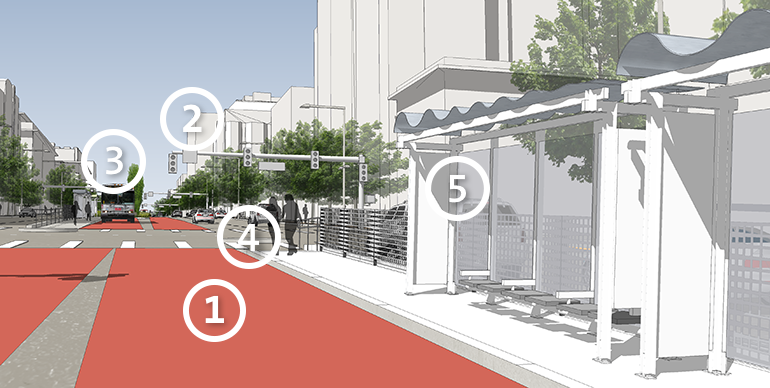
A diagram showing benefits of bus rapid transit

Features of Bus Rapid Transit on Van Ness include:

  1. Dedicated transit lanes that are physically separated from the other traffic lanes.
  2. Enhanced traffic signals optimized for buses.
  3. Low-floor vehicles and all-door boarding.
  4. Safety enhancements for people walking.
  5. Fully furnished boarding platforms that include shelters, seating and prediction displays.

For more information about the Van Ness Improvement Project and what to expect, or to sign up for project updates, please visit our website.


Published September 12, 2020 at 12:58AM
https://ift.tt/2Fe4jXn

Friday, September 4, 2020

Virtual Open House for the Bayview Quick Build Project

Virtual Open House for the Bayview Quick Build Project
By Benjamin Barnett

LIVE ON MONDAY! - Click Here to Access the Virtual Open House

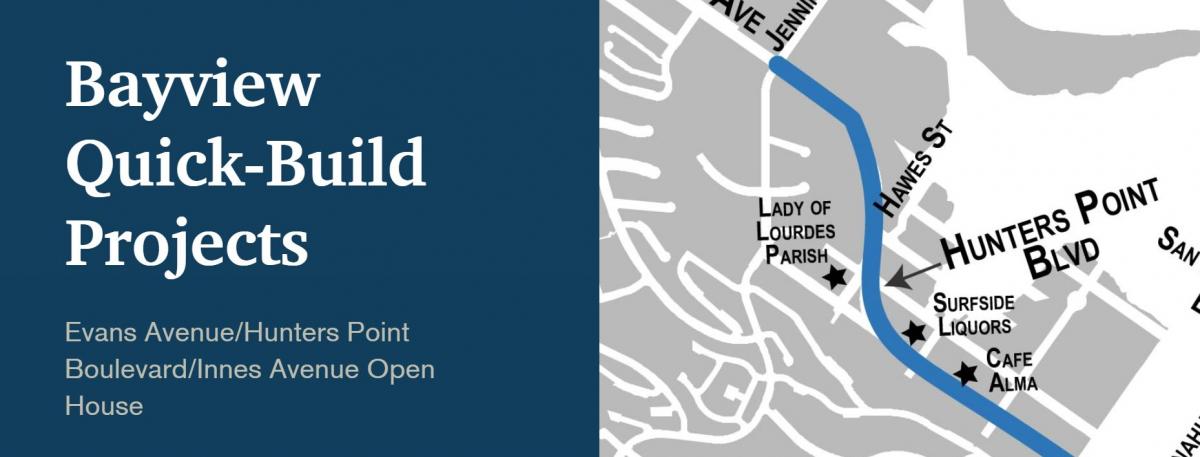
The SFMTA will be holding a Virtual Open House on the Bayview Hunters Point Quick-Build Project for Evans Avenue, Hunters Point Boulevard, and Innes Avenue. This project is an effort to improve pedestrian and cyclist visibility while reducing opportunities for reckless driving by implementing cost-effective and temporary design treatments that can be installed quickly. At the event you can learn more about the proposed changes, ask questions or make official public comments. 

Virtual Open House for the Bayview Quick Build Project

Virtual Open House Details 

Join us online starting September 7- September 21. The interactive, online event can be accessed at any time during the two-week period. Like the SFMTA’s in-person project open houses, when you access the event you will be able to learn more about the project such as the schedule, project background, and other aspects through virtual informational boards. Community members will then have an opportunity to see the proposed design, ask questions via email, leave public comments about the project and provide feedback through our survey. Project staff will respond to questions and comments received and the responses will be posted back to the Virtual Open House web page in a couple of days. Office hours for community members to speak directly with the project team regarding concernswill also be held. 

Proposed Quick-build Improvements 

  • Reducing travel lanes and installing edge lines to calm traffic, address excessive roadway capacity and to define roadway space for parking, walking, and biking 
  • Installing crosswalks, painted pedestrian median islands, and painted safety zones to increase visibility, safety and comfort for pedestrians 
  • Potential for  extended pedestrian walkway and protected bicycle lanes to provide a buffer between vehicles and increase safety for non-motorized travel (walking, biking, etc.) 

Project Background 

The Bayview District is one of San Francisco's most diverse and distinct areas, with a rich history as a traditionally African American neighborhood. As the City moves forward, the Bayview continues to grow as well, but the streets have not changed with it to meet the community's evolving needs. Several residents, businesses, and community-based organizations have reached out calling for comprehensive changes to the streets that can support the community's transportation needs and priorities. Some of the most frequent issues raised include aggressive speeding, reckless driving, and unsafe behavior that place undue stress on the streets. 

Bayview Quick-Build Transportation Projects seek to improve traffic safety for all roadway users. Recognizing the immediate need for transportation improvements in Bayview Hunters Point, locations for near term improvements were identified during the planning phase of the Bayview Community Based Transportation Plan (CBTP).  

Language Assistance:   

For free interpretation services, please submit your request 48 hours in advance of meeting to 311. 

Para servicios de interpretación gratuitos, por favor haga su petición 48 horas antes de la reunión a 311. 

如果需要免費口語翻譯,請於會議之前48小時提出要求 311.  

Para sa libreng serbisyo sa interpretasyon, kailangan mag-request 48 oras bago ang miting 311. 


Published September 04, 2020 at 11:04PM
https://ift.tt/31WAgf4

Wednesday, September 2, 2020

Enforcement in Residential Parking Permit Areas to Resume September 14th

Enforcement in Residential Parking Permit Areas to Resume September 14th
By Phillip Pierce

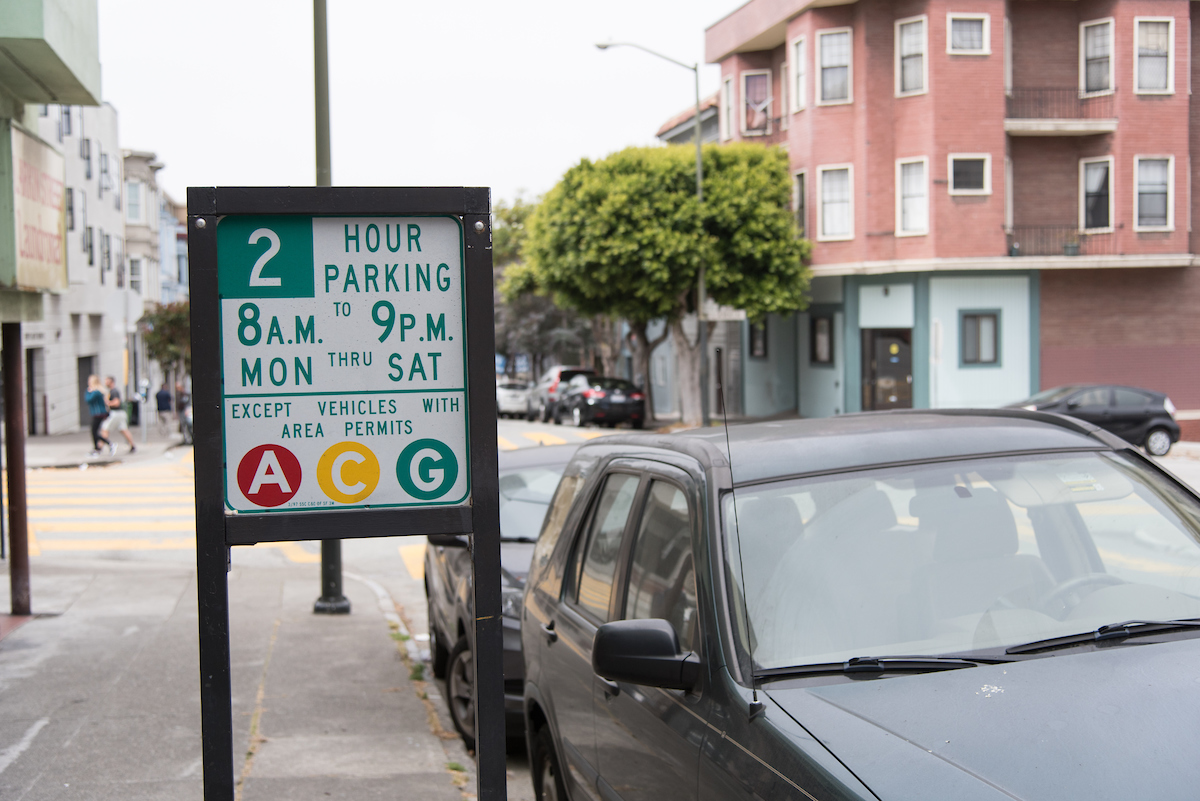
To make more parking available to neighborhood residents as more businesses open, enforcement of parking time limits in all Residential Parking Permit (RPP) areas is set to resume September 14, 2020. Vehicles with a valid permit for their area, those displaying a disabled placard or vehicles with disabled license plate are exempt from the time limits. If you don’t have a valid RPP for an area, you will be required to move your vehicle a minimum of one block before the time limit expires.

A picture of a residential parking sign

A picture of a residential parking sign.

At the start of shelter in place earlier this year, enforcement within RPP areas was temporarily suspended. As more of the city reopens to activity, parking rules are restarting to be sure the limited supply of curbside parking is available for residents, customers of local business and visitors. SFMTA Parking Control Officers have begun placing warnings on vehicles without a valid permit that are parked in RPP areas so people can prepare to renew or get a permit.  

Apply or Renew Online!

To make it easier for residents to purchase a permit prior to September 14th without having to come to the SFMTA Customer Service Center, we created a new online application process. Residents who need to apply for a new permit or to renew an expired permit may apply online here or download an application at SFMTA.com/RPP.

Don’t wait until it is too late: Turnaround time is about one day for online purchases or two weeks in the mail. Once you are approved, you will not get a citation even if your permit sticker has not yet arrived.

While we encourage customers to use the online application, customers who need to apply in-person can use the re-opened SFMTA Customer Service Center at 11 South Van Ness.  Prior to your visit, please download and complete the application and bring your vehicle registration and proof of insurance with you. Don’t forget to wear a face covering – they are required for everyone’s protection.   

For more information, please see below for specific programs for each of the following situations:


Published September 03, 2020 at 04:26AM
https://ift.tt/2EVWm8H

Enforcement in Residential Parking Permit Areas to Resume September 14th

Enforcement in Residential Parking Permit Areas to Resume September 14th
By Kathryn Studwell

To make more parking available to neighborhood residents as more businesses open, enforcement of parking time limits in all Residential Parking Permit (RPP) areas is set to resume September 14, 2020. Vehicles with a valid permit for their area, those displaying a disabled placard or vehicles with disabled license plate are exempt from the time limits. If you don’t have a valid RPP for an area, you will be required to move your vehicle a minimum of one block before the time limit expires.

A picture of a residential parking sign

A picture of a residential parking sign.

At the start of shelter in place earlier this year, enforcement within RPP areas was temporarily suspended. As more of the city reopens to activity, parking rules are restarting to be sure the limited supply of curbside parking is available for residents, customers of local business and visitors. SFMTA Parking Control Officers have begun placing warnings on vehicles without a valid permit that are parked in RPP areas so people can prepare to renew or get a permit.  

Apply or Renew Online!

To make it easier for residents to purchase a permit prior to September 14th without having to come to the SFMTA Customer Service Center, we created a new online application process. Residents who need to apply for a new permit or to renew an expired permit may apply online here or download an application at SFMTA.com/RPP.

Don’t wait until it is too late: Turnaround time is about one day for online purchases or two weeks in the mail. Once you are approved, you will not get a citation even if your permit sticker has not yet arrived.

While we encourage customers to use the online application, customers who need to apply in-person can use the re-opened SFMTA Customer Service Center at 11 South Van Ness.  Prior to your visit, please download and complete the application and bring your vehicle registration and proof of insurance with you. Don’t forget to wear a face covering – they are required for everyone’s protection.   

For more information, please see below for specific programs for each of the following situations:


Published September 03, 2020 at 04:26AM
https://ift.tt/2EVWm8H

Photo Exhibit Event: Vintage Bus Display and Tour

Photo Exhibit Event: Vintage Bus Display and Tour By Jeremy Menzies Join us Saturday, Jan. 27 at a special event for our exhibit, " 1...