Wednesday, June 24, 2020

Taxi Taxi

Taxi Taxi
By Benjamin Barnett

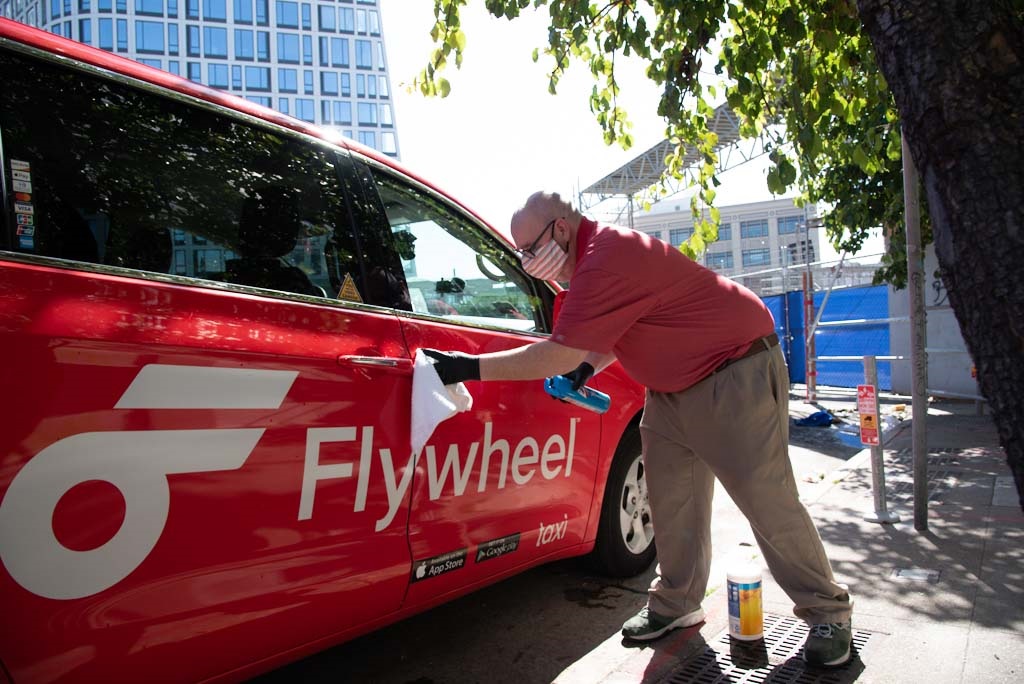
taxi cleaning

During this time of physical distancing and temporarily reduced Muni service, our Taxi program continues to provide essential trips around the City. A number of changes have been made to meet the challenges of this crisis and instill confidence in drivers and passengers during the COVID-19 pandemic. 

To start with, taxi company representatives have been trained, including with an SFMTA training video on proper cleaning procedures. Taxis are now required to be sanitized after each passenger trip and the SFMTA follows up with enforcement activities to ensure compliance.  

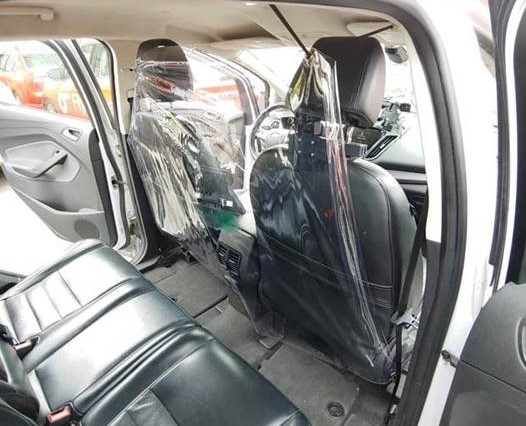
In addition to making personal protective equipment (PPE) kits available to all taxi companies for distribution to drivers, the SFMTA has procured and distributed clear plastic shields for vehicles. These plastic shields are easily installed inside the vehicle, separating the rear and front seats, adding a layer of protection for both the driver and passenger. The SFMTA has provided these plastic shields to all taxi companies at no charge.  

taxi bubbleSFMTA provided plastic “bubbles” to all taxi companies that add a layer of protection for Taxi drivers and passengers alike. 

We are also committed to helping the taxi industry as a whole. Here are some things that the SFMTA is doing to boost the Taxi industry during these trying times: 

  • Increased the SFMTA’s Clean Air Taxi program per vehicle rebate up to $7,700 and used vehicles are now able to qualify.  
  • Support the Department of Environment’s Essential Worker Ride Home program that provides subsidized taxi trips for essential workers.  
  • Meet weekly with taxi companies to share information and get updates from company managers 
  • Provided a list of financial resources and other support programs, including unemployment assistance and paycheck protection program, to the taxi industry 
  • Ensured that SFPD is aware that taxis are considered essential during the shelter-in-place order and are able to continue operating 
  • Route industry requests through the SFMTA’s Incident Command System and continue to seek additional resources for taxis 
  • Meet weekly with taxi regulators across the country to share best practices to support taxi industry 

Taxis deliver critical service as part of the Essential Trip Program

With a shortage of operators, car cleaners and other key personnel, Muni has implemented significant reductions to Muni service. For many older adults and people with disabilities, walking farther to an alternate bus or paying for other transportation simply isn’t possible. To address this need, SFMTA’s Essential Trip Card (ETC) helps older adults and people with disabilities pay for essential trips in taxis. We are thankful that taxis have stepped up to serve this critical need.  

The ETC provides two to three round trips per month at 20 percent of the cost of a regular cab fare.  All taxis in San Francisco will accept the card to pay for essential trips like going to the grocery store or the doctor during the shelter-in-place period.  Customers who pay $6 will receive $30 value or $12 for $60 value for taxi trips on a debit card. Cards can be re-filled once a month for each month of this special temporary program until the SFMTA announces its end.  

The taxi industry is an essential part of our transportation system. Taxis have been instrumental in our city’s efforts to effectively serve people with disabilities and older adults before and during this crisis. Since the early 1980s, taxis have been an integral part of Paratransit and San Francisco has had wheelchair-accessible ramp taxi service since the early 1990s. The SFMTA is thankful that taxis continue to deliver these critical services to our most vulnerable citizens during these challenging times.  


Published June 25, 2020 at 04:20AM
https://ift.tt/2NvkYWw

Thursday, June 18, 2020

Big Changes Ahead when Muni Rail Returns in August

Big Changes Ahead when Muni Rail Returns in August
By Mariana Maguire
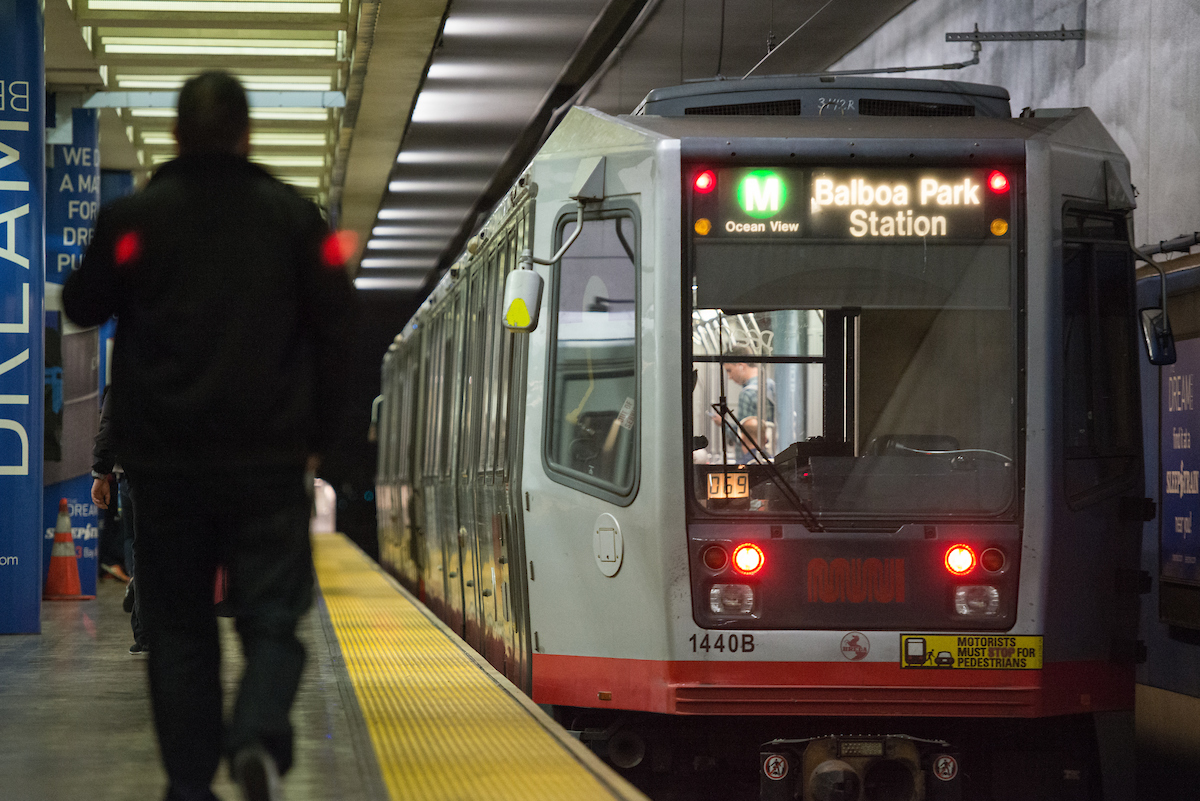
Muni Metro train at a subway platform

Photo: Muni Metro rail train at a subway platform.

Get ready for a big addition to our COVID-19 Core Service Network:  Muni Metro rail is scheduled to return in August to coincide with San Francisco schools welcoming teachers and students back into their classrooms, and more businesses reopening.

But the new Metro rail service will look different when it comes back: Some Muni Metro lines could be taken out of the subway to cut severe pre-COVID-19 delays and backups in the tunnels. This would also allow us to add more cars to our Metro trains to increase capacity.

Putting Metro rail back in service frees up buses currently in use for the L, M, N and T to serve additional routes and improve frequencies systemwide. A high-frequency shuttle in the subway would replace the Metro lines that we take out of the subway. Devoting the tunnels to the higher capacity routes would use the space in our subway much more efficiently. These changes will support more essential trips, physical distancing, and our city’s economic recovery.

Closing the Muni Metro subway in March allowed us to minimize risk to our front-line staff and the community and redirect custodial resources to other facilities. While the rail system was closed to customers, Muni was able to complete critical maintenance work to our vehicles and infrastructure.  

All our service changes are possible because of the City’s efforts, the cooperation of our customers, and the steps we have taken as an agency to decrease the risk of transmission of COVID-19. As more of our operators and other staff are gradually able to return to work, we can offer more service.

We’re able to restart Metro rail with the implementation of a mobile cleaning program that allows us to clean buses and trains in the field rather than only at bus and rail yards. This new program helps to expand service levels by keeping more buses on the street. The more vehicles we have in circulation, the easier it is for customers to maintain physical distance onboard.


Highlights of the service changes for rail that are planned for August are below:

Subway Metro Rail:

  • All metro buses currently running will be suspended with the return of metro service. This includes the N Bus, L Bus and T Bus. The N Owl and L Owl bus service will continue.
  • The N Judah will return with two-car trains.
  • More frequent S Shuttles will return between West Portal and Embarcadero stations with two-car trains. These shuttles will run exclusively inside the subway.
  • The M Oceanview will return and be combined with the T Third – a practice known as “interlining.” This means we will be able to use two-car trains on both these lines when service returns.

Surface Metro Rail:

Metro rail service will return on the following routes, but will no longer use the subway in order to significantly cut down delays and congestion in the tunnels:

  • The L Taraval and K Ingleside will be combined (interlined) and will no longer enter the subway at West Portal Station. This new interlined route will run from the SF Zoo to City College at Balboa Park Station. West Portal will be a transfer point to either the M/T line or S Shuttles for riders who need to continue to downtown.
  • The J Church will no longer enter the subway. It will terminate at Market. To continue downtown customers can transfer to the M/T line or S Shuttle at Market and Church, or the N Judah at Duboce and Church.

Here is a map of the new Muni Metro rail configuration:
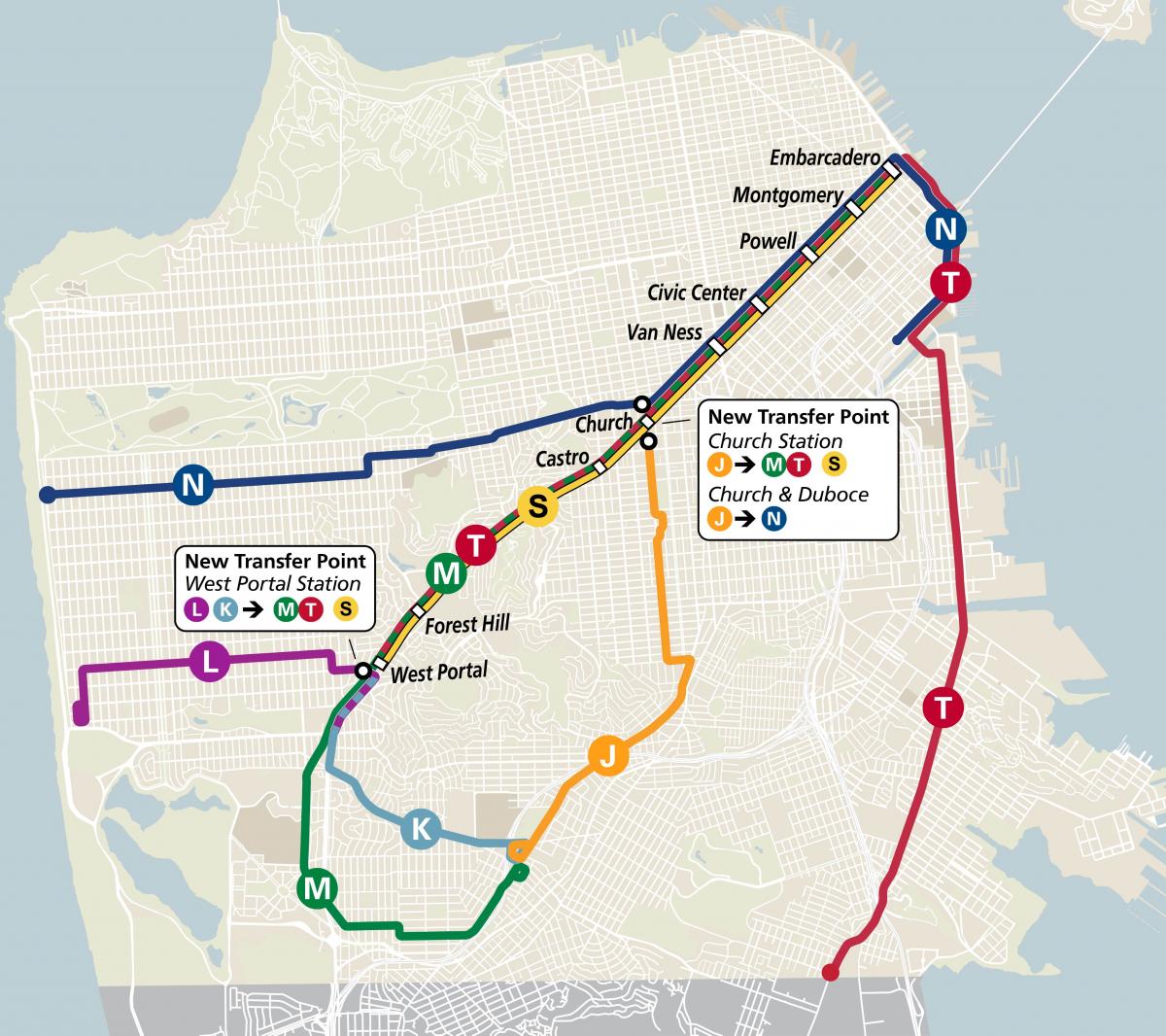
Map of new Muni Metro rail configuration.


Making Metro More Reliable

We are all too familiar with the routine backups that occurred in the Metro rail tunnels before COVID-19. Trains would be stuck outside the tunnels, between stations and on the platforms for long periods, often unable to let customers on or off. For years J Church and N Judah customers have experienced delays waiting to enter the tunnel at Duboce. Customers have similar experiences waiting to exit the tunnel at West Portal Station. A major cause is structural – we move all seven of our Muni Metro lines through a single subway tunnel. Like a backed-up freeway, trains get stuck in traffic, causing unacceptable slowdowns and unreliable service across the system.
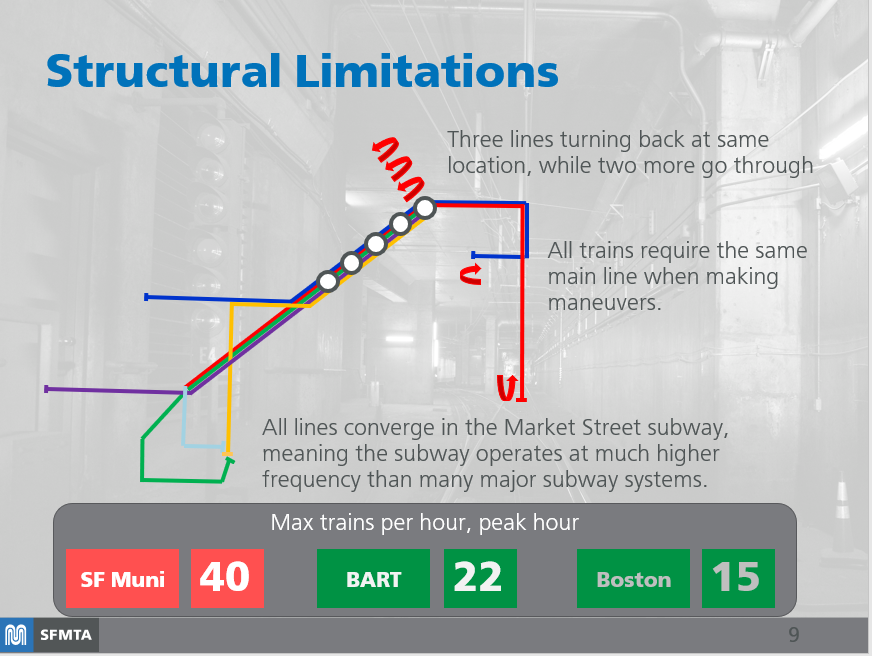
Graphic showing all Metro lines funneling into one tunnel.

Graphic: Muni Metro lines converging into a single tunnel.

Change has been needed for a long time, but now, more than ever, we must get people to their jobs and activities reliably and reduce delays that could increase risk of exposure to COVID-19. As we emerge from shelter-in-place, it’s imperative that we take the opportunity to improve our rail service so that we can deliver people to and from school and work reliably. We don’t want our customers stuck on trains in between stations or crowding on station platforms. By limiting the number of lines that go into the subway, we can meet both of those goals.

Change has been needed for a long time, but now, more than ever, we must get people to their jobs and activities reliably and reduce delays that could increase risk of exposure to COVID-19. As we emerge from shelter-in-place, it’s imperative that we take the opportunity to improve our rail service so that we can deliver people to and from school and work reliably. We don’t want our customers stuck on trains in between stations or crowding on station platforms. By limiting the number of lines that go into the subway, we can meet both of those goals.

This will be a big change to our previous Muni Metro rail service and a big adjustment for all of us. Customers would need to adapt some of their commute habits, so we are also working to ensure transfers are convenient for people to easily make their connections, particularly for seniors and people with disabilities.


Addressing Demand for Rail

Our subway system moves our highest volumes of customers, cumulatively, through the core of the city. Reliability is imperative for our customers and operators. Yet over the years as our service has grown, we have placed too much demand on our subway tunnels without improving tunnel capacity.

Before the COVID-19 emergency, we had been running more trains per hour in subway than we can process, roughly 40 trains per hour. Often, however, we’re only able to get 35 of trains through. This makes our service inconsistent and leaves our customers frustrated. To improve reliability and efficiency we need to reduce the number of trains per hour to around 25 to 30 and run higher capacity trains through the subway.
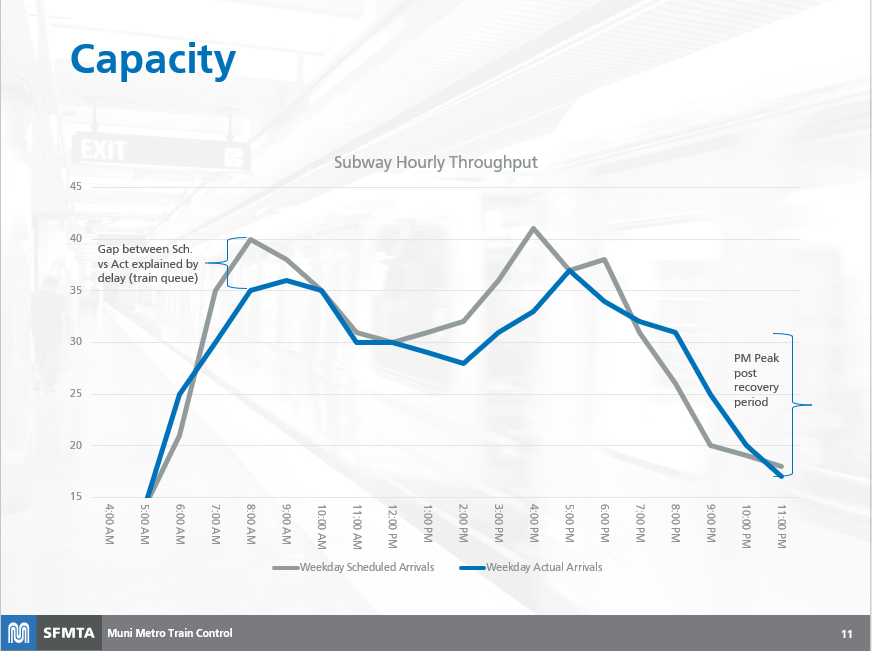
Line graphs depicting the disparity between number of trains scheduled to run through the subway and actual number of trains that get from end to end. The difference represents backups and delays that make the current configuration unreliable.

Graphic: Line graphs depicting the disparity between number of trains scheduled to run through the subway and actual number of trains that get from end to end. The difference represents backups and delays that make the current configuration unreliable.

The J Church and K Ingleside lines can only support one-car trains due to surface-level constraints, while the N Judah, M Ocean View, T Third and S Shuttle can accommodate two-car trains. One-car trains take up the same “slot” in the subway as a two-car train. By devoting the tunnels to the higher capacity routes, we could be using the space in our subway much more efficiently. And with ridership volumes, it currently makes the most sense to combine the K Ingleside and L Taraval lines.

The shorter running times means the J Church, K Ingleside, and L Taraval lines will be more frequent along their new surface-only routes. Combined with a more reliable frequent shuttle service, trips downtown will be more dependable and quicker.

We know customers will have questions about these changes. More details on these and other service changes, including detailed maps, will be coming soon.


The modified COVID-19 Core Service Plan  supports essential trips that cannot be made in other ways. All San Franciscans are helping us maintain adequate space on Muni for physical distancing by continuing to stay at home except for essential trips. If you need to make an essential trip, please use an alternate form of transportation whenever possible – walking, biking, taxi or driving – to save a seat on Muni for those who don’t have other options.

When you must use Muni for your essential trips, please allow space to physically distance and give yourself extra time. You may need to wait longer for a vehicle with available space. Remember, your trip may now include transfers and a longer walk, and your fare is good for two hours across multiple buses. 

We know that for many people with disabilities and seniors, walking farther — or paying for other transportation — isn’t possible. To serve this need, the SFMTA has introduced the Essential Trip Card (ETC) – a discount program to help seniors and people with disabilities make essential trips in taxis during this crisis.  

Visit SFMTA.com/COVID-19 for the latest information about Muni routes in service or to explore alternate ways to get around the city. 


Published June 19, 2020 at 01:16AM
https://ift.tt/2Yigglz
Monday, June 15, 2020

We want to hear from you! Participate in the Muni Customer Survey

We want to hear from you! Participate in the Muni Customer Survey
By Sophia Scherr

The SFMTA hopes that you and your family have been staying well during these challenging and uncertain times. As San Francisco and the SFMTA begins the transit recovery planning process, we are seeking input to help inform a Transportation Recovery Plan. This plan will include service and operational strategies, such as expansion of Muni service, frequency and operation, leading to a broader reopening in line with public health guidelines.

We invite you to participate by taking the survey below. This survey is also available in Spanish, Chinese and Filipino and takes approximately 15 minutes to complete.
 

Take the Survey!


We appreciate your participation and taking the time out of your day to provide this valuable information.


Published June 16, 2020 at 01:34AM
https://ift.tt/2B7wIMi

Tuesday, June 9, 2020

Adapting Our Public Process to Meet the Moment

Adapting Our Public Process to Meet the Moment
By Sophia Scherr

The SFMTA has quickly adapted our in-person public process to meet the moment and ensure that San Franciscans can still provide input and participate. Through our partnership with the SFGovTV, we were able to adapt open houses, Townhall, and board meetings from a face-to-face format to an interactive, multilingual, online platform that is accessible to all.

As developments surrounding COVID-19 accelerated throughout March, the SFMTA was one of the first city entities to begin hosting public meetings remotely with our online budget town hall. Originally planned to be held in-person at City Hall, our team quickly created a multilingual video series in which our Director of Transportation took members of the public through the proposed budget. We leveraged this townhall our social media channels, included information on our webpage and streamed it on the SFGovTV webpage and cable access channel.

Once the city mandated shelter-in--place-orders were in effect with requirements of physical distancing and a prohibition on large gatherings, we went 100% virtual with our online budget conversation. Members of the public were able to provide valuable feedback and ask questions via a dial-in hotline, email, and by Twitter using #SFMTABudget. This major outreach effort allowed us to collect valuable feedback and information that was used in shaping our future budget.  

In addition to our online town halls, the SFMTA adjusted Community Advisory Committee meeting to a video conferencing platform and SFMTA Board hearing to be held remotely. This SFMTA Board hearing was the first San Francisco board or commission - aside from the Board of Supervisors’ meetings, that was available for online engagement. Our team shifted from our regular in-person participation to live audio participation, where members of the public called in to provide input and comments to Board members. Testing new technologies and techniques comes with its own sets of challenges, but we made the necessary improvements so that our  SFMTA Board of Directors meeting was able to proceed without a (virtual) hitch.

Upcoming Public Meetings

June 11

ISCOTT Meeting

June 12

Engineering Public Hearing

June 26

Color Curb Hearing


Visit our event calendar page for future public meetings.


Published June 10, 2020 at 01:26AM
https://ift.tt/2MMbtlH

Monday, June 8, 2020

4th Street Transit Lane Offers Muni a Path Forward

4th Street Transit Lane Offers Muni a Path Forward
By Bonnie Jean von Krogh

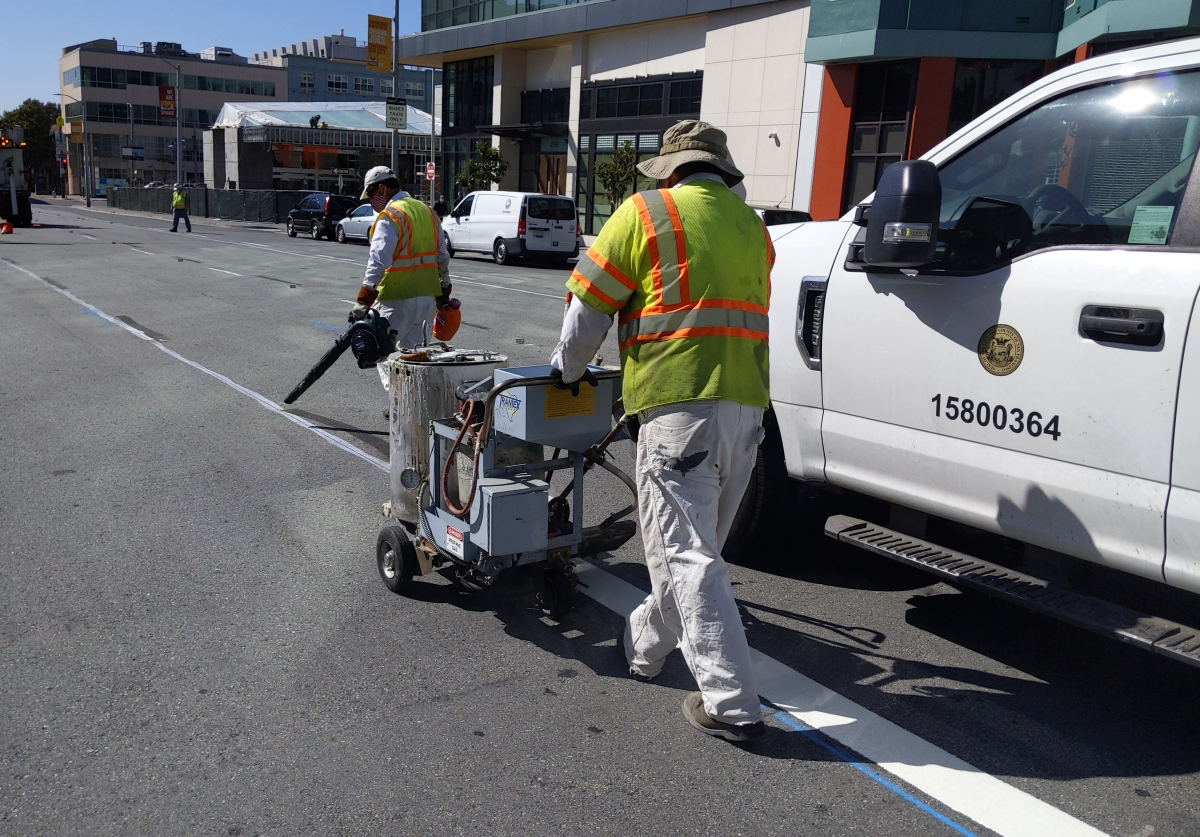
Work crews paint transit lane on 4th Street

A new transit lane was installed last week on 4th Street in SoMA as part of the previously approved 4th Street Transit Improvement Project. As the first transit lane put in place during the COVID-19 pandemic, this change will help protect Muni passengers as congestion returns to city streets.

Transit lanes allow buses to complete trips in less time and turn around back into service more quickly. That means with our limited resources, we can provide more Muni service with the same number of buses, reducing crowding and maintaining better physical distancing onboard.

The benefits that transit lanes provide – saving time and avoiding congestion – have become critically important during COVID-19 to protect the health of Muni passengers. Physical distancing requirements mean that Muni’s passenger capacity is cut in a third from pre-COVID levels. When buses take longer to complete their routes, customers increase their possible exposure to COVID-19.

The 4th Street transit lane can be used as a model for how this proven tool can benefit Muni customers throughout the city. The SFMTA is using travel time data to evaluate additional locations where adding new transit lanes would achieve the biggest time savings and provide the greatest benefit.

4th Street Transit Lane: A Model for a Broader Return of Muni Service

The new transit lane is the primary feature of the 4th Street Transit Improvement Project approved in October 2019 following months of community engagement. Other key elements of the project include additional passenger and commercial loading, as well as improved safety for people walking. The dedicated transit lane runs from Market to Folsom streets. It is currently identified with white “Bus/Taxi Only” stenciling and will later be painted red. The 4th Street lane complements the recently updated transit lane on 3rd Street as part of the 3rd Street Transit and Safety Project. Taken together, these transit lanes can substantially reduce transit delay, minimizing health risks for Muni passengers.

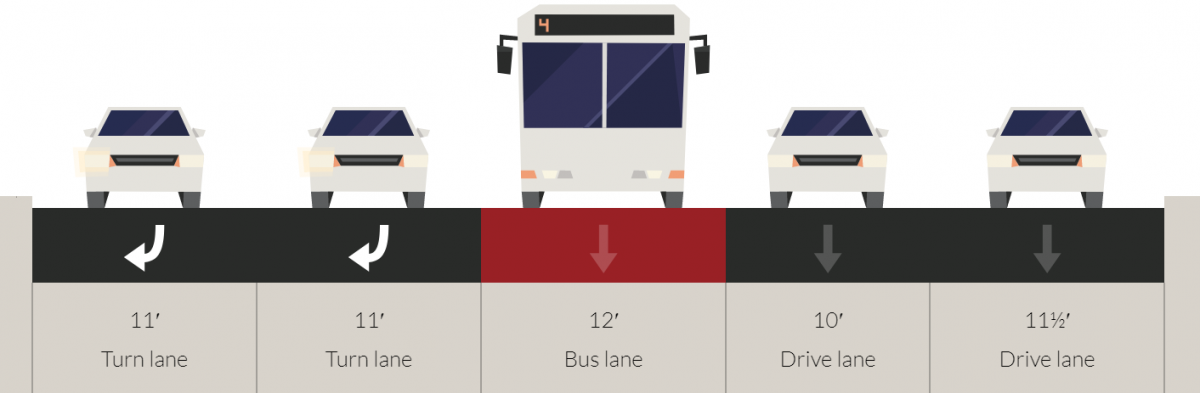
See the diagram below for the new design of 4th Street approaching Howard.

Diagram of cross section of 4th Street with transit lane approaching Howard.

The 4th Street corridor is a major transit and traffic corridor, providing connections to Caltrain, 101 South and the Bay Bridge and is anticipated to have high levels of traffic congestion moving forward. Typically, it is used by five of Muni’s busiest bus lines, including the 8 Bayshore, 8AX and 8BX Bayshore Expresses, 30 Stockton, 45 Union/Stockton and 91 OWL lines. During COVID Core Muni service, it supports the 8 Bayshore and 91 Owl lines.

As economic activity gradually resumes, we know that if just a fraction of the people riding Muni before the crisis switch to driving, congestion will be so severe that it will cripple San Francisco’s economic recovery. Simply put, without transit there is no recovery. Transit lanes are a proven success that allow Muni to avoid traffic congestion, improve travel times and increase frequency. If buses are less frequent, customers will have to wait longer and more people will need to use the same bus, increasing crowding or pass-ups when buses are full.

SFMTA has the task of meeting changing mobility needs in real time. But our challenge is that much greater with the immense loss of revenues the SFMTA is experiencing due to the COVID-19 pandemic. With limited resources, Muni’s number one goal is to keep transit moving while protecting the health and safety of our passengers and operators as we recover.

The 4th Street transit lane can help reduce the current crowding on the 8 Bayshore and ensure that when additional Muni routes return, they too can avoid traffic congestion. Given the critical importance of this corridor to local and regional transit, it will serve as an example to look to for similar treatments on other corridors.


Published June 09, 2020 at 06:03AM
https://ift.tt/3dKHfvl

We're In This Together: The Taraval Community Spirit

We're In This Together: The Taraval Community Spirit
By

As we continue to respond to COVID-19, signs and images of support are sprouting across the city. Images include lighted windows forming the shape of hearts on high rise buildings, posters of encouraging words on residential properties and even local art. These are reminders that we are all in this together.

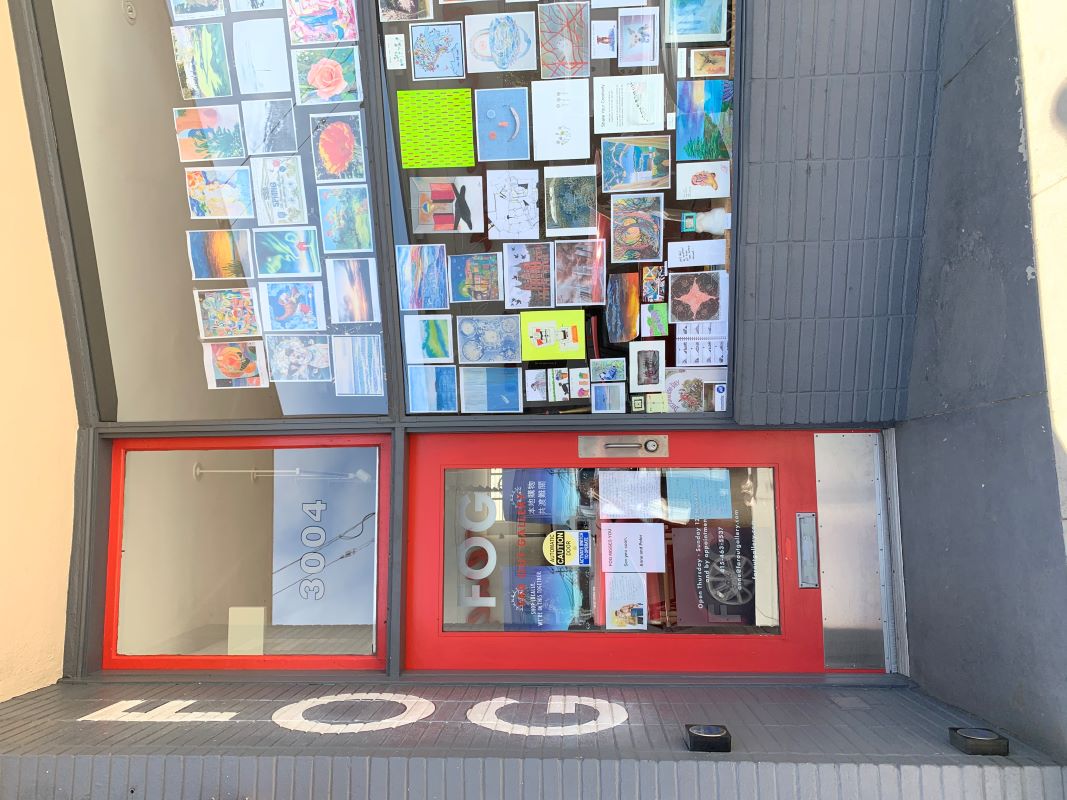
Picture of a store front with a large window filled with art work

Bright and colorful art donated from local community members fill the window of Far Out Gallery, adoringly called by the acronym FOG, located in the Sunset Parkside District at Taraval and 40th Avenue.

Located along the L Taraval Improvement Project corridor, Anne Herbst and Peter Munks of the Far Out Gallery are a member of its working group that is making efforts to support the Taraval community and its vibrant neighborhood during construction. As both a resident and small business owner in the Taraval neighborhood, Anne and Peter are advocates of inspiring creativity through art and keeping Taraval’s vibrancy alive as we navigate through this difficult time.

When Anne made the call for local artwork to be displayed in the storefront’s window, the Taraval community responded and donated an influx of self-made, local art pieces.

Every art piece is as unique as the next and with words of encouragement that uplifts spirits, even in the current challenging times: “Be Kind. Be Safe. Be Well,” “We Shall Overcome,” and a list of “Suggested songs for the Big Shelter-in-Place,” cheer on onlookers and neighbors as they grab their morning coffee and pick up delicious take-outs nearby. The art-filled window highlights local artists in the area, while showcasing the fighting spirit of the tight-knit Taraval community. For those who would like to contribute, Far Out Gallery is continuing to accept art pieces through their mail slot.

Thanks to San Francisco businesses like Far Out Gallery for bringing the community together as we get through this difficult time together.


Published June 09, 2020 at 02:34AM
https://ift.tt/3f4zTCS

Friday, June 5, 2020

Central Subway Update – Projected to be Open for Service by the End of 2021

Central Subway Update – Projected to be Open for Service by the End of 2021
By

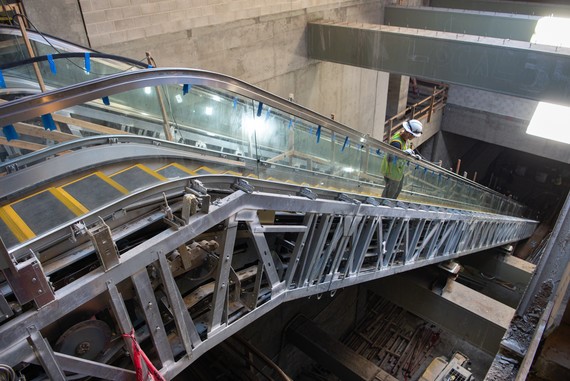
Worker pausing on escalator in Rose Pak Chinatown Station
A worker pauses on one of the massive escalators leading down to Rose Pak Chinatown Station's future lobby and fare gate area.

The Central Subway project remains a key priority for the SFMTA, even during the current health crisis. Workers from the contractor and project staff continue to work every day while taking precautions and following best practices for physical distancing.

Important progress was made over the last few months, but there were also challenges resulting in revisions to our target dates for the completion of construction. Heavy construction on stations was scheduled to finish this Summer, but now will continue into the Fall and finish by the end of the year. The date for revenue service when we can welcome our first customers is now the end of 2021.

The opening of the subway will follow an extensive testing period because our number one goal is to open a service that is reliable and safe on day one of operation.

Although construction will continue a little longer into the year than expected, most of the impactful work is behind us. All but one street or sidewalk adjacent to worksite is now open. The remaining closed block of Washington Street in Chinatown will reopen once construction is complete later this year as it is a key access point for materials.

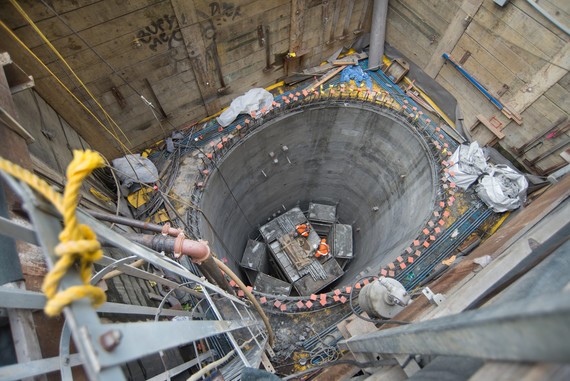
Lastly, we want to share a major project milestone was completed: Finishing an emergency exit for the Chinatown Rose Pak Station on Stockton near Jackson Street. This new exit was a massive endeavor that began in 2015 by excavating down over 95 feet. Once the soil was removed, the equivalent of a 9-story building was constructed underground -- surrounded by reinforced concrete, waterproofed and then capped with a pneumatic roof hatch.

Looking down at the egress shaft before construction was complete
During Construction: Cement casing was built down approximately 200 feet after excavation.

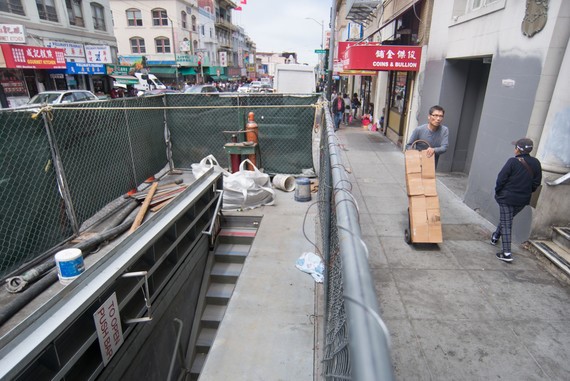
Image of hatch prior to completion

During Construction: Stairs leading up to the surface with the construction fencing that once adorned the corner.

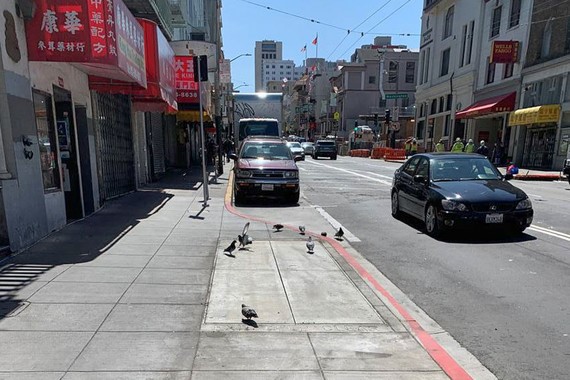
Completed section section

Today after Construction Finished: Competed Emergency Exit at Stockton and Jackson street with the grates closed and locked from the inside.

We know that construction of this vital project is disruptive to the community, so are deeply grateful for everyone’s patience. Once operational, the Central Subway will provide key connections to some of our city’s most densely populated and growing areas -- linking Chinatown, Union Square and SoMa to Mission Bay and the southeastern neighborhoods of San Francisco.

For more project information: SFMTA.com/CentralSubway

Information on our response to the current health crisis including Muni service, parking and more: SFMTA.com/COVID19


Published June 06, 2020 at 05:00AM
https://ift.tt/3f70iQP

Photo Exhibit Event: Vintage Bus Display and Tour

Photo Exhibit Event: Vintage Bus Display and Tour By Jeremy Menzies Join us Saturday, Jan. 27 at a special event for our exhibit, " 1...